If you want to make lattes for guests with minimal effort, choose a fully automatic machine whose specific model has an automatic milk-drink programme. A capsule machine with an integrated milk system is better suited to limited worktop space and smaller quantities, while a manual espresso machine is for those who want to control the espresso and milk themselves and have time to practise. Whichever route you choose, factor in cleaning after use and the type of coffee the machine requires.
Who are the different options suited to?
Host who wants to keep their hands free
Wants to serve milk-based drinks while entertaining without having to steam milk each time. Check whether the specific model has a latte programme and what you need to do between cups. The Consumers’ Association lists the number of cups and available space as factors to consider when choosing an espresso machine.
Latte drinker with limited worktop space
Wants a simple way to make coffee that fits on a small worktop and may be happy to use capsules. Remember to factor in cleaning the milk container and the ongoing cost of capsules. The Consumers’ Association describes capsule machines as easy to use.
Home barista who wants to steam milk themselves
Values having control over the espresso and milk texture more than making a drink at the touch of a button. The Sage Barista Express Impress requires you to froth the milk manually. Sage describes how to use the model, but that doesn’t make milk preparation automatic.
What should you consider?
Fully automatic machine with an automatic milk system
Best if: you want to use beans and make lattes for guests with minimal effort.
The trade-off: automatic preparation means you don’t have to steam the milk yourself, but the machine and its components still need looking after.
Capsule machine with an integrated milk system
Best if: you have limited space, usually make smaller quantities and want to use compatible capsules.
The trade-off: capsules are an ongoing cost, and the milk container needs attention after use.
Manual espresso machine with a steam wand
Best if: you want to make the espresso yourself and froth the milk by hand.
The trade-off: you’ll need to do more and practise, even when you have guests.
When making lattes for guests, the key things to consider are the milk programme, cleaning and how many cups you want to make in a row. The Consumers’ Association also highlights available space and the number of cups you’ll make. So compare the machine and the coffee it uses with how you’ll use it.
| What to consider |
What to look for |
Who should pay more attention to this? |
| Minimal effort |
Check that latte or latte macchiato is available as a programme, and find out what steps are needed between milk-based drinks. |
If I mainly want to serve drinks rather than steam the milk myself when I have guests, I want to check the complete milk programme in advance. Around 33% of consumers making this choice put convenience when entertaining first. |
| Cleaning the milk components |
Check which parts need rinsing or washing after each use and what regular maintenance is required. |
If you want to keep the ongoing work after guests leave to a minimum, factor in the steps needed to clean the milk container. Around 27% of consumers making this choice put cleaning first. |
| Space and coffee use |
Measure the available worktop space and compare capsules or beans with the number of cups you expect to make. |
If my kitchen has limited space and I want to match my coffee choice to the number of cups I make, both the machine’s size and running costs matter. Around 20% of consumers making this choice focus mainly on space and the ongoing cost of coffee. |
| Control over preparation |
Check whether the milk is frothed automatically or by hand, and what parts of the espresso-making process the machine supports. |
If you want to control the espresso and milk texture yourself, you may be happy to do more to keep that control. Around 20% of consumers making this choice put manual control first. |
Common buying mistakes
-
Assuming an espresso button means there’s a latte programme
A machine can make espresso without automatically frothing milk. This means you may still have to steam the milk yourself while entertaining.
Check the drinks menu and milk controls for the specific model variant, not just the general product category.
-
Assuming automatic milk preparation means no maintenance
Milk components need cleaning even after automatic preparation. Philips advises rinsing LatteGo after each use or washing its components. Nespresso says the milk container on the Lattissima One must be thoroughly cleaned after use.
Check the model’s cleaning instructions before you buy and bear in mind the ongoing cleaning involved.
-
Comparing only the upfront cost of capsule and bean-to-cup machines
The Consumers’ Association says capsule machines are generally cheaper to buy, but also points out that capsules come with ongoing costs.
Compare the machine and the coffee it uses based on the number of cups you actually expect to make.
-
Assuming an extended warranty plan replaces your statutory rights
The Government of the Netherlands says there is no fixed statutory warranty period in the Netherlands, and that your statutory rights apply alongside a manufacturer’s or additional warranty.
Check what extra cover a plan offers and compare it with the rights you already have.
A paid additional plan may offer cover that partly overlaps with your existing rights.
Brands to compare
Philips
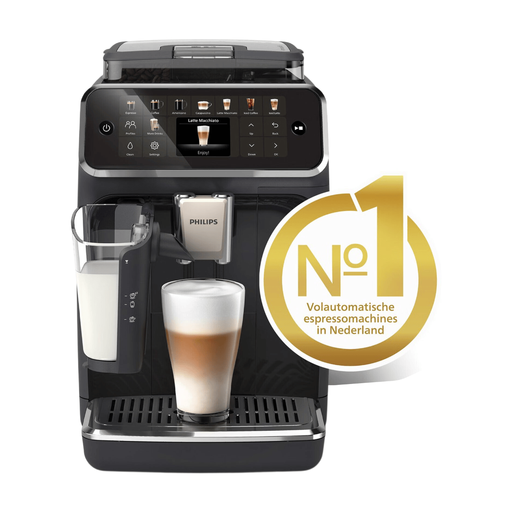
The 3300 Series EP3349/70 model we reviewed is a bean-to-cup machine with LatteGo and a latte macchiato programme.
- Philips describes LatteGo as a milk system with two parts.
- Philips advises rinsing LatteGo after each use or washing its components, so automatic preparation doesn’t mean you can skip cleaning.
De’Longhi
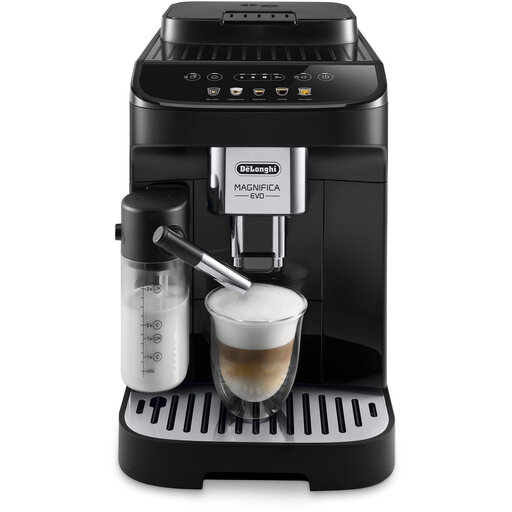
According to De’Longhi, the Magnifica Evo ECAM290.81.TB EX:1 model we reviewed offers latte macchiato and MyLatte, among other options, with LatteCrema Hot.
- The manufacturer describes an automatic cleaning step for the milk system.
- Check what further cleaning and maintenance the specific model requires. An automatic cleaning step doesn’t mean all maintenance is taken care of.
Nespresso
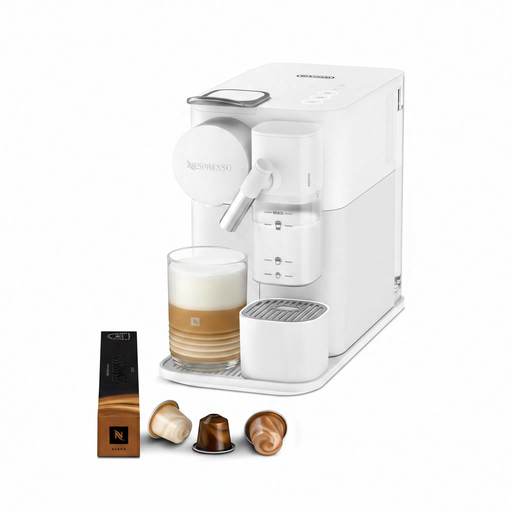
The Original Lattissima One model we reviewed is a capsule machine with an integrated milk system, including for latte macchiato.
- Nespresso describes one-touch preparation and a milk container that is dishwasher-safe.
- Nespresso says the milk container must be thoroughly cleaned after use. Compatible capsules also come with an ongoing cost.
Sage
The Barista Express Impress SES876BSS4EEU1 combines a grinder and assisted tamping with manual milk frothing.
- With this method, you froth the milk yourself.
- Manual steaming takes effort and doesn’t give you an automatic way to make a latte.
Siemens
The EQ6 plus s100 TE651209RW model we reviewed is a fully automatic machine with a selection of milk-based drinks, including latte macchiato and café au lait.
- Siemens mentions automatic steam cleaning of the milk system.
- Follow the other maintenance instructions too. Steam cleaning doesn’t mean you can skip other maintenance.
Joybuy products
This selection includes a capsule machine with an integrated milk system and fully automatic machines with automatic milk preparation, for anyone who wants to make lattes with less effort.
 No image available
De’Longhi EN510.W Lattissima One (Nespresso Original)
Ideal if you want to make latte macchiato with minimal effort and are looking for a capsule machine.
The integrated milk system makes latte macchiato at the touch of a button. The milk jug is removable and dishwasher-safe. The machine uses Nespresso Original capsules.
The milk container must be thoroughly cleaned after use.
View at Joybuy
 No image available
Philips EP5541/50 LatteGo Series 5500
Ideal if you’re looking for a bean-to-cup machine with automatic milk preparation for lattes.
The product description mentions LatteGo and a selection of lattes. It also lists a ceramic grinder, several grind settings and AquaClean.
Check the cleaning instructions for the milk system on this model.
View at Joybuy
 No image available
De’Longhi ECAM290.61.B Magnifica Evo
Ideal if you want to make latte macchiato with automatic milk preparation.
The description mentions LatteCrema Hot, an integrated milk container and latte macchiato at the touch of a button.
Follow the maintenance instructions for the milk system and the machine.
View at Joybuy
 No image available
De’Longhi Rivelia EXAM440.55.G, Pebble Grey
Ideal if you want automatic latte preparation and value the ability to switch between different types of beans.
The product description mentions the LatteCrema Hot milk system and a bean-switching system.
Check which milk-based drinks and preparation steps are available with this model.
View at Joybuy
 No image available
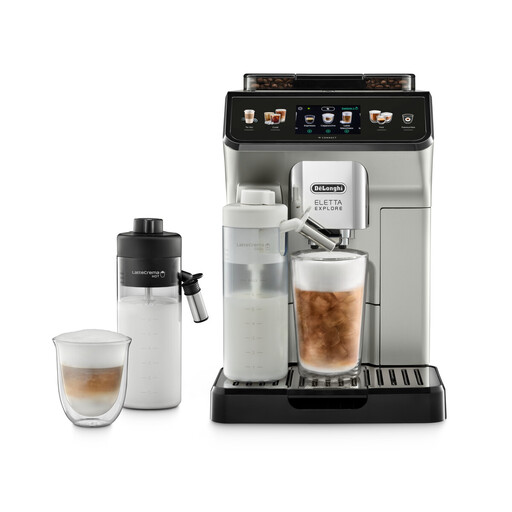
De’Longhi Eletta Explore ECAM450.65, silver
Ideal if you’re looking for a bean-to-cup machine with automatic milk preparation for caffè latte.
The product description mentions the LatteCrema system and automatic milk frothing.
Check the drinks selection and cleaning instructions for the specific model.
View at Joybuy
Frequently asked questions
Can every fully automatic machine make a latte at the touch of a button?
No, it depends on the model. Check whether latte or latte macchiato is available as a drink programme and whether the milk is frothed automatically. Some machines have a manual steam wand.
What do I need to clean after making milk-based drinks?
Follow the instructions for the specific model. Philips advises rinsing LatteGo after each use or washing its components. Nespresso says the milk container on the Lattissima One must be thoroughly cleaned after use.
Are capsule machines cheaper than bean-to-cup machines in the long run?
A lower purchase price doesn’t tell you enough about the running costs. The Consumers’ Association says capsule machines are generally cheaper to buy, but points out that capsules come with ongoing costs. Compare the coffee costs based on the number of cups you expect to make.
What safety information should I check for an espresso machine?
Electrical equipment covered by low-voltage regulations must meet safety requirements and carry CE marking. The Netherlands Food and Consumer Product Safety Authority describes the scope of these regulations for equipment with a nominal AC voltage of 50 to 1,000 V. That requirement alone does not confirm that a specific item being sold complies.


