Who is this for?

Everyday latte drinker

You make lattes regularly and want to know how much extra work and cleaning the milk system involves. Philips and Krups describe bean-to-cup machines with automatic milk preparation; check which recipes are available on each version.

Small-kitchen shopper

You usually make one drink at a time and want to weigh up the worktop space required, the water tank and milk preparation. De’Longhi lists the Dedica Style EC685.W EX:4 as 15 cm wide; also measure the space you’ll need to use and clean the machine.

Home barista

You want control over your espresso or milk froth and don’t mind a few extra steps. The Consumers’ Association distinguishes between bean-to-cup, pod and manual espresso machines as different ways to make coffee.

What should you look for when choosing?

Bean-to-cup machine with a milk system

A good fit if: you often make milk-based drinks and want as few steps as possible while preparing them.

Bear in mind: the milk components and machine parts still need maintenance.

Pod machine with a milk function

A good fit if: you usually make one latte at a time and value straightforward operation.

Bear in mind: pods aren’t interchangeable between all systems; the Consumers’ Association says pods cost more than ground coffee.

Manual espresso machine

A good fit if: you want more control over your espresso and milk, or you’re looking for a narrow machine.

Bear in mind: making coffee and frothing milk involve manual work; automatic steam assistance won’t do every step for you.

What to consider What to look for when buying Who should give this more thought?
Ease of use Check whether the exact model can make your latte and whether you have to froth the milk yourself. If I want to make a latte quickly on a busy morning, the main thing is how many steps are involved in preparing the milk. Around 33% of consumers say ease of use is their main concern when buying.
Cleaning Check which milk components can be removed and what cleaning the manufacturer recommends. After my latte, I want cleaning up to be manageable without forgetting to maintain the machine. Around 27% of consumers put cleaning at the top of their list.
Space and control Measure the available space and compare manual milk frothing with any steam assistance. My worktop is small, but I also want control over my espresso or milk froth. I’ll need to weigh up the space against the extra steps. Around 20% of consumers prioritise size and control over the brewing process.
Running costs Compare pods and beans based on how many cups you make, and factor in maintenance products. I want to know which ongoing costs suit the way I use the machine, rather than looking only at the purchase price. Around 20% of consumers prioritise running costs.

How to avoid common buying mistakes

  • Assuming a milk frother means latte at the touch of a button

    A steam wand, milk tank and automatic milk function each involve different steps. So having a milk function doesn’t necessarily mean the machine will prepare espresso and milk together automatically.

    Check which drinks are available on the exact model and which steps you’ll need to do yourself.

    Preparing milk manually takes extra time and may require a separate milk jug.

  • Comparing only the purchase price

    The Consumers’ Association says pod machines generally cost less to buy, but pods cost more than ground coffee. The overall cost also depends on how many cups you make.

    Compare the purchase price and ongoing costs based on your own usage, and check which pod system the machine uses.

    Pods or beans and maintenance products come with ongoing costs.

  • Reading ‘quick to clean’ as ‘maintenance-free’

    Philips describes LatteGo as a two-part milk system with no tubes, but also recommends maintaining other parts, including the brew group.

    Read the maintenance instructions for the exact version as well as the information about its milk system.

    Maintaining other parts of the machine can also take time and require maintenance products.

Brands to consider

Philips

The 2300 Series with LatteGo is a bean-to-cup option for anyone who wants to make milk-based drinks with few manual steps.

  • Philips describes LatteGo as a two-part milk system with no tubes.
  • Check the drinks list for the exact version; other machine parts also need maintenance.

De’Longhi

The Dedica Style EC685.W EX:4 is a narrow manual espresso machine with manual milk preparation.

  • The manufacturer lists this version as 15 cm wide and says it has an adjustable Cappuccino System.
  • Preparing the milk remains a manual step. Check the full model number, as features don’t automatically apply to other EC685 versions.

Nespresso

The Original Lattissima One is a pod machine with integrated milk preparation, designed to make one milk-based drink at a time.

  • Nespresso lists one-touch operation for milk-based drinks and a dishwasher-safe milk tank.
  • The Consumers’ Association highlights the pod system and ongoing pod costs; the milk tank also needs cleaning.

Sage

The Bambino Plus combines a manual espresso machine with automatic assistance for steaming milk.

  • Sage lists adjustable milk temperature and texture for the Bambino Plus.
  • Making coffee is still part of the manual espresso process; claims about froth quality come from the manufacturer.

Krups

The Arabica Latte range includes bean-to-cup machines with a milk jug and adjustable recipes.

  • Krups describes the EA819E10 as having a three-part milk jug and adjustable recipes.
  • This information doesn’t automatically apply to the EA819N10 or the entire Krups range; check the version using its full model number.

Joybuy products for lattes

The models below include a pod machine with a milk function and bean-to-cup machines with automatic milk preparation. According to the NVWA, CE marking is mandatory for electric espresso machines placed on the Dutch market as electrical consumer products. Low-voltage rules also apply to equipment within their scope, subject to applicable exceptions. Check the marking and conformity information for the specific product.
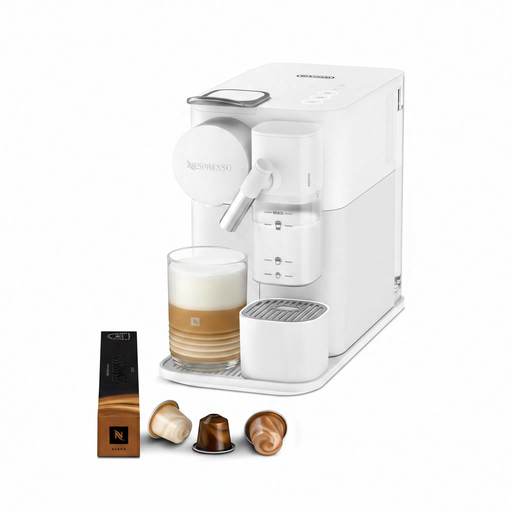
De’Longhi EN510.W Lattissima One pod machine

De’Longhi EN510.W Lattissima One, Nespresso Original

This pod machine is designed to make one milk-based drink at a time; check that the available coffee and milk drinks match what you want to make.

The milk jug is removable and dishwasher-safe. It needs to be cleaned after use.

View at Joybuy
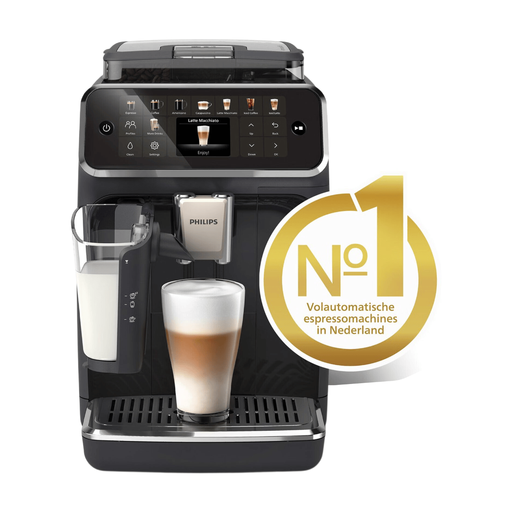
Philips EP5541/50 LatteGo 5500 Series

Philips EP5541/50 LatteGo 5500 Series

This bean-to-cup machine with LatteGo is designed for anyone who wants to make milk-based drinks with few manual steps; check whether the recipes on this version include the latte you want.

The product name lists 20 drinks, a ceramic grinder with 12 grind settings and a 1,8 l water tank.

View at Joybuy

Philips EP5547/90 LatteGo 5500 Series

Philips EP5547/90 LatteGo 5500 Series

This bean-to-cup machine with LatteGo is a good fit if you want to make lattes with few manual steps; check the recipe options for the exact version.

Follow the instructions for cleaning the milk system and maintaining the rest of the machine.

View at Joybuy

De’Longhi ECAM290.61.SB Magnifica Evo

De’Longhi ECAM290.61.SB Magnifica Evo

This bean-to-cup machine is an option if you want to make latte macchiato with automatic milk preparation; the milk tank is removable and needs cleaning.

Check the maintenance instructions and make sure the drinks available on this version suit the way you’ll use it.

View at Joybuy
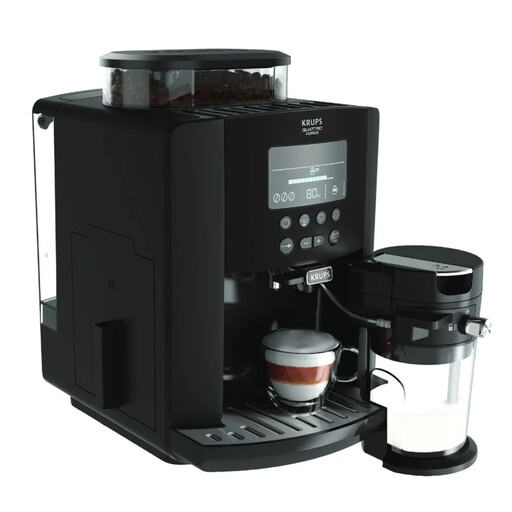
Krups EA819N Arabica Latte

Krups EA819N Arabica Latte

This bean-to-cup machine is designed to make latte macchiato with automatic milk frothing; check that the recipe options and cleaning routine suit you.

Follow the instructions for cleaning and descaling the machine.

View at Joybuy

Frequently asked questions

How do I choose between beans, pods and a manual espresso machine if I usually make one latte?

Start with the steps you want to do yourself: a bean-to-cup machine grinds beans and makes coffee automatically, a suitable pod machine simplifies the coffee-making step, and with a manual espresso machine you do some of the work yourself. Check how each exact model prepares the milk; not every machine makes a latte automatically.

What should I clean after making a milk-based drink?

Follow the instructions for the exact model. Philips recommends rinsing or washing LatteGo after every use and also lists maintenance for the brew group. Nespresso says the Lattissima One’s tank is dishwasher-safe.

Are pods cheaper in the long run if the machine costs less?

Not necessarily. The Consumers’ Association says pod machines generally cost less to buy, but pods cost more than ground coffee. Compare the costs based on how many cups you make; without knowing your usage, it isn’t possible to work out your personal break-even point.

What are my rights in the Netherlands if my espresso machine breaks down?

You’re entitled to a product that meets the standard you could reasonably expect. According to the Dutch government, there’s no fixed statutory warranty period in the Netherlands, and the retailer is your point of contact. A manufacturer’s warranty is in addition to your statutory rights.

Which safety marking is required for an electric espresso machine?

According to the NVWA, CE marking is mandatory for electric espresso machines placed on the Dutch market as electrical consumer products. Equipment within the scope of low-voltage rules must also meet the relevant safety requirements, subject to applicable exceptions. Check the marking and conformity information for the specific product.
