If you mainly want to serve lattes at your cooking workshop with minimal effort, choose a fully automatic machine with a suitable milk function. If participants will learn to prepare espresso and froth milk themselves, a portafilter machine with a steam wand is a better fit, although it takes more practice and hands-on work. A pod machine can be a good option for occasional use and limited worktop space, but you’ll need a suitable way to prepare the milk for lattes, and pods cost more than ground coffee, according to the Consumentenbond.
Who are these machines suitable for?
Workshop host serving lattes
Wants to serve participants milk-based drinks while they cook, with minimal effort for each order. Pay particular attention to the milk function and cleaning between preparations, as described by the Consumentenbond and the manufacturers concerned.
Teacher offering barista practice
Wants participants to make espresso and froth milk themselves, and is prepared to provide extra guidance and manage more hands-on steps. The Consumentenbond describes the manual steps involved with a portafilter machine; Sage explains the features of its models.
Organiser with limited worktop space
Makes lattes only occasionally and is looking for a compact, straightforward set-up. With a pod machine, you’ll need to arrange milk preparation separately; the Consumentenbond also notes that pods cost more than ground coffee.
What should you look for when choosing?
First decide whether the machine is mainly for serving drinks or for giving participants the chance to practise making them. Then compare cleaning requirements and the available worktop space.
| Consideration |
What to look for |
Who is this important for? |
| Serving several lattes |
Check whether the exact model has the milk recipe you want and look at the cleaning steps. If you have a set group size, ask for substantiated information about making drinks one after another. |
If I want to serve lattes during a busy workshop without turning every drink into a teaching session, I look at the recipe and how the machine operates. Around 40% of consumers prioritise being able to make several milk-based drinks quickly when choosing a machine. |
| Making drinks and practising |
Check whether the model has a steam wand, allows you to froth milk manually, and includes a grinder or requires you to buy one separately. |
If I want participants to make espresso and froth milk themselves, the available steps and level of guidance are key. Around 30% of consumers say barista practice is their top priority when choosing a machine. |
| Cleaning the milk system |
Compare the removable parts and cleaning routine for the exact model; also bear in mind any maintenance needed beyond the milk function. |
If I’m making milk-based drinks repeatedly, I want to know how much attention the milk system needs between preparations. Around 20% of consumers prioritise ease of cleaning. |
| Compact size and occasional use |
Measure the available space and factor in a suitable milk frother and ongoing pod costs. Also check which pod system the machine uses. |
If I have limited worktop space and only make lattes occasionally, I want a compact set-up without overlooking the milk preparation step. Around 10% of consumers say compact size and occasional use are their top buying priorities. |
Common buying mistakes
-
Assuming an espresso programme includes a complete latte function
A machine that makes espresso won’t automatically prepare the milk for a latte too. Nespresso lists espresso and lungo for the Essenza Mini, so you’ll need a separate way to prepare the milk.
Before buying, check the milk function and which parts are included with the exact version.
If the machine has no milk function, you may need a separate milk frother.
-
Comparing pod costs only with the initial purchase price
According to the Consumentenbond, pods cost more than ground coffee. The more often you use the machine, the more important these ongoing costs become when choosing.
Compare the machine, accessories and expected number of workshop cups on the same basis of use.
Remember to factor in the ongoing cost of pods and, if needed, a separate milk frother.
-
Assuming an automatic milk function is maintenance-free
Preparing drinks automatically and cleaning the milk parts are two different things. An automatic function doesn’t eliminate the need to clean the machine.
Read the cleaning instructions for the exact model and allow time between workshop sessions.
Brands worth comparing
De’Longhi
The Magnifica Evo ECAM290.61.SB is an option for hosts who want to serve milk-based drinks automatically. The manufacturer lists MyLatte and cappuccino among the available options.
- The manufacturer lists a LatteCrema Hot milk system and a cleaning function after use for this model.
- These features don’t tell you how many lattes you can make in a row. Also check the terms and conditions for your intended use.
Philips
The 5500 Series EP5544/50 is designed to make a range of milk-based drinks automatically. Philips lists lattes, LatteGo and user profiles for this model.
- Philips describes LatteGo as a two-part milk system that’s easy to clean.
- Check the full model code: versions with different codes aren’t necessarily the same product.
Sage
The Barista Express and Bambino Plus offer different ways to incorporate espresso-making and milk preparation into a practice session.
- According to Sage, the Barista Express has a built-in grinder and a manual steam wand. The Bambino Plus lets you froth milk automatically or manually.
- The models don’t have the same features. Sage’s claims about foam quality or speed aren’t based on independent workshop testing.
Nespresso
The Essenza Mini is a compact pod machine for occasional use. According to Nespresso, this model makes espresso and lungo.
- The Essenza Mini could be a good fit if compact size and straightforward operation are important to you.
- You’ll need a separate way to prepare milk for lattes. The Consumentenbond notes that pods cost more than ground coffee; Nespresso Original is also a specific pod system.
Espresso machines for workshops
These models include both machines that prepare milk automatically for serving drinks and those with a manual steam wand for practice during a workshop.
 No image available
Philips 1200 Series EP1220/00, black
Suitable for workshops where participants want to froth milk themselves as a hands-on step.
The product name lists a Pannarello steam wand and one-touch operation.
View at Joybuy
 No image available
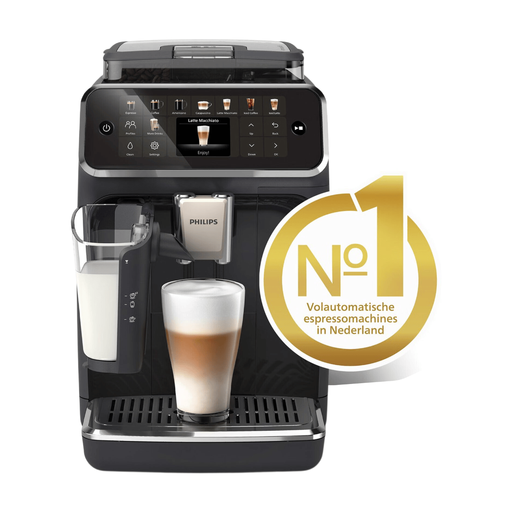
Philips 5500 Series EP5541/50 LatteGo
A fully automatic option for hosts who want to serve milk-based drinks with minimal effort.
The product name lists 20 drinks, a ceramic grinder with 12 settings, AquaClean and a 1.8 l tank.
View at Joybuy
 No image available
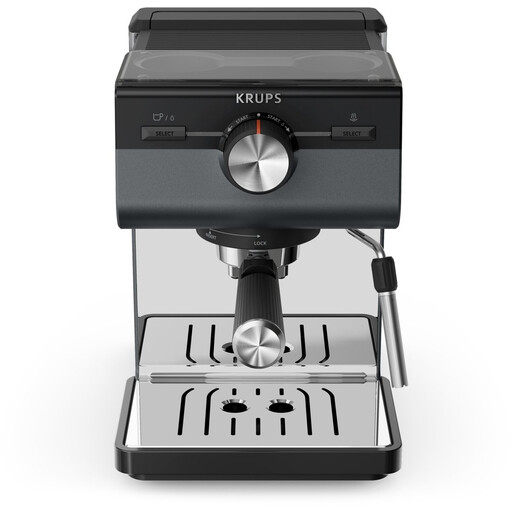
Krups Authentic+ C40 XP384G
Suitable for a workshop where participants want to make espresso and froth milk themselves.
The product name lists a portafilter and an included milk frother. Making espresso and frothing milk both require hands-on steps.
View at Joybuy
 No image available
De’Longhi Magnifica Evo ECAM290.61.SB
Suitable for hosts who want to serve milk-based drinks automatically, without turning every preparation into a practice session.
De’Longhi lists MyLatte, cappuccino and a LatteCrema Hot milk system for this model. The manufacturer also lists a cleaning function after use.
View at Joybuy
 No image available
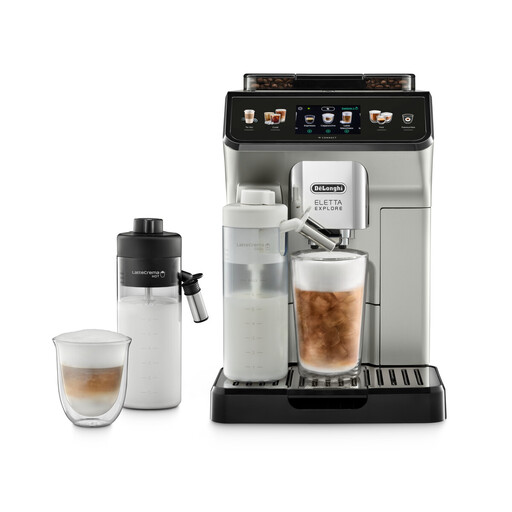
De’Longhi Eletta Explore ECAM450.65, silver
A fully automatic option for hosts who want to serve lattes with milk prepared automatically.
The product name lists the LatteCrema system and 13 drinks.
View at Joybuy
Frequently asked questions
Can an espresso machine also make a latte automatically?
No, not every machine that makes espresso also has a milk function. Check the exact version: Nespresso lists espresso and lungo for the Essenza Mini, so you’ll need a suitable separate milk frother to make lattes. An automatic milk system and a steam wand are two different ways of preparing milk.
What needs cleaning during a workshop?
Follow the instructions for the milk system, brewing parts and descaling. The Consumentenbond points out that fully automatic machines have several parts that need cleaning; an automatic milk function doesn’t remove the need for maintenance.
Are pod machines more cost-effective for a workshop?
Not necessarily over the full period of use. According to the Consumentenbond, pods cost more than ground coffee, even if a pod machine may have a lower purchase price. If a suitable milk frother isn’t included, remember to factor that in for lattes too.
What warranty applies when buying in the Netherlands?
Consumer purchases are covered by the statutory guarantee, in addition to any manufacturer’s or seller’s warranty. According to ACM ConsuWijzer, the seller must resolve the issue if a product doesn’t perform as could reasonably be expected under normal use. Don’t automatically assume the same consumer rights apply to a business purchase. Discuss your intended workshop use and the terms and conditions before buying.
What food safety rules may apply if a workshop organiser serves lattes to customers?
If the activity involves preparing, processing or selling food as a business, as described by the NVWA, a HACCP food safety plan or an applicable approved hygiene code is required. If food is supplied or sold to customers, the organisation must tell them about any allergens present, including milk and, if used, soya or nuts. Whether these rules apply to a particular workshop depends on how it is organised; they aren’t a requirement for everyone buying a machine for personal use.


