
Housemates who share a machine
You want everyone to be able to make a latte, and the milk system to be easy to clean after use. Philips says that the LatteGo parts should be cleaned after every use.


Start by considering who will clean the milk system after each latte, and how many steps and how much worktop space your housemates are happy with. A fully automatic machine with automatic milk preparation means less work when making a drink, while a portafilter machine involves more hands-on preparation. A capsule machine with a milk function is best suited to someone who wants to make one cup easily. Whichever you choose, factor in cleaning and the ongoing cost of using capsules or beans.
You want everyone to be able to make a latte, and the milk system to be easy to clean after use. Philips says that the LatteGo parts should be cleaned after every use.
You’re looking for a machine that fits on a shared worktop, with enough room around it for the steps and equipment needed to prepare milk. De’Longhi lists the Dedica Style EC685.W EX:4 as being around 15 cm wide.
You want to make espresso and froth the milk yourself, and are happy to do a few extra steps. With a portafilter machine such as the De’Longhi Dedica Style, frothing the milk is a manual step.
Best for: several housemates who regularly want to make lattes with minimal preparation.
Bear in mind: the milk components and other machine parts need cleaning. Philips says that LatteGo should be cleaned after every use.
Best for: anyone short on machine width who wants to prepare espresso and milk themselves. De’Longhi lists the Dedica Style EC685.W EX:4 as being around 15 cm wide.
Bear in mind: frothing milk and cleaning the parts take extra steps and worktop space.
Best for: one person who wants to make a latte quickly from time to time. Nespresso says the Lattissima One can prepare drinks at the touch of a button.
Bear in mind: the milk system still needs cleaning. The Consumers’ Association says that capsules cost more per coffee than beans.
| What to consider | What to check before buying | Who is this important for? |
|---|---|---|
| Cleaning the milk components | Check which parts need cleaning after every use and whether they can be removed. Agree on who will clean them and where they can dry. | When I share a machine, I want the milk components to be easy to clean after a latte and left tidy. Around 28% of consumers put cleaning the milk components first. |
| Ease of use | Check whether the exact model prepares milk drinks and what each user needs to do before and after making a drink. | I want different housemates to be able to make a latte without too many preparation steps. Around 22% of consumers prioritise ease of use. |
| Worktop space | Measure the available width and depth, and allow for the space you need to prepare the drink and keep the necessary equipment. | When the worktop is shared, I want to fit both the machine and everything needed to prepare a drink. Around 17% of consumers prioritise available worktop space. |
| Preparing espresso and milk yourself | Check whether the model has a steam wand or automatic milk preparation, and which drink settings are available. | I want to control how the espresso and milk foam are prepared, even if it takes more steps. Around 17% of consumers make control over preparation their top priority. |
| Purchase and running costs | Compare the purchase price and ongoing costs on the same basis, such as per latte, and agree on who will pay for coffee and maintenance products. | When we share a machine, I want to know in advance how we’ll split the purchase price and running costs. Around 16% of consumers prioritise sharing the costs. |
An automatic milk drink doesn’t mean the milk system will be clean after use. In a shared kitchen, uncertainty about who should clean it can make it harder for the next person to use.
Check the cleaning instructions for the exact model and agree on who will clean the milk system after each milk drink.
The Consumers’ Association says that capsule machines are generally cheaper to buy, but capsules cost more per coffee than beans. If you use the machine regularly, your choice of system can therefore affect your ongoing costs too.
Compare the purchase price and coffee costs over the same period of use before splitting the costs between housemates.
When preparing milk manually, you may also need space for a milk jug, cups and other equipment.
Measure the available width and depth, and allow room for the whole preparation process, not just the machine itself.
The 3300 EP3349/70 is an example of a bean-to-cup machine with LatteGo and a specified latte macchiato recipe.
The Dedica Style EC685.W EX:4 shows what a slim portafilter machine with manual milk frothing can look like.
The Original Lattissima One is a capsule machine with integrated milk preparation, designed to make one cup at a time.
The Evidence UP EA897B10 is a bean-to-cup machine with automatic milk preparation and a milk hose included.
These product options suit different ways of making espresso as the base for a latte, from manual to automatic. For each model, consider how much of the milk preparation you want to do yourself, and how much space and cleaning it involves.
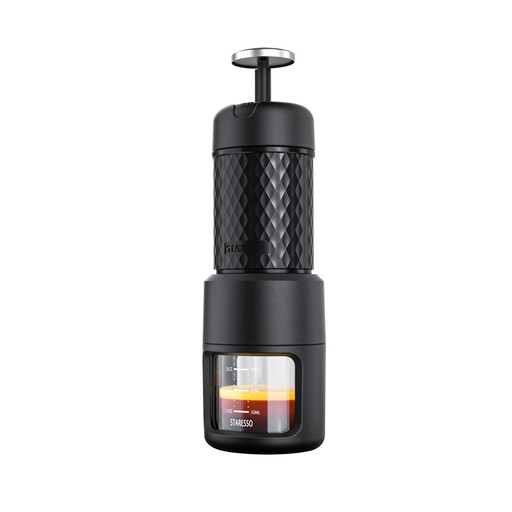 No image available
Suited to anyone who wants to prepare the espresso base for a latte themselves; consider how you’ll froth the milk.
Suitable for ground coffee and capsules; manual extraction; 304 stainless steel interior. Extraction requires hot water at 85–95 °C. Take the parts apart and rinse them after use.
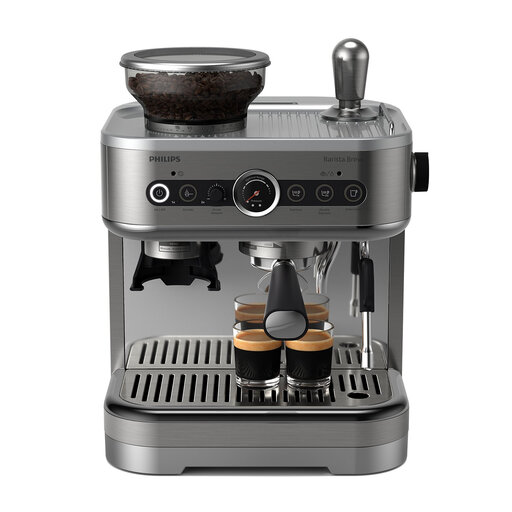 No image available
Suited to anyone who wants to make espresso and froth milk with the steam wand. You’ll need to grind, dose and tamp the coffee yourself, then clean the portafilter and filter baskets after use.
Semi-automatic; 15 bar; 58 mm portafilter; 1350 W; stainless steel milk jug.
 No image available
Suited to anyone who wants coffee made from beans and to froth milk themselves using the Pannarello steam wand. Milk preparation is manual.
Matt black finish; Pannarello steam wand.
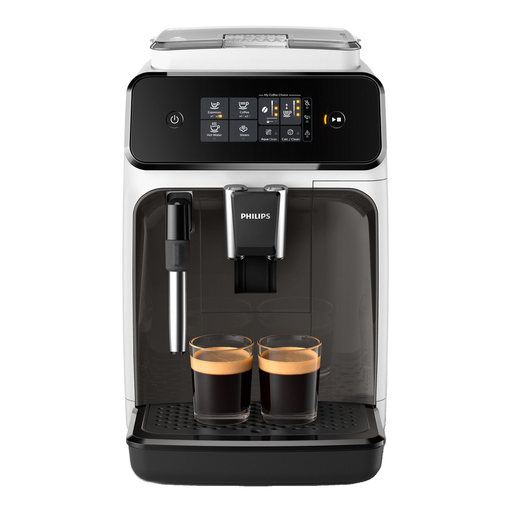 No image available
Suited to anyone who wants bean coffee and to prepare milk for a latte macchiato themselves using the classic milk frother.
White finish; 1.8 l water tank; 15 bar; ceramic grinder. The milk frother is operated manually.
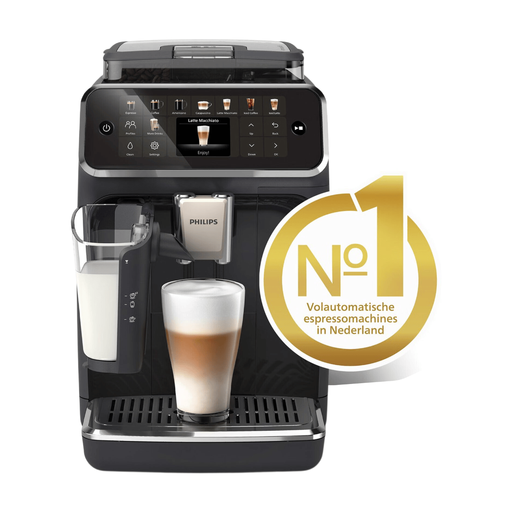 No image available
Suited to anyone considering a fully automatic machine with LatteGo for milk drinks. Philips says that LatteGo should be cleaned after every use.
20 drinks; ceramic grinder with 12 settings; AquaClean; 1.8 l water tank.
Follow the instructions for the model you choose. Philips says to rinse the two LatteGo parts after every use or clean them in the dishwasher. This applies to this milk system and not automatically to every machine.
After use, put opened semi-skimmed milk back in the fridge promptly and store it at 4 °C, as advised by the Netherlands Nutrition Centre. For other types of milk or plant-based drinks, check the storage advice on the packaging.
Check the instructions and make sure you have a suitable electrical socket available. The Fire Service advises fully unwinding cable reels and, where possible, plugging appliances that use a lot of power directly into a socket rather than into a cable reel or extension lead.
According to the Dutch government, there is no fixed statutory warranty period in the Netherlands: you’re entitled to a product that meets the standard you could reasonably expect, and the retailer is your point of contact if something goes wrong. A manufacturer’s warranty is an extra benefit, so don’t assume there is a general statutory warranty period of exactly two years.