
Workshop host serving drinks
You want to serve latte macchiatos during the lesson without asking each participant to make espresso and milk foam first. Consider the controls, milk supply and how many drinks the machine can make in succession.


If you mainly want to serve latte macchiatos during a cookery workshop, choose a bean-to-cup machine whose exact model offers this recipe and whose milk system suits your cleaning routine. If participants need to learn how to make espresso and milk foam themselves, a manual espresso machine with a steam wand is better suited to the lesson, but each drink takes more steps to prepare. A capsule machine with an automatic milk function may suit occasional use; capsules are an ongoing cost to factor in.
You want to serve latte macchiatos during the lesson without asking each participant to make espresso and milk foam first. Consider the controls, milk supply and how many drinks the machine can make in succession.
You want participants to grind the coffee, make espresso and froth milk themselves. A manual machine gives them the chance to practise these steps, but requires more work for each drink.
You want to keep milk components clean between preparations. If you serve food or drink to customers, you also need to follow the relevant food safety and allergen rules in your working practices.
Best for: serving drinks or demonstrating how to make one, with fewer manual steps for each cup.
Bear in mind: the milk components need maintenance. Check the cleaning steps and recipes for the exact model.
Best for: participants who want to make espresso and froth milk themselves.
Bear in mind: the extra steps take practice and preparation time during the workshop.
Best for: occasional workshops where participants make an automatic milk-based drink one at a time.
Bear in mind: capsules are an ongoing expense. Also check how to clean the milk reservoir.
| What to consider | What should you check? | Who should pay extra attention? |
|---|---|---|
| Making several drinks in succession | Check the latte macchiato recipe, milk supply, space for glasses and cleaning steps for the exact model. | If I want to serve several drinks during the lesson, I need to know what steps are required between each one. Around 31% of consumers say consistent preparation is their top priority. |
| Learning to make drinks | See which steps participants can carry out themselves, and how much practice time and cleaning are involved. | If participants need to make espresso and milk foam themselves, clear steps they can practise are important. Around 25% of consumers put hands-on practice first. |
| Milk and cleaning | Read the cleaning instructions for the specific model and plan how milk and equipment will be handled during the lesson. | In a shared work area, I need to be able to keep the milk components clean; if I serve customers, I also need to follow the relevant rules. Around 25% of consumers make milk hygiene their top priority. |
| Running costs | For your expected use, compare coffee, milk and recommended maintenance on a like-for-like basis. | If I use the machine more often, I want to consider the cost of capsules or beans and maintenance as well as the purchase price. Around 19% of consumers put ongoing costs first. |
A steam wand for manual frothing is different from an automatic recipe. A milk system alone does not confirm that the model you choose has a latte macchiato programme.
Check the recipe list and milk function for the full model number before relying on one-touch operation.
Capsules are an ongoing expense. How often you use the machine affects how much those costs matter.
For the number of drinks you expect to make, compare the cost of capsules or beans, milk and recommended maintenance.
An automatic rinse or cleaning function does not replace every maintenance step. A shared milk-preparation area needs attention between preparations and afterwards.
Follow the cleaning instructions for the exact model. If you serve food or drink to customers, the Netherlands Food and Consumer Product Safety Authority sets requirements for safe food handling and allergen information.
According to Siemens Home Appliances Netherlands, the EQ700 TQ723E03 is a bean-to-cup machine with a latte macchiato recipe, an integrated milk container and a 2,4 l water reservoir.
The Rivelia EXAM440.55.G is a bean-to-cup machine with a latte macchiato recipe and an automatic milk system. The Lattissima One EN510.B is a capsule machine that makes one cup at a time.
The Barista Express SES870BSS4EEU1 is a manual espresso machine for workshops where participants make espresso and milk foam themselves.
The Lattissima One is a capsule machine with an automatic latte macchiato recipe.
According to Philips, the 5500 Series EP5544/50 has a LatteGo milk system and adjustable coffee and milk volumes.
This selection includes manual espresso machines for participants who want to practise making drinks themselves, as well as bean-to-cup machines for serving milk-based drinks.
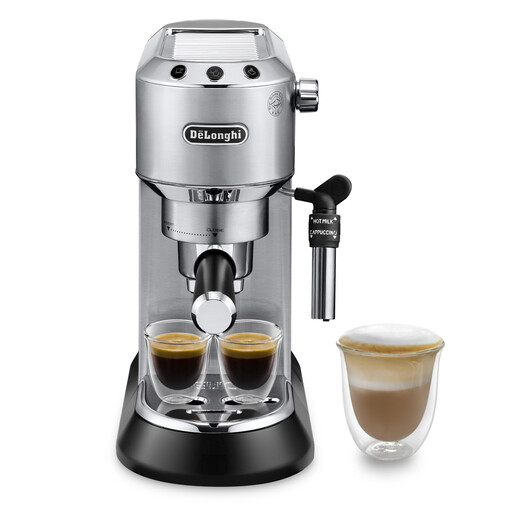 No image available
The manual steam wand is ideal for a workshop where participants froth the milk themselves.
Suitable for ground coffee and E.S.E. pods; can make up to two cups at a time.
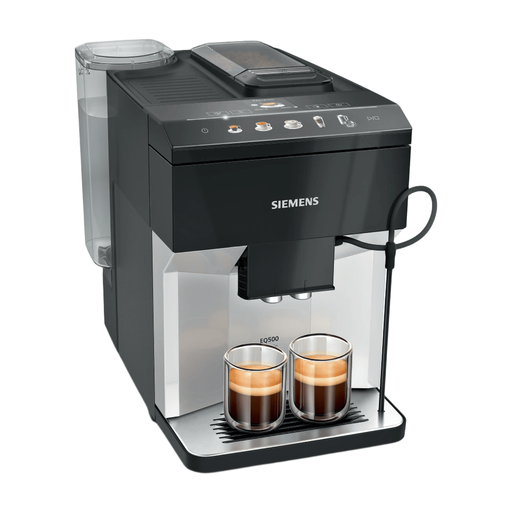 No image available
Automatic milk preparation may suit a demonstration where the host serves the drinks.
The product information lists latte and cappuccino, and a milk tube that can be placed in a milk container. Check the recipe menu if you need latte macchiato.
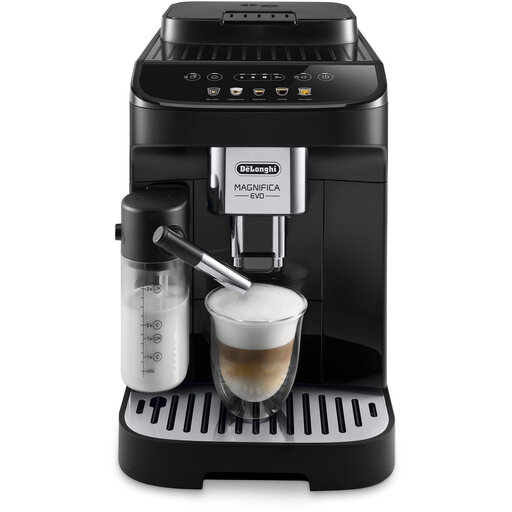 No image available
The product information lists one-touch latte macchiato preparation, making it a good choice for a host who wants to serve milk-based drinks without frothing the milk by hand.
LatteCrema milk system; 1,8 l water reservoir; according to the product information, it can make two cups at a time.
 No image available
Suitable for a host who wants to make latte macchiato automatically; De’Longhi lists this recipe for this model.
1,4 l water reservoir. The product information lists two interchangeable bean containers and automatic cleaning after use.
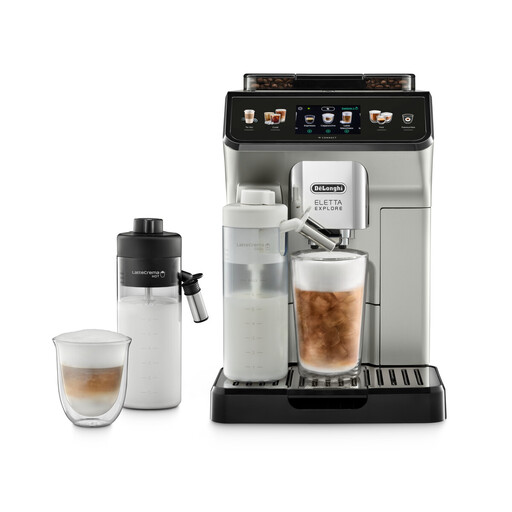 No image available
Automatic milk frothing may suit a host serving milk-based drinks during the workshop.
LatteCrema system and 1,8 l water reservoir. The product information lists caffè latte and cappuccino; check the recipe menu if you need latte macchiato.
Businesses that prepare, handle or sell food must have a food safety plan based on HACCP, as required by the Netherlands Food and Consumer Product Safety Authority. An approved hygiene code can be used for this purpose. Whether a private workshop falls under these business requirements depends on the activity. If you serve customers, check which rules apply.
According to the Netherlands Food and Consumer Product Safety Authority, businesses that sell or serve food or drink to customers must provide information about any allergens present, including milk and soya. For non-prepacked products, this can also be given verbally under certain conditions, as long as customers are clearly told they can ask for it. This applies to the relevant food or drink service, not automatically to every private workshop.
For pre-packed milk, follow the storage temperature on the label. The Netherlands Food and Consumer Product Safety Authority recommends 7 °C or below for its hospitality guidelines if this information is missing. Keep the work area and equipment clean, and follow the relevant hygiene code.
Yes. An automatic rinse or cleaning function does not replace every maintenance step; follow the manual for the exact model. The Consumers’ Association lists cleaning and descaling as tasks for bean-to-cup machines. Nespresso says the Lattissima One’s milk reservoir can go in the dishwasher after use.
Yes. According to the Government of the Netherlands, statutory consumer protection applies alongside any manufacturer’s or retailer’s warranty; there is no fixed statutory warranty period in the Netherlands. Different contractual terms may apply if you buy a machine for business use in workshops, so make sure these are confirmed separately.