Which machine is right for you?

If you want to make a latte quickly

You want to spend as little time as possible making your drink when you get home, and would rather not froth the milk yourself. Automatic milk systems and capsule machines with a milk function are worth comparing, but bear in mind that the milk components need cleaning. Consumentenbond explains the difference between the convenience of a bean-to-cup machine and the more hands-on operation of a traditional espresso machine.

If you want to control the preparation yourself

You want to influence how the espresso is brewed and the texture of the milk, and are happy to put in a little extra effort. A traditional espresso machine with a steam wand gives you that hands-on approach; also check whether you’ll need a separate grinder. De’Longhi describes the Dedica EC685.M EX:4 as a manual machine, while Sage lists a built-in grinder for the Barista Express BES870.

If you’re weighing up space and coffee type

You want the machine to fit on your worktop and to choose between beans, ground coffee or capsules. Measure the space available and check which type of coffee the model uses. De’Longhi lists a width of 149 mm for the Dedica EC685.M EX:4; this measurement applies to this version.

What should you look for when choosing?

Bean-to-cup machine with milk function

Best for: anyone who wants to make a milky coffee with fresh beans and minimal effort.

Consider: automatic preparation doesn’t eliminate the need to clean the milk components and brewing unit.

Traditional espresso machine with steam wand

Best for: anyone who would rather prepare the espresso and milk texture themselves.

Consider: grinding or measuring out the coffee and frothing the milk involve more steps.

Capsule machine with milk function

Best for: anyone who values simple operation and wants to use the compatible capsule system.

Consider: you’re tied to compatible capsules and will need to clean the milk reservoir.

What to consider What to look for Who it’s for
Preparation time Check whether the exact model makes the milk drink you want and how you adjust the amount of milk. If I want a latte quickly when I get home, convenience is my priority. Around 36% of consumers say speed matters most to them.
Cleaning Check which milk components can be removed and what cleaning the milk system and brewing unit require. If I make milk drinks regularly, I want to know in advance which parts need cleaning after use. Around 29% of consumers prioritise easy maintenance.
Manual control Check whether the model has a steam wand and whether you need to grind or measure out the coffee yourself. If I want to brew my own espresso and froth the milk myself, I’m happy to put in extra effort for more control over the preparation. Around 21% of consumers prioritise that level of control.
Space and coffee system Measure the space on your worktop and check whether the model uses beans, ground coffee or capsules. If I have limited worktop space, I weigh up the dimensions against the coffee I want to use and the purchases that come with it. Around 14% of consumers focus mainly on space and running costs.

Common pitfalls

  • Assuming a milk programme makes a complete caramel latte

    A latte macchiato programme doesn’t mean the machine adds caramel syrup too. In De’Longhi’s recipe, the syrup is added to the cup separately.

    Choose your machine based on how it prepares espresso and milk, then add the syrup separately according to the recipe you’re using.

  • Assuming automatic means maintenance-free

    Even an automatic milk function requires the milk components to be cleaned. Some models also need their brewing unit maintained.

    Read the maintenance instructions for the exact model before you buy. Philips recommends cleaning the milk circuit and also provides instructions for maintaining the brewing unit.

  • Focusing only on width or coffee system

    A slim machine may take up little worktop space, but the coffee system also determines which coffee you’ll need and whether you need extra equipment, such as a grinder.

    Check the dimensions, the type of coffee and which components come with the machine. Choose one that suits the way you’ll use it.

Brands to compare

Philips

The EP3349/70 is a bean-to-cup machine with LatteGo and a latte macchiato programme.

  • Philips describes automatic milk frothing for this model.
  • The milk components and brewing unit need maintenance; features of the EP3349/70 don’t necessarily apply to other 3300 variants.

De’Longhi

The Dedica EC685.M EX:4 is a manual espresso machine with an adjustable cappuccino system.

  • De’Longhi lists a width of 149 mm and compatibility with E.S.E. pods for this version.
  • You froth the milk manually; this version doesn’t offer the same operation as an automatic milk programme.

Nespresso

The Lattissima One combines Original capsules with an integrated milk function.

  • Nespresso describes one-touch latte macchiato preparation and a dishwasher-safe milk reservoir.
  • Check that the capsule system and cleaning the milk reservoir fit your routine.

Sage

According to Sage, the Barista Express BES870 combines a built-in grinder with a portafilter and manual steam wand.

  • Sage lists settings for the grind and shot volume.
  • Frothing the milk yourself takes more effort than using an automatic milk programme; product specifications aren’t an independent taste test.

Siemens

The EQ700 TP725E01 is a bean-to-cup machine that makes milk drinks, including latte macchiato.

  • Siemens lists automatic detection of the milk quantity and the option to use a milk carton or your own container.
  • The stated dimensions are 380 × 309 × 467 mm; measure the available space for this version.

Joybuy product picks

These models are fully automatic espresso machines with an automatic milk function, for anyone who wants to make a latte-style drink without frothing the milk by hand. Add caramel syrup separately and check the cleaning instructions for the model you choose.
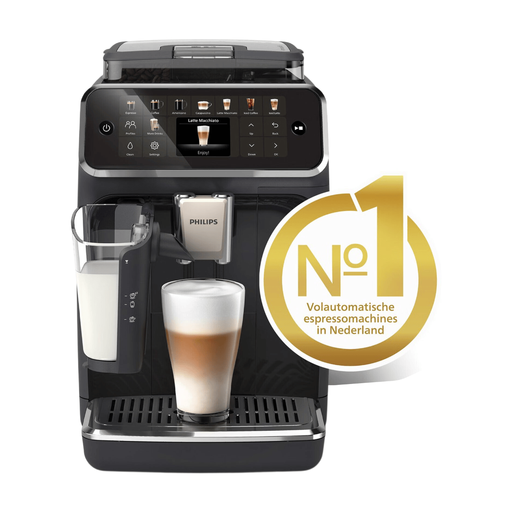
Philips EP5541/50 LatteGo Series 5500 fully automatic coffee machine

Philips EP5541/50 LatteGo Series 5500

For anyone who wants to make a latte-style milk drink with minimal effort; add the caramel syrup separately.

The product description lists 20 recipes, a ceramic grinder with 12 settings and a LatteGo milk system. Additional cleaning is required.

Joybuy
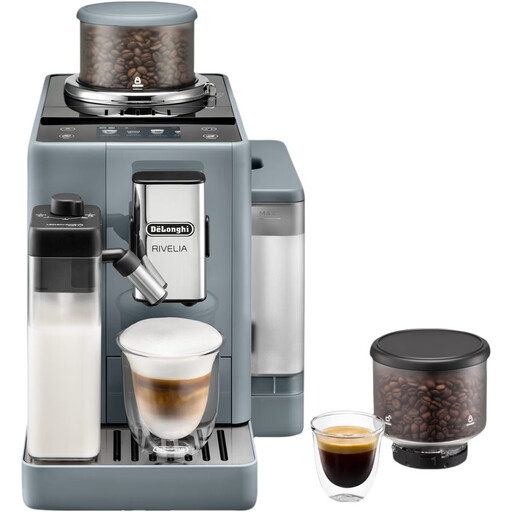
De’Longhi Rivelia EXAM440.55.G fully automatic espresso machine in Pebble Grey

De’Longhi Rivelia EXAM440.55.G

For anyone who wants to make a latte with automatic milk preparation and switch between two types of beans.

The product description lists two interchangeable bean hoppers. Clean and descale the machine according to its instructions.

Joybuy

De’Longhi ECAM290.61.SB Magnifica Evo fully automatic coffee machine

De’Longhi ECAM290.61.SB Magnifica Evo

For anyone who wants to make a latte macchiato or another milk drink at the touch of a button.

The product description lists a removable milk reservoir, a removable brewing unit and 13 grinder settings. Follow the instructions for cleaning and descaling.

Joybuy
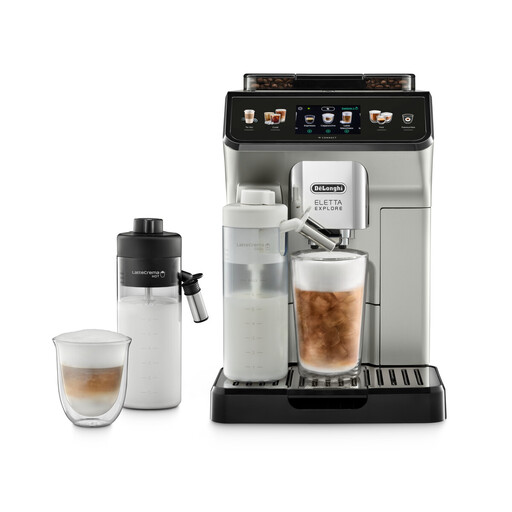
De’Longhi Eletta Explore ECAM450.65 fully automatic coffee machine

De’Longhi Eletta Explore ECAM450.65

For anyone who wants to make a caffè latte automatically without frothing much milk by hand.

The product description lists an automatic milk system, automatic cleaning and a removable brewing unit.

Joybuy
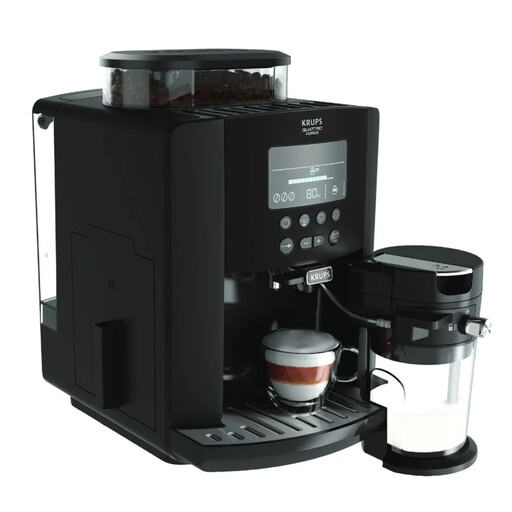
Krups EA819N Arabica Latte coffee machine in black

Krups EA819N Arabica Latte

For anyone who wants to select a latte macchiato on the touchscreen and have the milk frothed automatically.

The product description lists temperature settings and a 1,70-litre water tank. Clean and descale the machine according to the manual.

Joybuy

Frequently asked questions

Does the machine need to add the caramel syrup itself?

No. In De’Longhi’s caramel latte recipe, the syrup goes into the cup first, followed by milk and espresso. Choose your machine based on its espresso and milk functions, and don’t expect a built-in syrup programme unless one is listed for the exact model.

What should I do with milk when I get home and after frothing it?

Return milk that needs to be kept chilled to the fridge as soon as possible. Voedingscentrum advises not leaving highly perishable products such as milk out of the fridge for more than two hours. Then clean the milk system according to your machine’s instructions.

Which costs will I have after buying the machine?

Factor in the coffee that’s compatible with your chosen system, as well as any recommended cleaning and maintenance products. Only compare the cost per cup when serving sizes, coffee prices and frequency of use have been calculated on the same basis for each option.

What can I do if my espresso machine is faulty?

Contact the seller. According to the Rijksoverheid, statutory consumer rights apply in the Netherlands, but there is no fixed statutory guarantee period. What you can expect from a product depends, among other things, on the product, its price and the information provided at the point of sale. A manufacturer’s guarantee does not replace those rights.

What safety rules apply to an electric espresso machine in the Netherlands?

According to the NVWA, CE marking is mandatory for electrical products. Electrical equipment with a rated AC voltage of 50–1000 V must also meet the relevant requirements of the Low Voltage Directive. CE marking alone does not prove that a specific product on sale meets all the applicable requirements.
