What should you look for when choosing?
First decide whether participants will practise the brewing process or mainly want to make their drinks quickly. Then compare the costs and features that suit the recipe you plan to teach.
| Consideration |
What to check before buying |
Who should give this more weight? |
| Learning to make espresso |
Check whether the machine offers manual steps such as grinding, dosing and tamping. |
If I want participants to practise the brewing process themselves, that experience matters more than speed. Around 36% of consumers say learning to make espresso themselves is their main concern when buying. |
| Making several drinks |
Look at the controls, milk preparation and cleaning; don’t judge the actual time needed by the number of recipes. |
When participants take turns making a drink, I want to keep the number of steps to a minimum. For around 29% of consumers, making several drinks quickly is the priority. |
| Costs with repeated use |
Compare the machine, the cost of coffee per cup and the maintenance required for your expected usage. The Consumers’ Association points out that beans cost less than coffee pods. |
If the machine will be used for workshops regularly, I also want to take ongoing coffee costs into account. Around 21% of consumers focus mainly on running costs. |
| The cold coffee element |
Choose the recipe first, then check whether the specific machine offers espresso, an iced-drink programme or cold extraction for it. |
For an iced latte, I want to know whether espresso over ice is enough or whether I want to demonstrate another extraction method. Around 14% of consumers prioritise their preferred extraction method. |
Brands to compare
The features listed below apply to the specific models mentioned; they are not a judgement on every machine from each brand.
De’Longhi
The La Specialista Arte Evo EC9255.M EX:2 is a good fit for a workshop where the manual brewing process is part of the lesson.
- De’Longhi lists espresso, Cold Brew and a manual steam wand for this version.
- Allow for the steps involved in making each cup; these features don’t automatically apply to other La Specialista versions.
Philips
The Philips 5500 Series EP5544/50 is worth considering if straightforward recipe selection and milk preparation are important.
- Philips lists iced coffee recipes and the LatteGo milk system for this model.
- Check the full model number: features on one 5500 Series version won’t necessarily apply to another.
Nespresso
The Nespresso Original Essenza Mini EN85.R, made by De’Longhi, may suit a workshop where espresso is a quick step and worktop space is limited.
- The manufacturer lists espresso and lungo buttons, and a 0.6 l water tank for the EN85.R.
- This model doesn’t have an automatic milk system. If you use it regularly, remember to factor in the cost of capsules.
JURA
The Z10 is a separate option for discussing cold-extracted coffee specialities in your workshop.
- JURA lists a Cold Extraction Process for the Z10.
- Cold extraction is a different preparation method from pouring espresso over ice for an iced latte.
Products at Joybuy
These product choices suit workshop approaches based on making espresso by hand, automatic preparation and a compact pod machine. For electrical equipment covered by the EU Low Voltage Directive, check the CE marking and safety information for the exact version; the European Union describes the directive as covering equipment with a rated voltage of 50–1,000 V AC.
 No image available
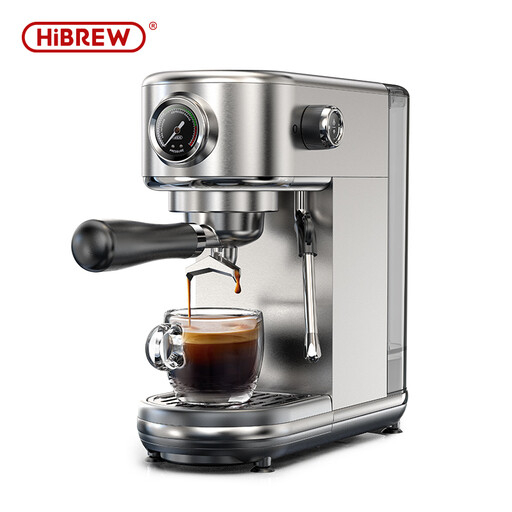
HiBREW H10B Semi Automatic Espresso Machine, 20Bar, Stainless Steel
An option for participants who want to make their own coffee; the product name describes it as a semi-automatic espresso machine.
20 bar; stainless steel finish.
View at Joybuy
 No image available
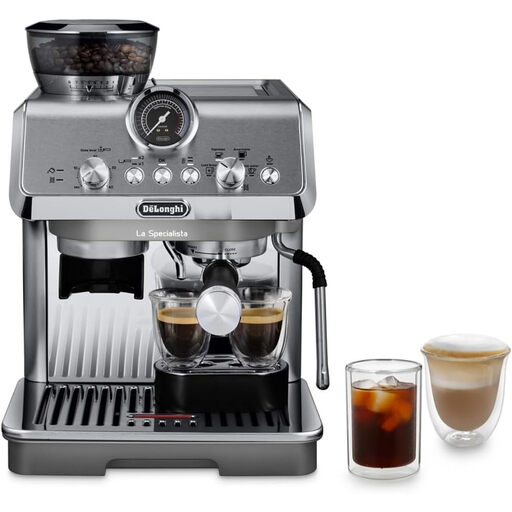
De’Longhi La Specialista Arte Evo EC9255.M EX:2
A good fit for a workshop where participants want to practise the manual steps involved in making espresso.
The product name lists 15 grind settings, a MyLatteArt steam wand and Cold Extraction Technology.
View at Joybuy
 No image available
Philips 5500 Series EP5547/90 LatteGo Coffee Machine
A bean-to-cup machine may be a good fit if, after a short introduction, participants mainly want to choose and make a drink themselves.
The title lists the LatteGo system. Check the model number and corresponding features for the exact version.
View at Joybuy
 No image available
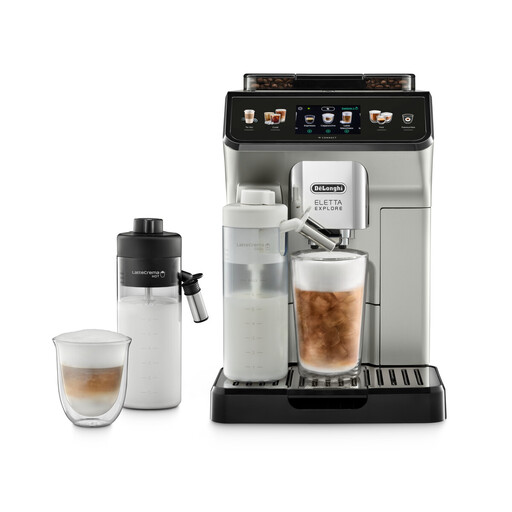
De’Longhi Eletta Explore ECAM450.65 Bean-to-Cup Coffee Machine
An automatic bean-to-cup machine for a workshop where participants mainly want to choose and make a drink.
The product name lists the LatteCrema System, a silver finish and 13 Drinks.
View at Joybuy
 No image available
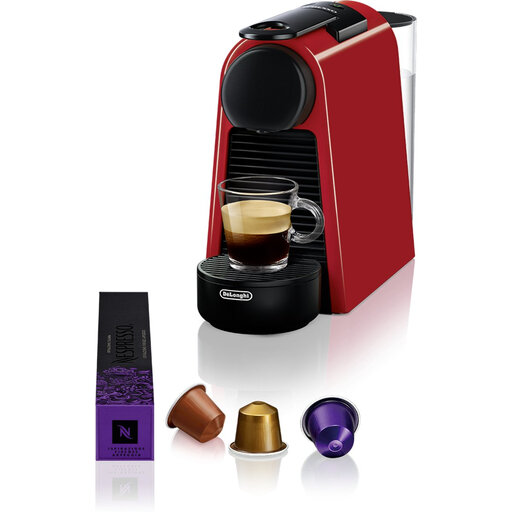
Nespresso Original, De’Longhi EN85.R Essenza Mini, Red
A compact option when espresso is just a quick step in an iced latte recipe; you’ll also need cold milk and ice.
The product name lists a 0.6 l tank. This model doesn’t have an automatic milk system. Capsules mean ongoing coffee costs; the Consumers’ Association points out that beans cost less than coffee pods.
View at Joybuy
Frequently asked questions
Does a machine need to cold-extract coffee for an iced latte?
No, cold extraction isn’t necessary for an iced latte. Nespresso’s iced latte recipe combines espresso with ice and cold milk; cold extraction is a different preparation method.
How should you handle cold milk during the workshop?
Keep cold milk chilled and put it back in the fridge as soon as possible after use. The Netherlands Nutrition Centre advises keeping perishable products such as milk at 4 °C where possible, and not leaving them out of the fridge for more than 2 hours.
What food safety rules apply if you sell drinks during the workshop?
According to the Netherlands Food and Consumer Product Safety Authority (NVWA), businesses that sell food to consumers more than once a year must register and work with a food safety plan or hygiene code. Whether this applies to a workshop depends on how it is actually run; calling it a workshop doesn’t determine that on its own.
What should you check for a machine’s electrical safety?
Check the CE marking and safety information for the exact version. The European Union explains that the Low Voltage Directive applies to electrical equipment within the relevant range, including equipment with a rated voltage of 50–1,000 V AC.
Is two years the full statutory guarantee in the Netherlands?
No. ACM ConsuWijzer explains that the statutory guarantee depends on what you could reasonably expect from the product under normal use. If a product is faulty, the seller is responsible for providing an appropriate solution.


