The best choice depends on how much preparation, space and cleaning you’re happy to share with your housemates. A capsule machine keeps making espresso simple; a fully automatic machine grinds beans without you having to dose and tamp them by hand; and a manual espresso machine gives you more control but involves more work. For an iced latte, you can combine espresso with ice and cold milk. Also check the dimensions, maintenance requirements, coffee system and safety information for the exact model.
Which machine is right for you?
The busy kitchen-sharer
You want to make an espresso shot, add cold milk and ice, then quickly clear the shared worktop. The Consumers’ Association recommends considering the space available and how many cups you’ll be making when choosing an espresso machine.
The bean-to-cup coffee-sharer
You regularly make coffee for several people and want freshly ground beans without the steps involved in using a manual espresso machine. You can agree with your housemates on who’s responsible for cleaning and descaling.
The iced latte experimenter
You want to control how your espresso is made, or you’re specifically looking for a model with a separate cold-extraction function. You’re happy to take on the extra preparation and cleaning.
What should you look for when choosing?
| What to consider |
What should you check? |
Who should pay particular attention? |
| Quick to make and tidy away |
Count the steps involved in making your drink and check which parts need emptying or cleaning afterwards. |
If I want to clear the shared worktop quickly after making a drink, I focus on the steps involved and the clean-up. Around 33% of consumers prioritise speed and tidying up straight away. |
| Your coffee base |
Check whether the model makes espresso and whether it has a separate cold-extraction function if you want to use one. |
If I want to choose how to make the coffee base for my iced latte, I look at the available brewing options. Around 27% of consumers prioritise cold coffee options. |
| Worktop space |
Measure the available space and leave room to remove the water tank and drip tray, as well as space for your glass. |
If I share the worktop with housemates, I want to leave enough room to work alongside the machine. Around 20% of consumers prioritise having clear worktop space. |
| Coffee system and maintenance |
Check what type of coffee you need and which parts require regular cleaning or descaling. |
If I want to know what I’ll need to keep buying and maintaining for my chosen system, I compare the routine with how I use it. Around 20% of consumers give this their highest priority. |
Common buying mistakes
-
Mistaking a steam wand for a cold-milk function
A steam wand is designed for making hot milk drinks; it won’t make cold milk for your iced latte.
Decide whether you’ll add cold milk separately or really want a dedicated cold function.
-
Assuming all coffee capsules are interchangeable
Nespresso distinguishes between Original and Vertuo; the Essenza Mini is part of the Original range.
Check the system name of the exact machine before choosing capsules.
-
Measuring only the machine’s width
A machine may fit on your worktop, but you’ll still need extra space to fill it, make your drink and empty it.
Measure the available space and check how the tank and drip tray are removed. Leave room for your glass and ingredients, too.
Brands to consider
Nespresso
Original capsule machines, such as the Essenza Mini, are an option if you want to make espresso quickly and add cold milk yourself.
- Nespresso describes the Essenza Mini as compact and suitable for espresso and lungo.
- According to Nespresso, this model doesn’t have an integrated milk frother. Also check which capsule system the machine uses.
Philips
The Philips EP2220/10 is a fully automatic machine for anyone who wants to make coffee from freshly ground beans without dosing and tamping by hand.
- Philips lists a built-in grinder, adjustable strength and volume, and a classic milk frother for this model.
- The milk frother uses steam. Cleaning and descaling are part of using the machine; the frother doesn’t make cold milk.
De’Longhi
The Dedica is a manual machine for anyone who wants to prepare espresso themselves and needs to consider the space available on the worktop.
- For the EC685.BK EX:4, De’Longhi lists a width of 149 mm, a removable drip tray and manual milk frothing.
- These dimensions and features apply to the specified model and aren’t guaranteed to apply to other De’Longhi machines.
Cuisinart
The EM160E is a manual espresso machine for anyone looking specifically for a cold-extraction function as well as espresso.
- Cuisinart lists cold extraction, a steam wand, ground coffee and a removable 1.5-litre water tank for the EM160E.
- The manufacturer’s claim about cold extraction isn’t based on an independent taste test. The machine requires manual preparation; check the availability of the exact model.
Joybuy products
This selection includes machines for espresso and different ways of making coffee, including capsule machines, semi-automatic models and a manual espresso maker. For an iced latte, add ice and cold milk separately if your machine doesn’t handle those steps itself.
 No image available
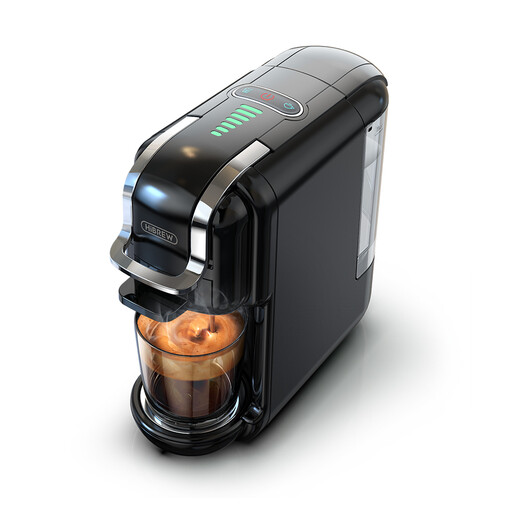
HiBREW H2B 5-in-1 Hot/Cold Coffee Machine, 20Bar, Black
An option if you’re looking for an espresso machine that, according to the product name, combines several ways of making coffee.
The product name lists 5-in-1, hot/cold, 20Bar and black, and mentions ground coffee and ESE pods.
View at Joybuy
 No image available
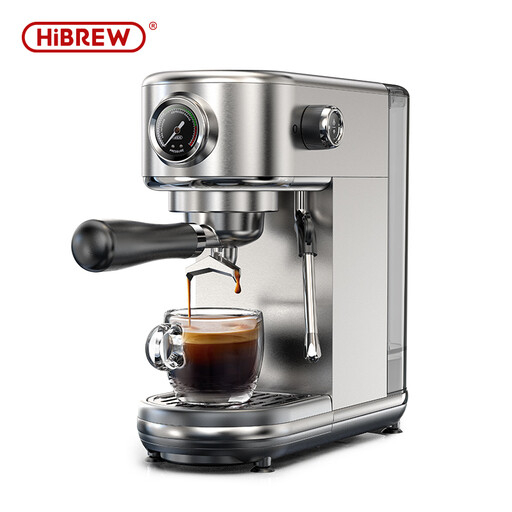
HiBREW H10B 20Bar Semi-Automatic Espresso Machine, Stainless Steel
A good fit if you’re looking for a semi-automatic espresso machine and want to consider a cold-brewing option, too.
The product name lists 20Bar, adjustable hot/cold brewing and stainless steel.
View at Joybuy
 No image available
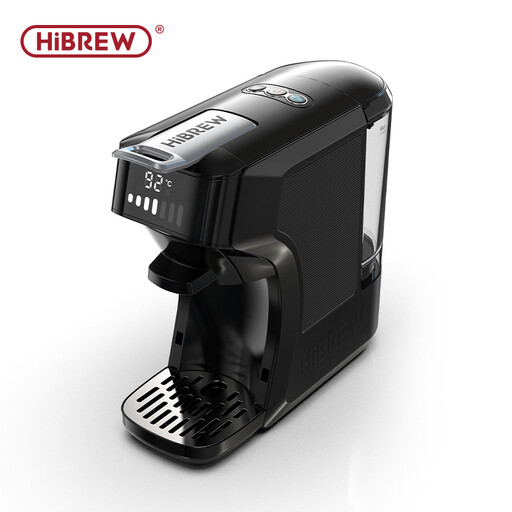
HiBREW H1C 6-in-1 Capsule Coffee Machine, 20Bar
An option if you want to pair espresso with a choice of different capsules or ground coffee.
The product name lists 6-in-1, 20Bar, hot and cold brew modes, and compatibility with several types of pods and coffee powder. The description lists 6–8 oz cups and states that mugs taller than 3.8 inches won’t fit.
View at Joybuy
 No image available
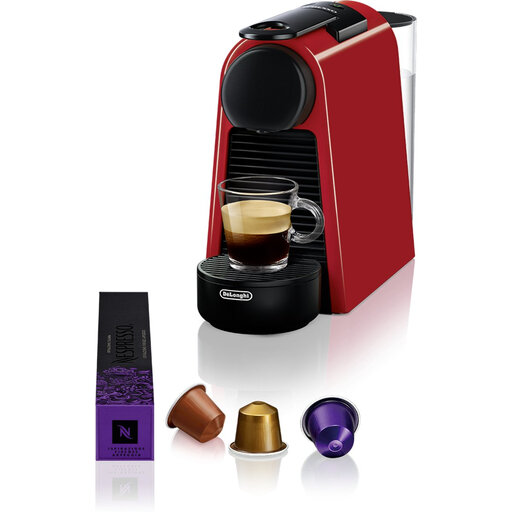
Nespresso Original De’Longhi EN85.R Essenza Mini, 0,6 Liter, Rood
A good choice if you’re looking for a Nespresso Original espresso machine and will add cold milk separately to your iced latte.
The product name lists a capacity of 0.6 litres and the colour red. Check that your capsules are compatible with the Original system.
View at Joybuy
 No image available
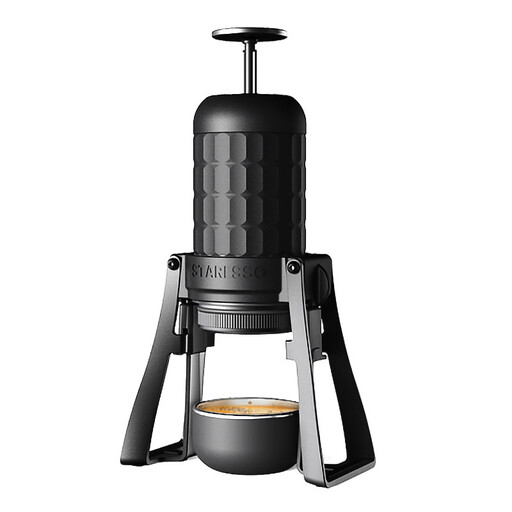
STARESSO Manual Portable Espresso Maker, Non-Electric
A good fit if you want to make espresso by hand without needing an electrical connection.
The product name lists compatibility with ground coffee, a pressurised filter and a non-electric design. The machine is operated manually; after use, its parts need to be taken apart and rinsed.
View at Joybuy
Frequently asked questions
Do you need a cold-milk programme for an iced latte?
No, you can combine espresso with ice and cold milk that you add yourself. A steam wand or hot-milk programme is mainly useful if you also want to make hot milk drinks.
What should you agree with housemates about using and cleaning the machine?
Agree on who clears away used capsules or coffee grounds, and who takes care of the drip tray, any milk components and descaling. Maintenance requirements vary by model, so consult the manual.
How should you store milk for iced lattes?
The Netherlands Nutrition Centre advises returning milk and other chilled products to a fridge at 4 °C as soon as possible. Also follow the storage and use-by information on the packaging.
How can you check whether capsules fit an espresso machine?
Check the capsule system used by the exact machine before choosing capsules. Nespresso distinguishes between Original and Vertuo; the Essenza Mini is part of the Original range.
Is CE marking required for an electric espresso machine sold in the Netherlands?
CE marking is compulsory for electrical products covered by the applicable regulations. For the Low Voltage rules, the Netherlands Food and Consumer Product Safety Authority (NVWA) includes electrical equipment with a nominal AC voltage of 50 V to 1000 V. Check whether the rules apply to the specific appliance; CE marking is a declaration by the manufacturer and isn’t, by itself, the result of an independent inspection.


