
Team with busy coffee breaks
Wants colleagues to be able to make espresso quickly, so ease of use and the capacity of the specific model are important. JURA publishes recommended capacities for its professional workplace solutions.


First, choose a machine to suit the number of users, peak times and who will take care of maintenance. Capsules require very little preparation, a fully automatic machine reduces the work involved in each cup, while a portafilter machine suits colleagues who want to make espresso themselves. Then decide whether you want espresso poured over ice, a specific iced coffee recipe or cold-water extraction; these are different ways of making coffee.
Wants colleagues to be able to make espresso quickly, so ease of use and the capacity of the specific model are important. JURA publishes recommended capacities for its professional workplace solutions.
Want to know whether a machine makes espresso to serve over ice, has a dedicated iced coffee recipe or makes coffee using cold-water extraction. These are different functions.
Needs to agree who will clean the machine, store milk, manage supplies and arrange servicing, so maintenance remains manageable with multiple users.
First, work out how many colleagues will use the machine and how busy coffee breaks get. Then choose how you want to make iced coffee and agree who will refill and clean the machine.
| What to consider | What should you check? | Who is this most important for? |
|---|---|---|
| Ease of use and capacity | Compare the steps involved in making each cup and check the recommended capacity of the specific model. | If colleagues get coffee at the same time, I want a machine that is easy to use and suits the level of demand. Around 31% of consumers prioritise ease of use and capacity. |
| How it makes iced coffee | Check whether the model offers espresso over ice, an iced coffee recipe or cold-water extraction. | I want to know exactly what will be in my glass: espresso over ice is not the same as coffee extracted with cold water. Around 25% of consumers choose primarily according to their preferred way of making cold coffee. |
| Cleaning routine | Check which parts need cleaning after use or at regular intervals, and who will do it. | As someone sharing the machine, I want it to be clear who cleans it and for the routine to be manageable. Around 25% of consumers give top priority to maintenance that is easy to keep up with. |
| Running costs and servicing | Compare ongoing costs for the same expected number of cups, and ask which service terms apply. | I want a clear picture of the costs of capsules or beans, cleaning products and servicing in advance, especially for business use. Around 19% of consumers focus mainly on ongoing costs and service terms. |
A recipe made with ice cubes and cold-water extraction are two different ways of making coffee.
Read the description of the specific model and check how it makes cold drinks.
Easy operation on its own does not prove that a machine will suit an office’s daily use or peak times.
Estimate the number of cups and identify busy periods, then compare them with the capacity and usage guidance for your chosen model.
At busy times, refilling, cleaning or servicing may take extra time, so factor these tasks into your plans.
Capsule and bean systems use different supplies, and a fully automatic machine also needs maintenance.
Compare the cost per cup based on the same expected usage, and allow for cleaning products and any servicing.
According to Philips, the 3300 EP3326/90 combines espresso with an iced coffee recipe. Check this feature against the model number.
The Vertuo Pop is a capsule option for a small team that wants to make espresso with very few steps.
The Barista Express Impress is a semi-automatic option for users who want more control over making their espresso.
JURA offers professional fully automatic machines for workplaces, as well as a separate Z10 model with Cold Extraction.
The Magnifica Evo Next ECAM312.80.TB is a bean-to-cup machine; De'Longhi also lists the Vertuo Pop ENV90.Y as a capsule machine.
This selection includes capsule machines and fully automatic bean-to-cup machines for espresso and coffee served over ice. Check the preparation method you want for each model, and agree which tasks the team will take on.
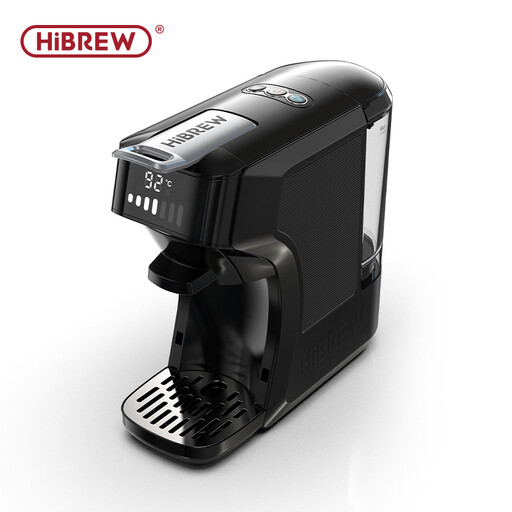 Image unavailable
Suited to a shared area where users want to use different capsule formats or ground coffee.
The product description lists support for multiple capsule types and ground coffee, hot and cold modes, and an extraction pressure of 20 bar. The recommended cup size is 6–8 oz; according to the description, cups taller than 3,8 inch cannot be used. Check which cold preparation method is meant.
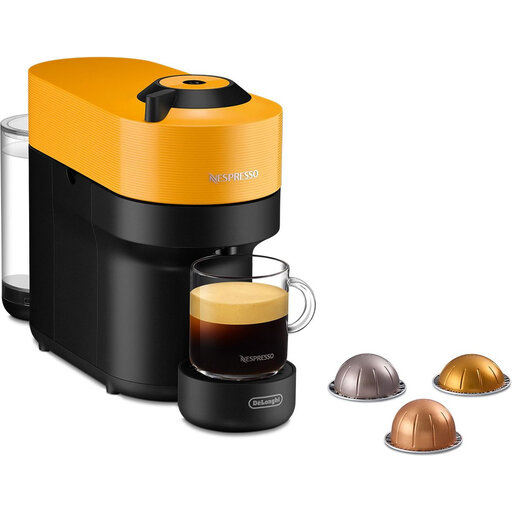 Image unavailable
Suited to a small team that wants to make espresso with compatible Vertuo capsules in just a few steps.
The machine recognises Vertuo capsules and adjusts its brewing settings accordingly. The listed cup sizes are espresso (40 ml), double espresso (80 ml), gran lungo (150 ml) and mug (230 ml); capacity is 0,6 litres.
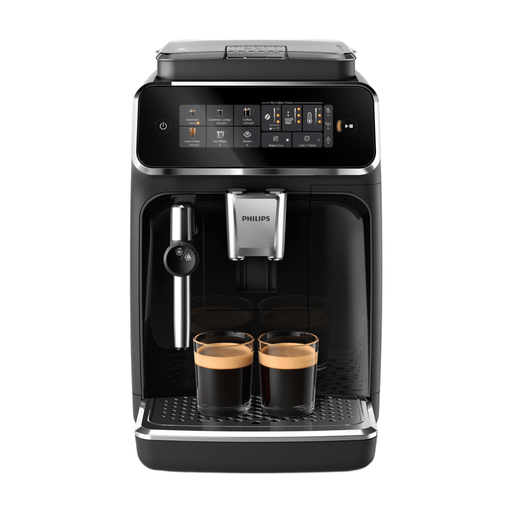 Image unavailable
Suited to a shared coffee area where users want to make espresso at the touch of a button.
The product description mentions iced coffee; check the manual to see how it is made. Listed specifications include a ceramic grinder with 12 grind settings and a classic milk frother.
 Image unavailable
Suited to colleagues looking for a fully automatic espresso machine that can use different beans.
The product description lists two interchangeable bean hoppers, Bean Adapt Technology, a touchscreen and automatic milk drink preparation with LatteCrema Hot.
 Image unavailable
Suited to a shared area where colleagues want a choice of drinks and the option to use profiles.
The product description lists 20 drinks, including iced cappuccino, two user profiles and QuickStart. Philips recommends rinsing LatteGo after each use. Check the preparation method if cold-water extraction is important to you.
No. Philips describes the EP3326/90 as having an iced coffee recipe to which you add ice cubes; JURA describes the Z10 as using cold-water extraction. Check how the specific model makes its drinks rather than relying on the word ‘cold’ alone.
Appoint someone to take responsibility and follow the manual for your chosen machine. For its espresso machines, Philips recommends, among other things, rinsing the brew group weekly and cleaning LatteGo after every use. These are the manufacturer’s instructions, not general cleaning schedules for every brand.
After use, promptly return opened milk to a fridge at 4 °C, as recommended by the Voedingscentrum. Clean the milk components you have used according to the machine’s manual.
The guidance from the Authority for Consumers and Markets (Autoriteit Consument & Markt) on the statutory guarantee applies to sales to consumers and does not support automatic application to a purchase made on behalf of a business. Before buying, ask the seller which business guarantee, repair and service terms apply.
Ondernemersplein explains that electrical appliances placed on the market must comply with the applicable European product rules. After an assessment, the manufacturer affixes the CE marking and draws up an EU declaration of conformity. Arboportaal describes a duty to maintain work equipment. The NVWA rules for selling food and drink do not automatically apply to coffee that colleagues prepare only for themselves.