
Host with a queue of coffee drinkers
You want to make several milk drinks during a neighbourhood meal and, above all, know how many steps and how much milk preparation each additional cup involves.


For making several honey lattes, a bean-to-cup machine with automatic milk preparation is a sensible choice if you want to spend less time frothing milk by hand while serving. A portafilter machine is better if you want to control the preparation yourself, while capsules are mainly suited to occasional use. None of these machines needs a honey function: add honey to the glass according to the recipe consulted, then weigh up the controls, cleaning and ongoing costs.
You want to make several milk drinks during a neighbourhood meal and, above all, know how many steps and how much milk preparation each additional cup involves.
You want to prepare espresso and milk foam to your own taste, and are happy to do some hands-on work for each drink.
You’re looking for a straightforward machine for the occasional milk drink and want to weigh up the purchase price, capsules and cleaning together.
Choose this option if: you want to make milk drinks for guests one after another without frothing every cup yourself with a steam wand.
Bear in mind: the milk components need cleaning, and you’ll need space for the machine and milk container. Automatic operation alone doesn’t tell you how long it will take to serve a whole group.
Choose this option if: you want the machine to make coffee from beans automatically, but prefer to froth the milk separately; the Philips EP3326/90 is one example.
Bear in mind: making the coffee and preparing the milk are separate steps. Check the milk system for the full model number.
Choose this option if: you want to make espresso yourself and control the milk foam; the Sage Bambino Plus has an automatic steam wand.
Bear in mind: dosing the coffee and working with the portafilter are still part of the process, even when the milk frothing is automatic.
Choose this option if: you’re mainly looking for a simple way to make one cup at a time and will only use the machine occasionally.
Bear in mind: the capsule system determines which capsules you need, so factor recurring purchases into your decision.
For people making several honey lattes at home for guests, the choice comes down to the work involved for each cup, milk preferences, cleaning, control over preparation and running costs.
| Consideration | What to look for when buying | Who is it important to? |
|---|---|---|
| Several drinks in a row | Check the milk controls and the steps involved between drinks; don’t take the reservoir capacity as proof of speed. | If I want to serve several milk drinks during a meal, I want as few steps as possible for each additional cup. Around 29% of consumers prioritise making several drinks in a row. |
| Milk for different guests | Check the milk system and which types of milk or plant-based drinks are suitable according to the manual. | If guests want different milk drinks, I want to choose how I prepare the milk. Around 23% of consumers put this flexibility first. |
| Parts that come into contact with milk | Check which parts need cleaning after use and which cleaning steps apply to the exact model variant. | I don’t want to be left with a fiddly milk-cleaning routine after serving. Around 18% of consumers prioritise easy cleaning of milk components. |
| Controlling the preparation yourself | Find out whether you need a grinder, who will operate the machine and whether you want to froth the milk yourself. | If I want to adjust the espresso and foam myself, I’m happy to do extra steps for each cup. Around 18% of consumers mainly choose a machine for the control it gives them over preparation. |
| Purchase price and ongoing use | Compare the machine with the coffee or capsules it needs and the maintenance involved; check the capsule system for the exact model variant. | I’ll use the machine after the meal too, so I want to factor in ongoing costs. Around 12% of consumers put this cost comparison at the heart of their decision. |
The Philips EP3326/90 makes coffee automatically, but has a classic milk frother. Other versions in the same range may have a different milk system.
Before buying, check the full model number and the corresponding milk system.
If you’ll use the machine after the neighbourhood meal too, the cost of the capsules it needs should also factor into your decision.
Weigh your expected use against the recurring cost of buying compatible capsules.
Capsules are an ongoing running cost; check which system the machine uses.
In the recipe consulted, honey is added to the glass. That doesn’t mean it belongs in a milk container or an internal component.
Add the honey to the glass and follow the machine manual for the milk system.
The reservoir capacity tells you how much water it holds, but not how long it takes to make successive milk drinks.
Also consider the controls and the steps between cups; don’t assume the machine will be quick for a group just because it has a larger reservoir.
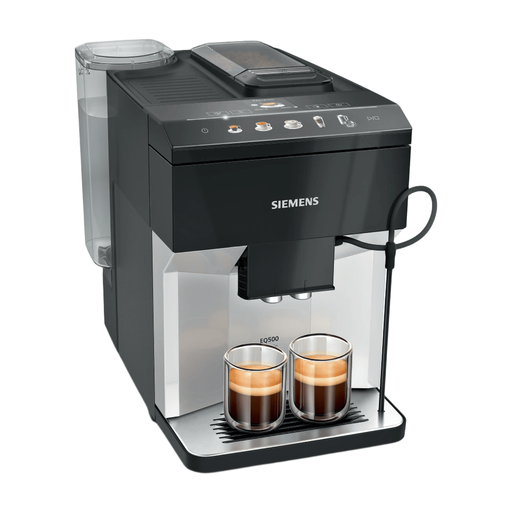
The Siemens EQ500 TP515R01 is a bean-to-cup machine that makes milk drinks at the touch of a button. Siemens says the machine can use milk from a carton or a suitable container.
The Philips 3300 EP3326/90 combines automatic coffee preparation from beans with a classic milk frother.
The Bambino Plus is a portafilter machine for anyone who wants to make espresso with a portafilter and use an automatic steam wand.
The Original Lattissima One is a capsule option for anyone who mainly wants to make milk drinks simply and occasionally.
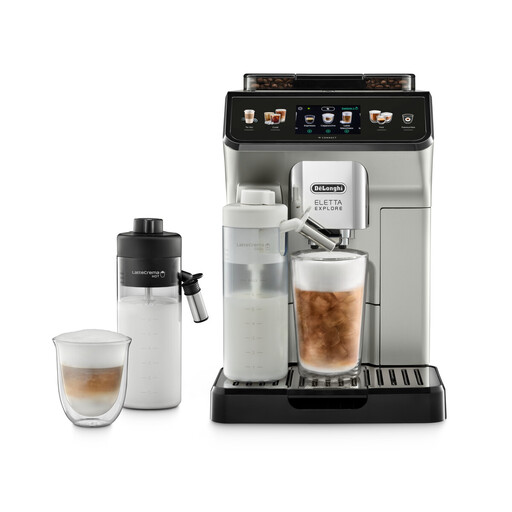
The product ranges differ: Dedica portafilter machines have a steam wand, while the Eletta Explore ECAM450.65.S EX:4 is a bean-to-cup option.
These models are bean-to-cup machines with automatic milk preparation for serving milk drinks. Add honey to the glass; it isn’t a separate machine function.
 No image available
Ideal if you want to make lattes and cappuccinos while serving, with little hands-on milk frothing.
Fully automatic espresso machine with a Cappuccinatore milk system and milk supplied through a tube. The product information recommends rinsing the milk system daily and cleaning the brew group weekly.
 No image available
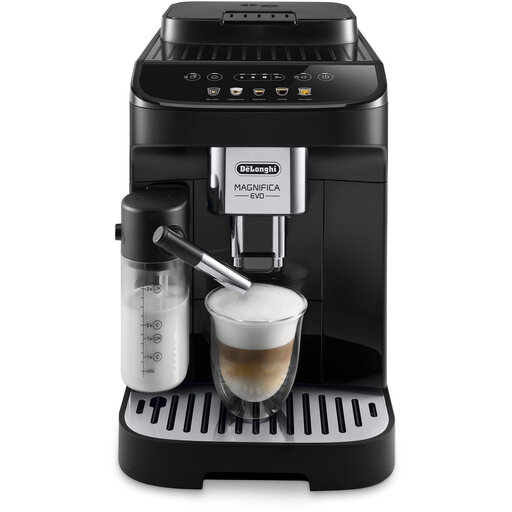
Ideal if you want to make milk drinks automatically and remove the milk container after use.
The product name lists five one-touch drinks and LatteCrema Hot. According to the product information, the milk container can be removed after use and kept in the fridge; also follow the cleaning instructions for this model.
 No image available
Ideal if you want automatic milk preparation and the option to switch between different types of coffee.
The product name lists the LatteCrema Hot milk system and a bean-switching system. The milk container needs to be filled and connected to make milk drinks.
 No image available
Ideal if you want to make milk drinks at the touch of a button and adjust the drink settings.
The product name lists the LatteGo milk system. The product information mentions adjustable coffee and milk volumes; according to that information, the LatteGo parts can be rinsed under the tap or cleaned in the dishwasher.
 No image available
Ideal if you’re looking for a bean-to-cup machine with LatteCrema for milk drinks, as well as honey lattes for guests.
The product name lists LatteCrema and 13 drinks. Check the cleaning instructions for the exact model variant before use.
No, you don’t need a special honey programme for honey lattes. In the recipe from De’Longhi Coffee Lounge, honey is added to the glass before the espresso is made; follow your machine’s manual for the milk system.
Follow the instructions for your exact machine and milk system. Philips recommends rinsing or washing LatteGo parts after every use; this advice doesn’t automatically apply to other systems.
Keep pasteurised milk chilled, as recommended by the Voedingscentrum. For opened cartons, also check the storage advice on the packaging.
Don’t give honey to a child under one year old. The Voedingscentrum warns that honey can be contaminated with a bacterium that can make children under one seriously ill.
Not simply because you’re hosting guests privately. The NVWA guidance on selling food or drink from home applies to those sales activities and includes requirements such as safe food handling and allergen information. Check any sales or catering activity separately against the relevant requirements. As a practical precaution, ask about milk allergies even when hosting a private meal.