Which type of machine is right for you?

A quick latte after class

You want to make an espresso with milk in just a few steps, without spending ages cleaning the milk components afterwards. The Consumentenbond describes bean-to-cup and capsule machines as options for anyone who values convenience.

Take control of the preparation

You’re happy to put in the extra effort of dosing the coffee and frothing the milk for greater control over how your drink is made. The Consumentenbond describes a manual espresso machine as an option that lets you be your own barista.

Keep an eye on running costs

You weigh the cost of the machine against the price of capsules or beans, based on how many cups you drink. The Consumentenbond points out the difference between the purchase price of capsule machines and the cost of coffee per cup.

What should you look for when choosing?

Bean-to-cup machine with a milk system

A good fit if: you want to make a milky drink after class without frothing the milk yourself.

Consider: check which milk drinks the exact model can make and how its milk components need to be cleaned.

Capsule machine with a milk function

A good fit if: you usually want one quick milky drink and prefer to use capsules.

Consider: the Consumentenbond says capsule machines generally cost less to buy than bean-to-cup machines, but capsules are more expensive than beans.

Manual espresso machine with a milk frother

A good fit if: you want to make espresso and froth milk yourself.

Consider: grinding, dosing or frothing the milk involves extra steps, and not every model has a built-in grinder.

What to consider What to check before you buy Who this matters to
Fewer preparation steps Check whether the exact model prepares milk automatically and which milk drinks it can make. After an evening class, I want to make an espresso with milk without too many steps; around 33% of consumers prioritise ease of preparation.
Milk preparation and cleaning Compare how to clean the milk container, milk system or steam wand on the exact model. If I want to prepare milk but also need to clean the components quickly afterwards, maintenance matters; around 27% of consumers prioritise milk preparation and cleaning.
Running costs Compare the machine, coffee supply and the number of cups you drink over the same period. I want to weigh up the costs based on how often I make coffee; around 20% of consumers prioritise the total cost of use.
Coffee in the evening Check which decaffeinated coffee is suitable for your chosen bean or capsule system. If you want to keep caffeine in mind in the evening, check which coffee works with your system; around 20% of consumers make their evening coffee preference their top consideration.

Common buying mistakes

  • Assuming a milk-drink button means there’s no maintenance

    Even with automatic milk preparation, the milk components still need attention after each use.

    Compare the cleaning steps for the exact model, rather than looking only at how many steps are involved in making a drink.

  • Comparing only the purchase price

    A lower purchase price alone doesn’t tell you how much the machine will cost to use. The Consumentenbond says capsules cost more per cup than beans.

    Compare the machine and coffee supply for the same number of cups over the same period of use.

  • Assuming similar product titles mean the models are identical

    A different or incomplete model code could mean the product information doesn’t match the model you’re looking at.

    Check the full model code and compare the product information with the exact model you want to buy.

Brands to consider

Philips

The EP2333/40 is an example of a bean-to-cup machine with an automatic LatteGo milk system, suited to anyone who values convenience.

  • Philips describes this model’s milk system as having two parts and no tubes.
  • Check the cleaning instructions for the exact model, as features and maintenance requirements vary.

De'Longhi

The Dedica Style EC685.BK EX:4 is an example of a compact manual espresso machine for anyone who wants to prepare espresso and milk themselves.

  • The specifications for this model list a width of 149 mm and an adjustable manual cappuccino system.
  • These features don’t automatically apply to other Dedica models, so check the full model code.

Nespresso

The Lattissima One is an example of a capsule machine with integrated milk preparation for a single milky drink.

  • Nespresso describes its operation as a one-touch process and says the milk container is dishwasher-safe.
  • The milk container still needs cleaning, and you’ll also need to factor in the ongoing cost of capsules.

Sage

The Barista Express BES875 is designed for anyone who wants to adjust the settings and prepare milk by hand.

  • Sage lists 16 grind settings and a 54 mm portafilter for this model.
  • More settings don’t necessarily mean fewer steps after an evening class.

Joybuy products

This selection focuses on fully automatic espresso machines with milk preparation, so you can make a latte with minimal hands-on effort. Check the applicable conformity information for the exact model: according to the European Commission, a product listing alone does not prove that it complies with the relevant EU rules.
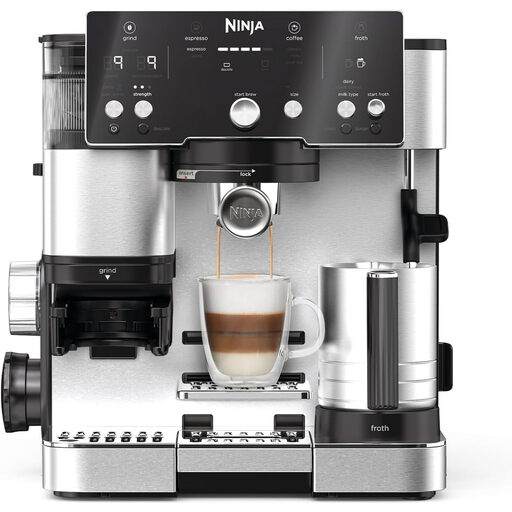
Ninja ES501EU Luxe Café espresso machine with grinder and milk frother

Ninja ES501EU Luxe Café espresso machine with grinder and milk frother

The product information lists automatic milk frothing and a built-in grinder for espresso with milk.

Wipe the outside of the steam wand after use; the automatic rinse cleans the inside.

View at Joybuy
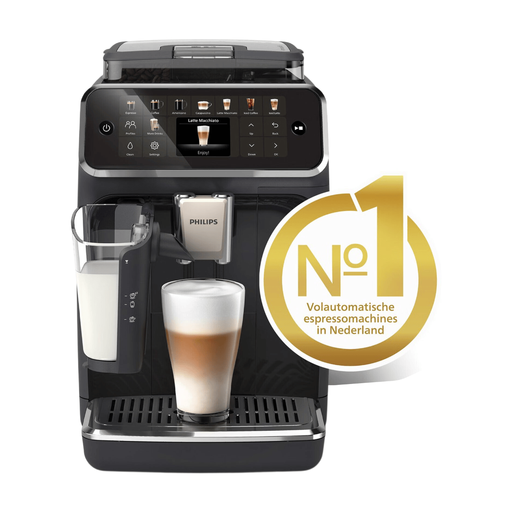
Philips EP5541/50 Series 5500 LatteGo fully automatic espresso machine

Philips EP5541/50 Series 5500 LatteGo fully automatic espresso machine

LatteGo is the milk preparation system for anyone who wants to make a latte without frothing the milk themselves.

The product information lists 12 grind settings and notes that extra cleaning is required.

View at Joybuy
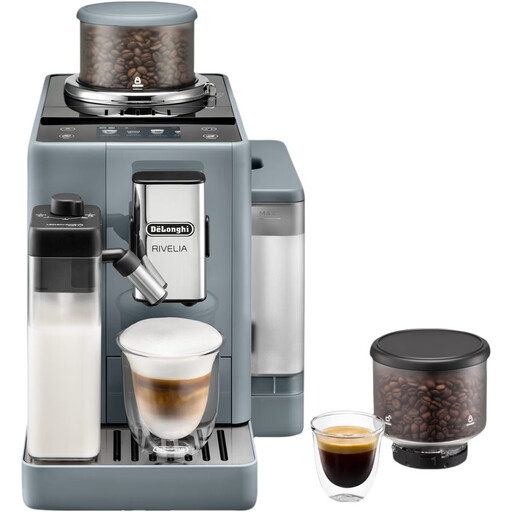
De’Longhi Rivelia EXAM440.55.G fully automatic espresso machine with LatteCrema

De'Longhi Rivelia EXAM440.55.G fully automatic espresso machine

Automatic milk preparation is ideal if you want to make an espresso with a milky drink without frothing the milk yourself.

The product information lists two interchangeable bean hoppers. To make a milky drink, the milk container needs to be filled and connected.

View at Joybuy

De’Longhi ECAM290.61.SB Magnifica Evo fully automatic coffee machine

De'Longhi ECAM290.61.SB Magnifica Evo fully automatic coffee machine

The product information lists automatic preparation of milk drinks, making it a good choice if you want to make a latte with minimal hands-on effort.

The milk container is removable. If you want to store it in the fridge, place it there separately.

View at Joybuy
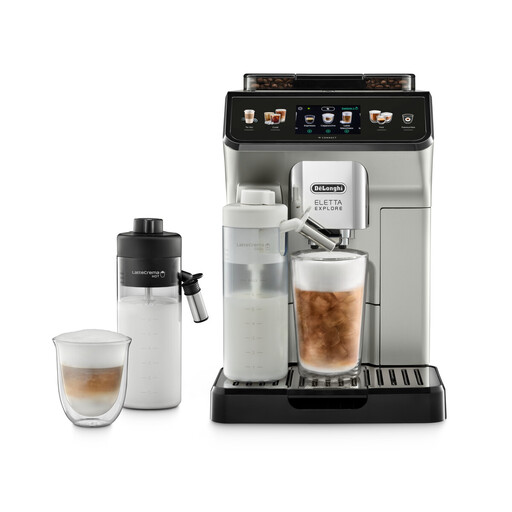
De’Longhi Eletta Explore ECAM450.65 fully automatic espresso machine with LatteCrema

De'Longhi Eletta Explore ECAM450.65 fully automatic espresso machine

The product information lists automatic milk preparation for hot milk drinks, including lattes.

Some components are removable. Automatic cleaning is mentioned, but no specific cleaning time is given.

View at Joybuy

Frequently asked questions

Does the machine need a special honey latte programme?

No, just add honey to your prepared drink. Check the manual before putting ingredients in the machine or milk container.

What should you clean after making a milky drink?

It depends on the milk system. Philips describes the EP2333/40 as having a removable LatteGo system, while Nespresso says the Lattissima One has a dishwasher-safe milk container. Check the cleaning instructions for the exact model and clean the milk components after use.

Is a capsule machine always cheaper?

No. The Consumentenbond says capsule machines generally cost less to buy, but capsules are more expensive per cup than beans. Which option costs you less depends partly on how many cups you make.

What does the CE marking mean on an electric espresso machine?

For equipment covered by the relevant EU rules, the required CE marking is one of the conditions for placing the product on the EU market. The European Commission explains that the manufacturer is responsible for the declaration of conformity; a product listing alone does not confirm that a specific item on sale complies with the rules.

Can the caffeine in espresso affect your sleep?

It can for some people. The Netherlands Nutrition Centre gives around 40 mg of caffeine for a 30 ml espresso and notes that caffeine can cause sleep problems. If this is something you want to bear in mind, check which decaffeinated coffee is suitable for your chosen system.
