
Participants who want to learn how to froth milk
If you want to make espresso and froth milk yourself, the hands-on process can be part of the workshop. Sage and De’Longhi describe models with manual milk preparation.


If you want participants to make espresso and froth milk as part of the lesson, choose a portafilter machine with a steam wand. If making several milk drinks more easily is the priority, a bean-to-cup machine with a milk function is a better fit. A capsule machine with a milk function could be an option for occasional workshops, but you’ll need compatible capsules. Add the honey separately: a milk-drink programme doesn’t add honey.
If you want to make espresso and froth milk yourself, the hands-on process can be part of the workshop. Sage and De’Longhi describe models with manual milk preparation.
When participants take turns, ease of use may matter more than learning to froth milk by hand. Philips and Siemens describe bean-to-cup machines with milk-drink functions.
A simple machine may be appealing, but also check whether the capsules are compatible with your chosen system and how to clean the milk components. Consumentenbond and Nespresso outline points to consider for capsules and milk-system maintenance.
First decide whether participants will froth the milk themselves or mainly want to make a milk drink quickly. Then compare cleaning requirements and the supplies you’ll need for the number of drinks you expect to make.
| What to consider | What to look for | Who is this important for? |
|---|---|---|
| Making drinks by hand | Check whether the model has a steam wand and includes a grinder; allow time to practise. | If I want participants to make espresso and milk foam themselves, I’m happy for the process to involve more steps as part of the lesson. Making drinks by hand is the top priority for around 29% of consumers looking for a machine for this type of workshop. |
| Making drinks one after another | Check the espresso and milk functions on the exact model, and make sure your supplies of water, beans and milk are suited to your workshop plan. | If several participants are making a drink in turn, I want to keep the process simple. Being able to make drinks one after another easily is the top priority for around 29% of consumers looking for a machine for this type of workshop. |
| Cleaning the milk components | Check the cleaning instructions for the specific milk system and allow time for cleaning between sessions. | If I’m serving milk drinks one after another, I want to know how to keep the components clean. Cleaning is the top priority for around 21% of consumers looking for a machine for this type of workshop; Consumentenbond takes the cleaning of milk components into account when assessing milk drinks. |
| Supplies and running costs | Compare beans, ground coffee or capsules based on the planned number of drinks; also check whether you’ll need a separate grinder. | If I want to use the machine regularly, I want to factor in the ongoing supplies. Running costs are the top priority for around 21% of consumers looking for a machine for this type of workshop. |
Making espresso and frothing milk are separate functions; a milk-drink programme won’t add honey automatically.
Check the espresso and milk functions on the exact model, and add honey as a separate recipe ingredient.
If a machine doesn’t have a suitable milk function, you may need a separate milk frother or extra preparation time.
Capsule systems vary, and how often you run workshops will determine how many capsules you need.
Check capsule compatibility and compare the supplies you’ll need for the same planned number of drinks.
Capsules are an ongoing expense; what you’ll need depends on the system and how often you use it.
Even an automatic milk system needs its components cleaned. Consumentenbond takes the cleaning of milk components into account when assessing milk drinks.
Before you buy, read the cleaning instructions for the specific milk container or steam wand.
Allow time for cleaning and factor in any recommended cleaning products.
The 3300 EP3349/70 is a bean-to-cup option for making espresso and milk drinks at a workshop.
The Dedica Style and Dedica Duo are manual portafilter options for workshops where participants can see how drinks are made.
The Barista Express BES870 is a portafilter option where grinding beans and frothing milk can be part of the lesson.
The Lattissima One is a capsule machine with a milk function for anyone considering an easy-to-use option.
The EQ.500 TP551E07 is a bean-to-cup option with milk drinks and a separate choice of milk supply.
These espresso machines are suited to workshops where you combine espresso with frothed milk, either by hand or using an integrated milk function.
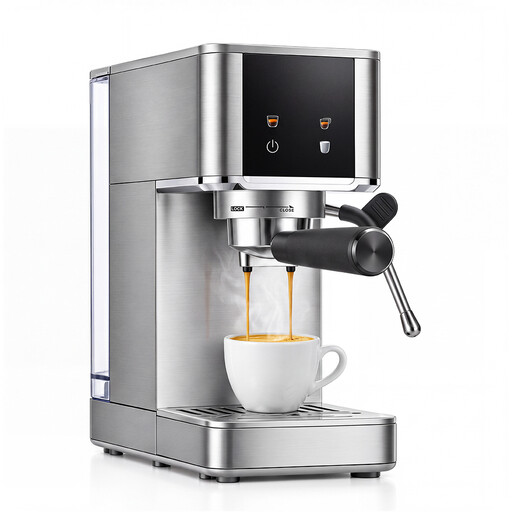 No image available
The combination of espresso and an integrated steam milk frother is a good fit for a workshop where you’ll be making milk drinks.
The Joybuy product description lists compatibility with capsules or ground coffee and a removable 1,4-litre water tank.
 No image available
A steam wand lets you include hands-on milk frothing in the workshop preparation.
The Joybuy product description lists an adjustable steam wand and a removable 1,1-litre water tank.
 No image available
This version is suited to a workshop where participants froth milk themselves using a steam wand.
The Joybuy product description lists a removable 1,5-litre water tank and a removable drip tray.
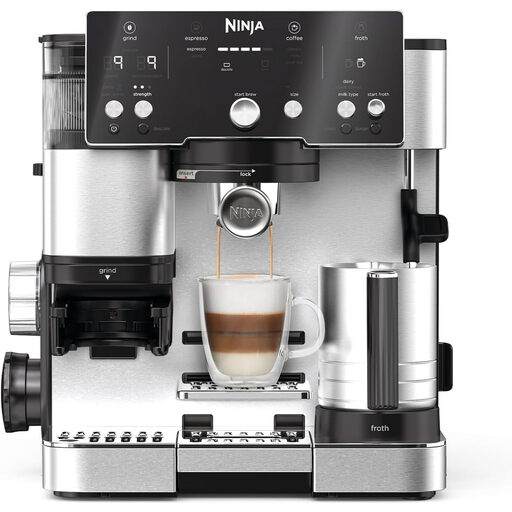 No image available
The combination of espresso, a built-in grinder and milk frothing is useful if grinding is part of the workshop too.
The Joybuy product description lists a portafilter and one cup per brew cycle; allow for separate cycles when running consecutive sessions.
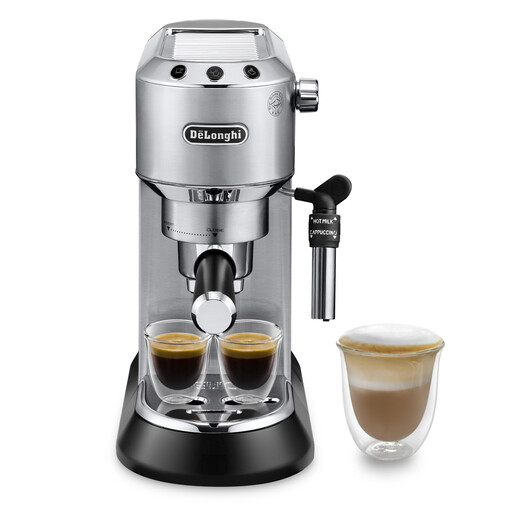 No image available
The manual milk frother is ideal for participants who want to froth milk themselves during the workshop.
The Joybuy product description lists a filter holder for two cups and a removable 1,1-litre water tank. According to the description, a separate filter, sold separately, is needed for E.S.E. pods.
Choose manual frothing if participants want to practise the skill; an automatic milk function is a better fit if keeping the number of steps per drink to a minimum is the priority. Whichever you choose, check how to clean the milk components.
If you prepare, process or sell food or drink as a food business, the Netherlands Food and Consumer Product Safety Authority says you must follow a HACCP food safety plan; you can use an approved industry hygiene code for this. This requirement doesn’t automatically apply to every private workshop.
The Netherlands Food and Consumer Product Safety Authority requires information about any allergens in unpackaged food offered for sale. This can be provided in writing or, subject to the conditions set out by the authority, verbally. Check the milk or plant-based alternative you’re using, and record the information for the specific drink.
For the planned number of drinks, compare how many beans, ground coffee or compatible capsules you’ll need. If you’re buying a portafilter machine, check whether you’ll need a grinder, and include any recommended cleaning and descaling products in your comparison.
No, don’t give honey to babies under 1 year old. Voedingscentrum advises against it because of the risk of infant botulism; this advice applies to this age group.