What should you look for when choosing?
First decide how much you want to do yourself for each cup: an automatic milk function cuts down on the steps, while a portafilter machine gives you more control over the preparation. A capsule machine is a third option if you only make a milk-based drink now and then.
Bean-to-cup machine with an automatic milk function
Best for: regularly making several milk-based drinks with minimal effort per cup.
Keep in mind: automatic preparation doesn’t mean you can skip cleaning the milk components.
Portafilter machine with a steam wand
Best for: frothing milk yourself and tailoring each drink to your guests.
Keep in mind: you’ll still need to dose the coffee and steam the milk yourself.
Capsule machine with a milk function
Best for: making a latte occasionally and keeping things simple.
Keep in mind: capsules aren’t necessarily compatible with every system, and you’ll need to factor in their ongoing cost.
| What to consider |
What should you check? |
Who is this important for? |
| Several milk-based drinks |
Check whether the exact model makes espresso and your preferred milk-based drink, what volumes you can set and what steps are needed between cups. |
If I make several lattes after a meal, I don’t want to steam each portion of milk separately. Around 36% of consumers prioritise convenience when making several cups. |
| Cleaning the milk components |
Check what needs rinsing or washing after every use, and whether any components can go in the dishwasher according to the instructions. |
If I want to tidy up quickly after a meal, I want to know in advance how much attention the milk component needs. Around 29% of consumers prioritise easy cleaning. |
| Taking control of the preparation |
Check whether the milk is frothed automatically or manually, how the machine prepares the coffee and which accessories are included. |
If I want to control the espresso and milk froth in each cup, I’m happy to put in a few extra steps. Around 21% of consumers put control over the preparation first. |
| Cost if you use it infrequently |
Compare the cost of the machine, compatible capsules or coffee, any milk accessories and maintenance against the number of cups you expect to make. |
If I only make a latte now and then, I want to factor in ongoing costs before choosing a capsule system. Around 14% of consumers prioritise the cost of occasional use. |
Joybuy products
This selection mainly features bean-to-cup machines with automatic milk preparation, plus one semi-automatic portafilter machine for anyone who wants to froth milk themselves.
 No image available
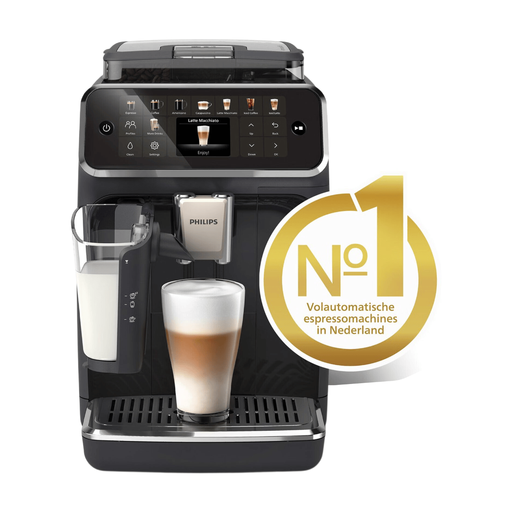
Philips EP5541/50 LatteGo Series 5500
This fully automatic model with LatteGo is designed for anyone who wants to make milk-based drinks with minimal effort.
The product name lists 20 drinks, a ceramic grinder with 12 settings, AquaClean and a 1.8 l tank.
View at Joybuy
 No image available
De’Longhi Rivelia EXAM440.55.G
Its automatic milk preparation suits anyone who wants to keep the steps per drink to a minimum at the table; the product description also mentions making two milk-based drinks at the same time.
The product name lists a LatteCrema Hot milk frother and a Bean Switch System. To make milk-based drinks, you’ll need to fill and connect the reservoir; follow the cleaning and descaling instructions.
View at Joybuy
 No image available
De’Longhi ECAM290.61.SB Magnifica Evo
The milk function and recipe selection suit anyone who wants to make a latte macchiato or cappuccino without frothing milk with a steam wand.
The product name lists an advanced milk frother and a touchscreen. Follow the maintenance alerts and descaling instructions.
View at Joybuy
 No image available
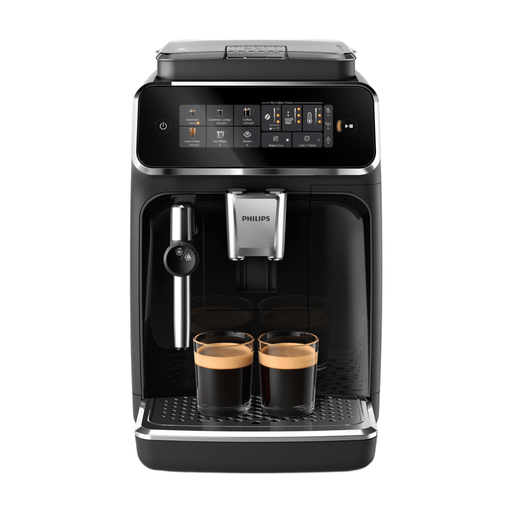
Philips 3300 Series EP3321/40
This machine suits anyone who wants the coffee made automatically and prefers to froth the milk themselves.
The product name lists four types of coffee, hot water and AquaClean. The classic milk frother requires a few extra steps using a separate jug.
View at Joybuy
 No image available
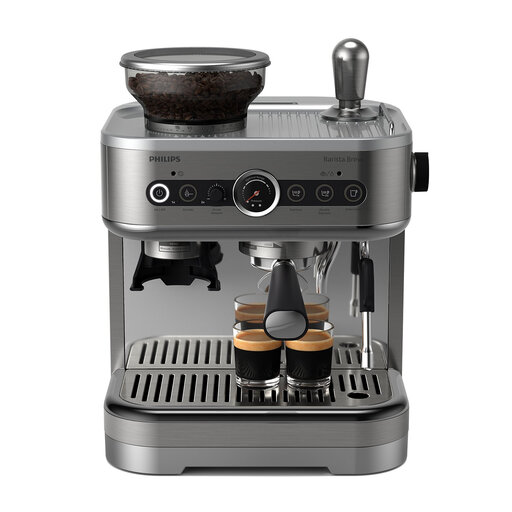
Philips Barista Brew PSA3218/01
This semi-automatic portafilter machine suits anyone who wants to control the espresso and milk texture themselves and is happy to take a few extra steps for each drink.
The product name lists a 58 mm portafilter and a stainless steel milk jug. Dosing, tamping and steaming the milk are all manual steps.
View at Joybuy
Frequently asked questions
Do I need to put the honey in the machine to make a honey latte?
No, add the honey to the glass. In a De’Longhi recipe, the honey goes into the glass first; don’t take this to mean it belongs in a reservoir or milk tube.
What should I clean after making lattes?
It depends on the model and milk system. Philips recommends rinsing LatteGo after every use or washing its two parts in the dishwasher; check the manual for instructions on the other components and maintenance too.
Can I use any type of milk with the Vertuo Lattissima?
No. For the Vertuo Lattissima milk jug, Nespresso lists only pasteurised or UHT cow’s milk. Don’t assume the same restriction applies to other machines without checking; refer to the instructions for the model you choose.
Can a baby try a honey latte?
Don’t give honey to a baby under 1 year old. The Netherlands Nutrition Centre warns of the risk of infant botulism; the caffeine in espresso also needs special consideration for children. An espresso machine doesn’t make a drink suitable for babies.
What should I consider if a pregnant guest wants coffee?
The Netherlands Nutrition Centre advises limiting caffeine to around 200 mg a day during pregnancy and, as a precaution, having no more than two cups of coffee. Caffeine levels also depend on the strength of the coffee and other sources; this is dietary advice, not a fixed amount per shot from a machine.


