
Vandaag of morgen in huis

Kwaliteit gegarandeerd

Welkomstaanbiedingen ontgrendelen: GRATIS bezorging | Tot 80% korting | Gratis 30 dagen JoyPlus-proefperiode
Download de app
Buying an espresso machine sounds simple, until you have to choose between a fully automatic coffee machine, a semi-automatic espresso machine, a coffee grinder and different milk-frothing systems. Manufacturers often highlight terms such as ‘professional’, ‘20 bar’ or ‘barista quality’. These words don’t always tell you how easy a machine is to use every day.
Focus instead on the features you’ll actually use: how the coffee is made, the settings available, the maintenance involved and the space you have on your worktop. Read on to find out which features matter and which models suit different needs.
A 15 bar espresso machine or 20 bar espresso machine sounds powerful, but the figure usually refers to the pump’s maximum pressure. The pressure reached as water passes through the ground coffee may be different. The grind, dose, tamping and extraction time also affect the result.
Think of pump pressure as just one technical specification, not a guarantee of a richer espresso. A pressure gauge, found on some semi-automatic models, can give you a better idea of what’s happening while you brew.
A cappuccino machine with an automatic milk jug is convenient, but you’ll need to clean the tubes, nozzles and milk reservoir. An espresso machine with a milk frother in the form of a steam wand gives you more hands-on control, but you’ll need to froth the milk yourself and clean the wand straight after use.
If you mainly drink espresso, a steam wand may be all you need. For making several cappuccinos in a row, an automatic milk system may be more practical.
Don’t just check the width. On many fully automatic machines, you need to be able to remove the water reservoir, drip tray or bean container from the front or top. So measure the depth too, and check how much clearance there is above the machine.
Also look for:
A semi-automatic espresso machine uses a portafilter. You measure out the ground coffee, tamp it and start the extraction yourself. It’s a good choice for home baristas who want to experiment with coffee beans, grind size and quantity.
A fully automatic coffee machine grinds the beans, measures out the coffee and makes your drink at the touch of a button. It’s handy for households where several cups need to be made quickly. The choice is mainly between control and convenience.
A coffee machine with an integrated bean grinder makes coffee soon after grinding the beans. Check how many grind settings it has and whether you can adjust the strength and volume. More settings usually give you more options for adjusting the grind to suit different beans, but can make the machine less straightforward to use.
If you choose a semi-automatic machine without a built-in grinder, you’ll need a separate coffee grinder. It takes up extra space, but gives you more freedom to choose the grind size.
A reservoir of around 1.1 to 1.3 litres may suit occasional use or a small kitchen. Models with a capacity of around 1.8 litres are more practical if several people drink coffee every day. However, a larger reservoir doesn’t mean you can skip maintenance: you’ll still need to empty the drip tray and coffee grounds container regularly.
Also check how many cups the machine can make at once. Many models can make two espressos side by side, while milk-based drinks may need to be made one at a time.

Why it suits this profile: This fully automatic coffee machine is designed for people who want to make espresso, lungo or cappuccino without too much effort. Its built-in grinder has 13 settings and the water reservoir holds 1.8 litres.
There’s no need to buy a separate grinder or learn complicated dosing steps. The manual steam wand does need to be cleaned straight after use.
13 grind settings, 1.8-litre water reservoir, manual milk frother and controls for several coffee specialities.
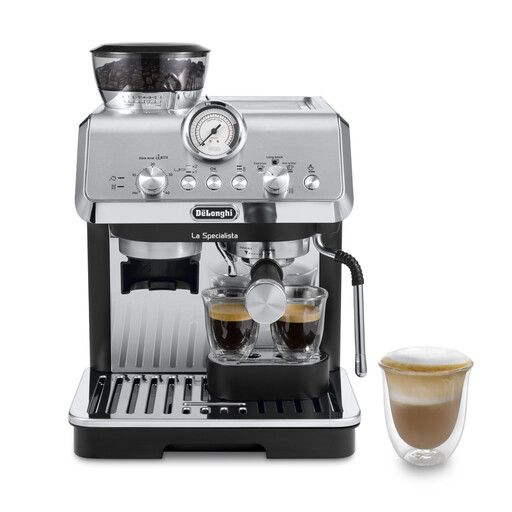
Why it suits this profile: This semi-automatic model combines a built-in coffee grinder with 8 grind settings, an integrated tamper and an adjustable steam wand. It’s designed for people who want to have a say in the preparation process.
The specifications make it clear that you measure, grind and froth the milk yourself. So if control matters to you, you won’t be paying for features you don’t use.
Integrated grinder, 8 grind settings, 15 bar according to the product specifications, 1.5-litre reservoir and 15 bar pump pressure.
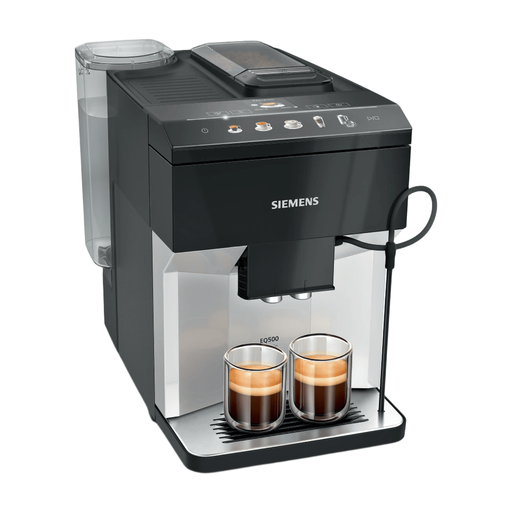
Why it suits this profile: This Siemens coffee machine is aimed at households that regularly make a range of coffee drinks. The oneTouch function, ceramic grinder and cappuccinatore are designed to make operation straightforward, with few manual steps.
The brew group can be removed for cleaning. This makes maintenance easy to manage, even if you use the machine often.
OneTouch operation, ceramic grinder, cappuccinatore, stated noise level of 69 dB and a narrower width of 26.5 cm.
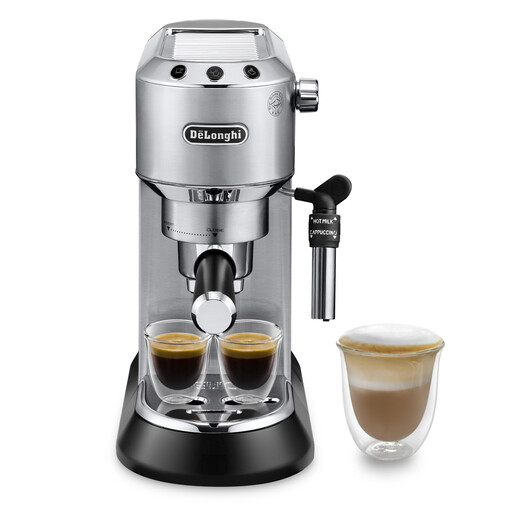
Why it suits this profile: This machine is 14.9 cm wide and works with ground coffee or E.S.E. pods using a filter, available separately. It’s a good fit for a smaller kitchen and for people who want to make their own espresso and milk-based drinks.
You’re choosing a slim machine without an automatic bean grinder. That keeps both its size and operation simple.
15 bar pump pressure, 1.1-litre reservoir, steam wand, cup warmer and the ability to make two cups at once, according to the product specifications.
We’ve put together a complete, up-to-date list of products that meet these strict selection criteria and comply with current European safety regulations.
Daily costs include more than just coffee beans or pods. Remember to factor in:
Always follow the manufacturer’s instructions. Product information for various models states that regular descaling is needed and that removable brew groups or drip trays are designed to be cleaned by hand. Manufacturer claims about, for example, longer intervals between descaling may apply only under the stated conditions of use, so check your water hardness and the maintenance instructions.
Yes, if you want freshly ground coffee without using a separate grinder. A built-in grinder saves space and steps, but often makes the machine larger and adds a part that needs cleaning. Check how many grind settings it has and whether you can also use pre-ground coffee.
Its lifespan depends on how often you use it, water hardness, cleaning and whether you descale it on time. Clean the milk system after use, empty the drip tray regularly and follow the maintenance programmes. When buying, also check the warranty, service options and availability of spare parts.
Not necessarily. The stated pump pressure is usually a maximum figure. Coffee extraction is also affected by grind size, dose, tamping, temperature and extraction time. So compare the whole system rather than looking at the bar figure alone.
