What should you look for when buying?
First decide how much work you want to do while making your drinks and how much time you’re willing to spend cleaning the milk system afterwards. Then compare the drinks available, the type of coffee or capsules used, and the cleaning instructions for the exact model.
| What to consider |
What should you check? |
Who should pay extra attention? |
| Making several milk-based drinks with minimal effort |
Check whether the exact model has an automatic milk function and offers the drinks you want. Making two coffees at once does not automatically mean you can make two lattes at once, as the Consumentenbond points out for the Philips 3340 series. |
If I want to make lattes for several guests without lots of steps for each cup, I’ll focus on the automatic milk function. Around 36% of consumers put this concern first. |
| Cleaning the milk system |
Check which parts can be removed and how they should be cleaned. The Consumentenbond and De'Longhi describe cleaning steps in addition to any automatic rinsing. |
After serving, I want to be able to clean away milk residue as part of a manageable routine. Around 29% of consumers put cleaning the milk system at the top of their list. |
| Preparing the espresso and milk yourself |
Check whether the machine has a steam wand, what type of coffee it uses and whether you’ll need a separate grinder. For the Sage the Bambino it tested, the Consumentenbond lists ground coffee. |
I want to make the espresso and froth the milk myself, even if that means extra steps for every guest. This is the top priority for around 21% of consumers. |
| Capsules and repeat purchases |
Check which capsule system the machine uses. According to the Consumentenbond, the De'Longhi Lattissima One EN510.B it tested uses Nespresso Original capsules; Nespresso distinguishes between Original and Vertuo. |
If I choose a compact capsule machine with a milk function, I want to know which capsules it takes and what I’ll need to buy regularly. This is the main concern for around 14% of consumers. |
Products at Joybuy
This selection includes fully automatic machines that prepare milk automatically, as well as espresso machines where you froth the milk yourself with a steam wand.
 No image available
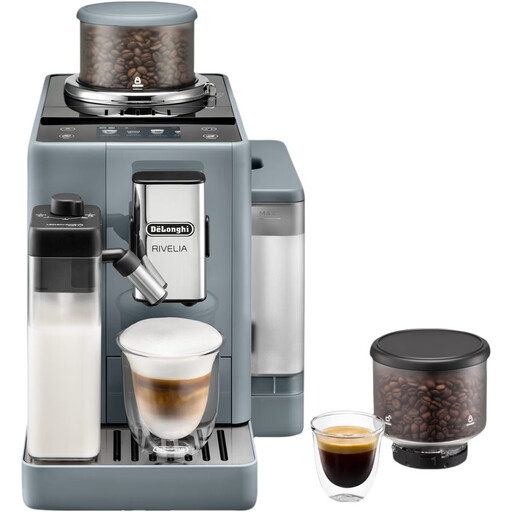
De'Longhi Rivelia EXAM440.55.G
A fully automatic way to make milk-based drinks for guests.
The product description mentions LatteCrema, two interchangeable bean containers and a hot water function. According to the description, you can prepare two milk-based drinks at once.
View at Joybuy
 No image available
Philips 5500 Series EP5547/90 LatteGo
A fully automatic option if you want the machine to prepare your milk-based drinks.
The product description mentions LatteGo, 20 coffee drinks, automatic milk frothing and two user profiles.
View at Joybuy
 No image available
De'Longhi Magnifica Evo ECAM290.61.SB
A fully automatic milk option if you want to make drinks such as cappuccino or MyLatte.
The product information mentions LatteCrema, a milk container and five drink choices. AutoClean doesn’t replace the additional cleaning needed for the milk carafe and its components.
View at Joybuy
 No image available
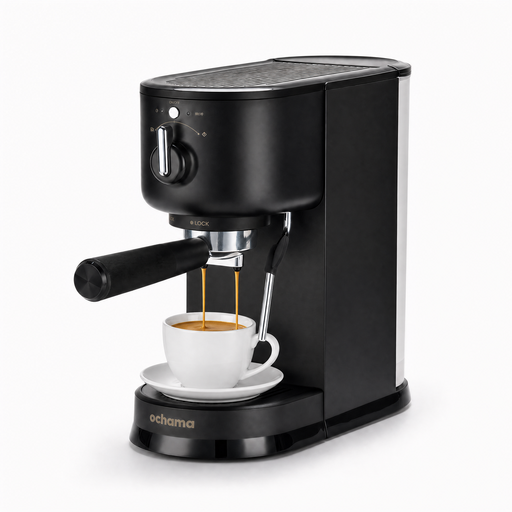
Ochama semi-automatic espresso machine
A manual option if you want to froth the milk yourself using the steam function.
The product name mentions a steam milk frother, 15 bar pressure and a 1,25 L water tank. Preparing the milk requires some hands-on steps.
View at Joybuy
 No image available
IAGREEA espresso machine with steam wand
A semi-automatic option if you want to prepare the espresso and milk froth yourself.
The product name mentions an adjustable steam wand, single or double shots, a cup warmer and a removable 1,1 L water tank. Using the steam wand manually means extra steps.
View at Joybuy
Frequently asked questions
Does the machine need a special hazelnut programme?
No, you can get hazelnut flavour from a separate ingredient. In a published De'Longhi recipe, hazelnut syrup goes into the glass before the frothed milk and espresso are added; that doesn’t mean every machine can make the recipe automatically. If you have a food allergy, check the allergen information for the ingredients you use.
What should you do with leftover milk after frothing?
Follow the cleaning instructions for the exact model and check which milk components need cleaning. Put any leftover milk back in the fridge promptly; the Voedingscentrum recommends keeping your fridge at 4 °C.
Does a two-year manufacturer’s warranty mark the end of your statutory guarantee?
No. According to ACM ConsuWijzer, the Netherlands doesn’t have a fixed two-year period for statutory guarantees; what matters is how long you can reasonably expect the product to last under normal use. If a product breaks down too soon, contact the retailer.
Do you have a cooling-off period when buying online in the Netherlands?
When you buy a product online, you generally have a statutory cooling-off period of up to 14 days after delivery, according to ACM ConsuWijzer. There are exceptions, so check which terms apply to your product before buying.
Is a CE marking a quality mark for tasty coffee or good milk froth?
No. Dutch government information explains that CE is not a quality mark; it means the manufacturer declares that the product meets the applicable EU requirements. The marking says nothing in itself about taste, milk froth or ease of use.


