
Users of a shared milk system
If you regularly make lattes, it helps to agree on who will clean the milk components. Philips recommends rinsing LatteGo after every use.


The best choice largely depends on how you want to prepare the milk and who will clean the parts afterwards. A fully automatic machine takes care of more preparation steps, while a manual espresso machine requires hands-on control and a capsule machine makes it easier to measure out the coffee. Also check that the machine fits in your shared space. To add hazelnut flavour without leaving residue in a shared milk system, it’s best to add the syrup to your own glass; De’Longhi uses this method in one of its recipes.
If you regularly make lattes, it helps to agree on who will clean the milk components. Philips recommends rinsing LatteGo after every use.
If you want to make a milk drink without giving up a large amount of permanent worktop space, check the machine’s width and make sure you can access its removable parts. De’Longhi lists the Dedica Style EC685.BK EX:4 as 149 mm wide.
If you mainly want an easy way to measure out coffee for each cup, consider a capsule machine with a milk function and check which capsules are compatible with the exact system.
Start by considering how you’ll prepare the milk and what cleaning you’re happy to do in a shared kitchen. Then measure the available space and decide how important an easy, single-cup preparation is to you.
| What to consider | What should you check? | Who should consider this? |
|---|---|---|
| Milk and cleaning | Check which milk components need to be removed, rinsed or cleaned after use, and how to maintain the brew group. | If several people in your household make milk drinks, you’ll want to know who cleans the parts after each use. Around 36% of consumers put ease of cleaning first. |
| Worktop space | Measure the available space and check that you can access the water tank, filter holder or milk jug there. | If the machine needs to fit among other items, a narrower model may matter more than having fewer steps when making coffee. Around 29% of consumers prioritise limited worktop space. |
| Making one cup at a time | Check that the exact model offers espresso and the milk function you want. If you like, add hazelnut flavour to your glass separately. | If you want to make one milk drink with minimal preparation, consider a capsule machine or an automatic milk system. Around 21% of consumers put ease of use first. |
| Running costs | Compare the beans or capsules required and the cleaning steps involved for the number of cups you expect to make. | If several people in your household use the machine regularly, you’ll also want to know which consumables and maintenance tasks are involved. Around 14% of consumers make usage and running costs their main priority. |
An automatic function doesn’t clean the milk components for you. In a shared kitchen, it may not be clear who is responsible for cleaning them after a latte.
Compare the maintenance steps for the exact model and agree who will carry them out after each milk drink.
Also allow time to clean the milk components and, depending on the model, carry out other maintenance.
Bean and capsule machines use different consumables, so your choice of system also determines what you’ll need to keep in the house.
Think about how many cups you’ll want to make and check which beans or capsules are compatible with the machine.
The 3300 LatteGo EP3349/70 is an example of a bean-to-cup machine with automatic milk preparation and a latte macchiato programme.
The brand offers both manual espresso machines and capsule machines with an integrated milk function.
Worth considering if you’re looking at capsule machines; check which capsule system the machine uses.
The LatteSelect is an example of a bean-to-cup machine with a range of milk drink recipes.
This selection includes capsule machines and fully automatic machines with a milk function, as well as a manual machine with a steam wand. For each model, check the stated power supply before plugging it in in the Netherlands.
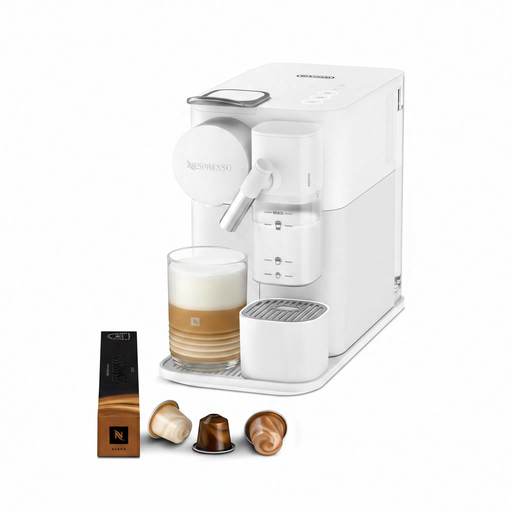 No image available
Ideal if you want to make a capsule coffee with a milk drink function, one cup at a time.
The product information lists a removable, dishwasher-safe milk jug. Before plugging it in, check that this model’s power supply is suitable for 230 V and 50 Hz.
 No image available
Ideal if you want to prepare milk drinks automatically and remove the milk container after use.
The product information lists a removable milk container, a removable brew group and removable drip tray components. Before plugging it in, check that this model’s power supply is suitable for 230 V and 50 Hz.
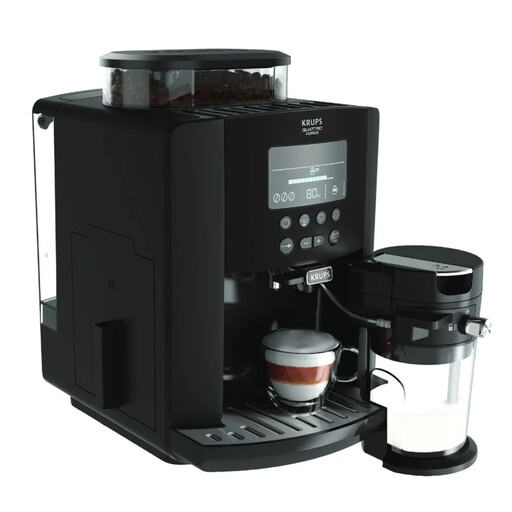 No image available
Ideal if you want to use coffee beans and prepare milk drinks with an automatic milk frother.
The product information lists a removable water tank and the option to make two cups at once. Before plugging it in, check that this model’s power supply is suitable for 230 V and 50 Hz.
 No image available
Ideal if you want to make espresso and froth milk yourself using a steam wand.
The product information lists a portafilter and a manual steam wand. Clean the steam wand after use. Before plugging it in, check that this model’s power supply is suitable for 230 V and 50 Hz.
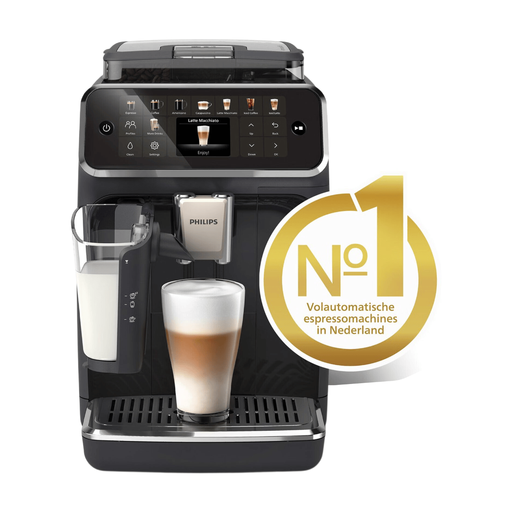 No image available
Ideal if you want to make a milk drink at the touch of a button and clean LatteGo after use.
The product information lists 230 V and 50 Hz, and says LatteGo can be rinsed under the tap or cleaned in the dishwasher. The milk system isn’t cleaned automatically.
It’s best to add the syrup to your glass, and follow the model’s instructions for its components. In a published hazelnut latte recipe from De’Longhi, the syrup goes into the glass first, followed by the milk and espresso.
Follow the machine’s care instructions and return any milk that needs to be chilled to the fridge. The Voedingscentrum recommends an ideal fridge temperature of 4 °C; Philips advises rinsing or washing LatteGo after every use.
Check the labels on the syrup and milk, and avoid transferring residue between shared glasses or components. The Voedingscentrum lists hazelnuts and milk as allergens; the NVWA explains allergen labelling on food products.
No. There isn’t a fixed statutory guarantee period that applies to every product. ACM ConsuWijzer explains that factors such as what you could reasonably expect from the product are taken into account; if something goes wrong, contact the seller.
Check the stated power supply for the exact model before plugging it in. According to Netbeheer Nederland, the Dutch electricity supply has a voltage of 230 V and a frequency of 50 Hz.