
Vandaag of morgen in huis

Kwaliteit gegarandeerd

Welkomstaanbiedingen ontgrendelen: GRATIS bezorging | Tot 80% korting | Gratis 30 dagen JoyPlus-proefperiode
Download de app
Looking for an espresso machine, but feeling overwhelmed by the options? Between semi-automatic machines, fully automatic models, and a myriad of specifications, the choice isn't simple. Some want full control over the brewing process, while others dream of a perfect cappuccino at the touch of a button.
As a Joybuy Product Recommendation Officer, I'm here to help you make the right choice. I've compared the specifications of popular models to help you find a machine that fits your needs and coffee ritual.
Before we dive into the models, it's helpful to understand three key decisions. These will largely determine which type of machine is best for you.
The first question to ask yourself is: how much of the work do I want to do myself?
An espresso machine with a built-in grinder offers the convenience of an all-in-one appliance. You're always guaranteed freshly ground coffee, which is essential for a great espresso. This also saves counter space. On the other hand, a separate grinder gives you more flexibility to switch between different grinders or to fine-tune your grind settings even more precisely.
Do you enjoy cappuccinos or lattes? Then an espresso machine with a milk frother is a must. Here too, there's a choice between control and convenience:
Based on functionality and user profiles, we've highlighted some popular choices for you.
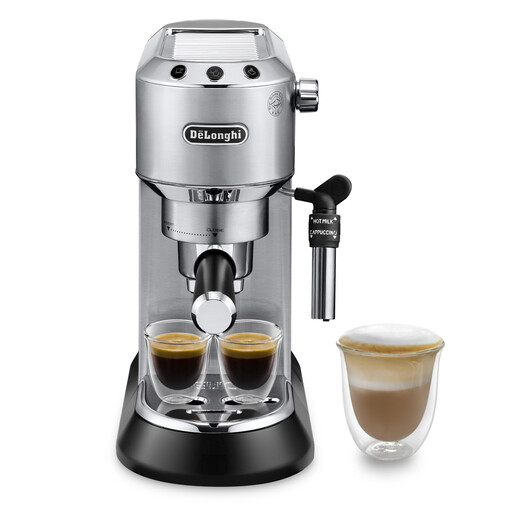
Why it stands out: The De'Longhi Dedica is a remarkably slim semi-automatic machine that fits into even the smallest kitchens. Despite its compact size, it delivers the 15 bar pump pressure needed for a proper espresso. It's an ideal entry-level model for those who want to explore the world of the home barista without immediately investing in a large, complex appliance.
Pros:
Who is it for? For the novice home barista who wants to learn the basics of espresso making and have control over the process, but has limited counter space.
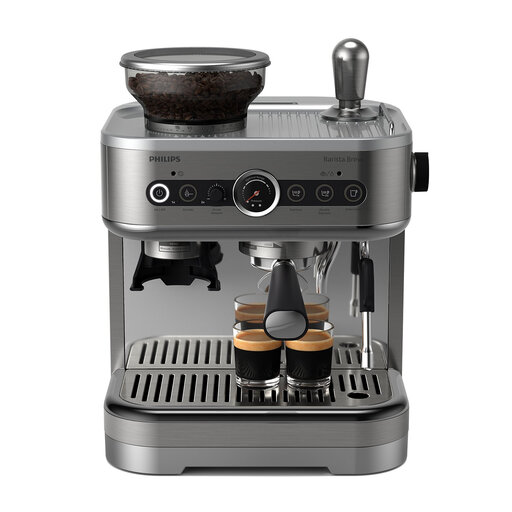
Why it stands out: The Philips Barista Brew brings professional features to your kitchen. The 58 mm stainless steel portafilter is professional-grade, ensuring an even extraction. The built-in pressure gauge gives you direct feedback on the extraction pressure, while the PID temperature control ensures a stable water temperature. This is a serious machine for the enthusiastic user.
Pros:
Who is it for? For the coffee lover who wants to take the next step and is looking for professional results at home. Ideal for those who enjoy experimenting with grind size, pressure, and extraction time to create the perfect espresso.
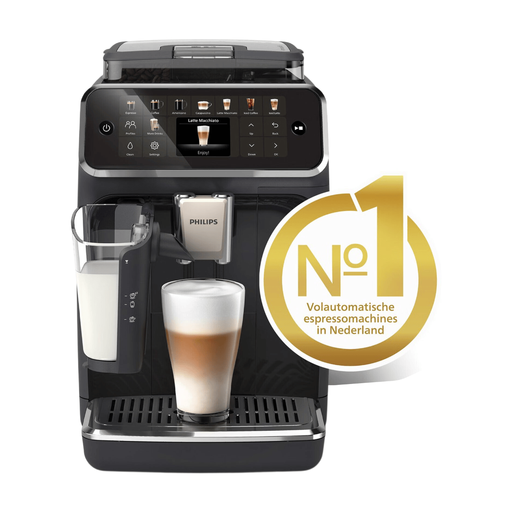
Why it stands out: This fully automatic machine from Philips is designed for maximum convenience and variety. With 20 different beverages, from a strong espresso to a refreshing iced coffee, there's something for everyone. The LatteGo milk system is a key advantage; it creates silky-smooth milk foam and, according to Philips, is very easy to clean as it consists of only two parts with no tubes.
Pros:
Who is it for? For anyone looking for ultimate convenience, variety, and consistent results. Perfect for busy households where different people have diverse coffee preferences.
Doesn't a freestanding model quite fit into your kitchen design? For a seamless and sleek finish, you might also consider a built-in coffee machine. These models are integrated directly into your kitchen cabinets for a luxurious and uncluttered look.
View our selection of built-in coffee machines here
A semi-automatic machine requires manual steps like grinding and tamping the coffee, giving you full control. A fully automatic machine automates this entire process, from grinding the beans to brewing the coffee, for maximum convenience.
For a true espresso, a pressure of around 9 bars on the coffee itself (the 'puck') is ideal. Most espresso machines advertise a pump pressure of 15 bar or more. This higher pump pressure ensures that, after any pressure loss within the system, there is always enough pressure remaining at the brew group to achieve that 9-bar target.
Yes, you can use virtually any type of coffee bean. The term 'espresso bean' usually refers to a specific roast (often darker) that works well for espresso. The most important thing is to choose fresh, high-quality beans. Experiment with different roasts and origins to discover what you like best.
