Start by considering how everyone in your household wants to make espresso and milk foam. A bean-to-cup machine minimises the steps involved, a capsule machine offers a simple approach, and a portafilter machine requires more hands-on effort but gives users greater control over the brewing process. The Consumentenbond distinguishes between these types of machine; check how each model prepares and cleans milk. Add chocolate to your cup: a cappuccino programme doesn’t automatically mean the machine can process chocolate.
Who is this choice relevant to?
People who share the cleaning
You’ll want to agree in advance who cleans the milk components and the brew group. Philips and De’Longhi state in their care information that milk components need attention after use; Philips also explains how to maintain the brew group.
Housemates who want to make coffee quickly
You’ll want everyone to be able to follow the preparation steps, so consider the milk system and the controls. The Consumentenbond describes different types of machine, and features vary by model.
People who want to adjust their espresso themselves
You’ll want more control over brewing and manual milk frothing, and should be prepared for the extra steps. Sage describes the Barista Express BES870 as a model with a built-in grinder and steam wand.
What should you look for when buying?
Bean-to-cup machine with an automatic milk system
A good fit if: several people want to make espresso and milk foam with minimal preparation.
Bear in mind: the milk system needs cleaning, along with other regular maintenance. Automatic frothing doesn’t mean you can skip the cleaning.
Capsule machine with a suitable milk system
A good fit if: easy operation and a small worktop footprint matter more than a wide range of settings.
Bear in mind: according to the Consumentenbond, capsules cost more than loose coffee, and capsule systems aren’t necessarily interchangeable.
Portafilter machine with a steam wand
A good fit if: you want to make espresso and froth milk by hand.
Bear in mind: dosing, brewing, frothing and cleaning all involve hands-on steps, so it helps to agree clearly who does what.
| What to consider |
What should you check? |
Who is this important to? |
| Cleaning the milk components |
Check which parts are removable, what cleaning steps the model requires and who will carry them out after use. De’Longhi recommends cleaning the milk system after preparing milk. |
If we share the milk components, I want to know what needs doing after each cappuccino and who’ll take care of it. Around 33% of consumers put cleaning first. |
| Easy preparation |
Go through the steps for making espresso, frothing milk and cleaning, and check that the specific model comes with the milk system you want. |
If housemates use the machine at different times, I want everyone to be able to follow the preparation steps without any unnecessary faff. Around 27% of consumers prioritise ease of use. |
| Control over espresso and milk foam |
Check which settings are available and whether the model has a steam wand or an automatic frother. |
If I want to tailor my espresso and milk foam, I’ll look at the controls and the steps involved. Around 20% of consumers give adjustability top priority. |
| Running costs and space |
Measure the available space and check access to the reservoir and other components. Compare the coffee used by the system with how much you expect to drink; the Consumentenbond says capsules cost more than loose coffee. |
If several people use the machine, I want to know how much space and stock the chosen system requires, and which coffee it uses. Around 20% of consumers place the greatest importance on cost and space. |
Common buying mistakes
-
Assuming a cappuccino programme also makes chocolate
A cappuccino function doesn’t necessarily mean the machine has a built-in chocolate function. In a De’Longhi recipe, the chocolate sauce is added to the glass first, then the cappuccino is made.
Check the drinks programmes for the exact model and add chocolate to the cup. Don’t put it in the water reservoir or milk system unless the instructions for that specific model say to.
-
Looking only at the purchase price of a capsule machine
The Consumentenbond says capsules cost more than loose coffee. These ongoing coffee costs add up when several housemates use the machine.
Compare the cost of coffee that’s compatible with your chosen system, and check which capsule system the machine uses before you buy.
-
Confusing automatic milk frothing with maintenance-free use
De’Longhi’s manufacturer instructions recommend cleaning the milk system after preparing milk. Philips also explains how to maintain the brew group, so briefly cleaning one milk component doesn’t cover all the machine’s maintenance.
Agree who will clean the components after use and who will take care of regular maintenance.
Brands to consider
Philips
The EP2333/40 is an example of a bean-to-cup machine with LatteGo and a cappuccino function, suited to people who want to keep preparation steps to a minimum.
- Philips describes LatteGo on the EP2333/40 as a two-part system with no tubes.
- The claimed 10-second cleaning time applies to LatteGo in the conditions described, not to all machine maintenance. Philips also mentions maintaining the brew group.
De’Longhi
The range includes bean-to-cup machines with different milk systems, including models with a steam wand and models with an automatic milk system.
- There are options for people who prefer to froth milk by hand and for those looking for an automatic milk system.
- De’Longhi recommends cleaning the milk system after preparing milk. Check the system and instructions for each model.
Sage
The Barista Express BES870 is a portafilter option with a built-in grinder and manual steam wand for people who want to prepare espresso and milk themselves.
- Sage’s product specifications describe the grinder and steam wand included with this model.
- You’ll need to handle the manual preparation steps and cleaning yourself.
KRUPS
The Evidence by Wilmotte EA89W410 is an example of a bean-to-cup machine with a milk tube; the brand’s capsule machines require a different type of coffee supply.
- The Evidence pack reviewed includes two milk tubes and a pipe cleaner.
- That packaging and those milk components don’t automatically apply to other KRUPS models, so check the version you’re considering.
Products at Joybuy
This selection includes bean-to-cup machines, capsule machines and machines with manual controls for espresso and milk foam.
 No image available
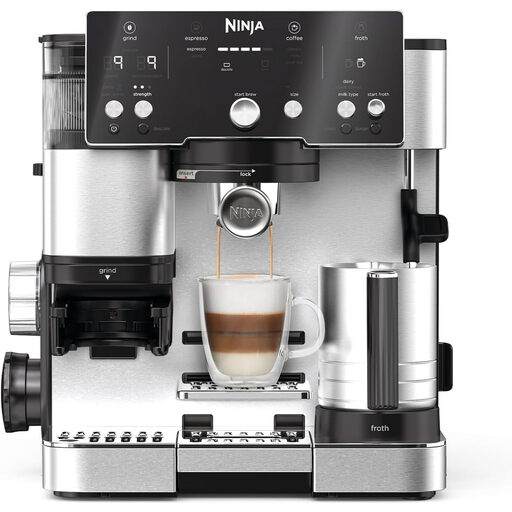
Ninja ES501EU Luxe Café Espresso Machine
An option if you want to combine espresso, grinding and milk frothing in one machine; the product name mentions a grinder, milk frother and two froth settings.
View at Joybuy
 No image available
Philips 5500 Series EP5547/90 LatteGo
Worth considering if housemates have different preferences; check that the controls and milk preparation on the EP5547/90 suit how you’ll use it in your kitchen.
View at Joybuy
 No image available
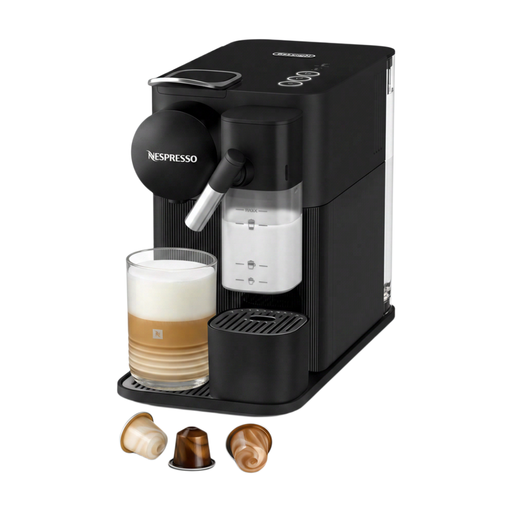
De’Longhi EN510.B Lattissima One, Nespresso Original
An option if a capsule machine for espresso and cappuccino suits the way you use it; this version is designed for Nespresso Original capsules or capsules compatible with that system. The Consumentenbond says capsules cost more than loose coffee.
View at Joybuy
 No image available
Philips 1200 Series EP1220/00 with Pannarello steam wand
A good fit if you’re considering a bean-to-cup espresso machine with manual milk frothing; the product name mentions a Pannarello steam wand and one-touch preparation. Bear in mind that the frother needs to be used and cleaned after frothing.
View at Joybuy
 No image available
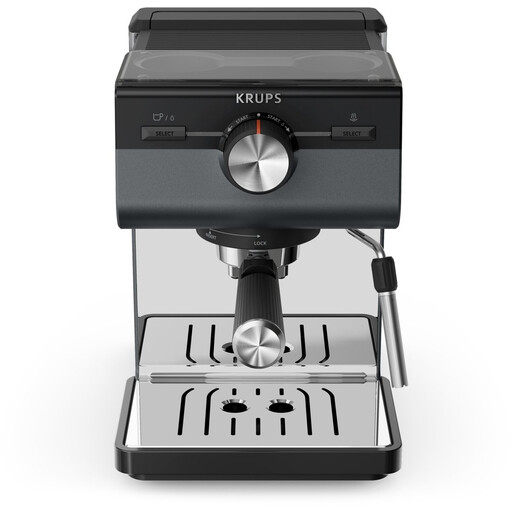
KRUPS Authentic+ C40 XP384G
An option for people who want to prepare espresso and milk foam themselves; the product name mentions a portafilter and milk frother. Expect some manual steps, and clean the steam wand after use.
View at Joybuy
Frequently asked questions
How do you add chocolate to a cappuccino?
Add the chocolate sauce to your cup, then make the cappuccino. In a De’Longhi recipe, the sauce goes into the glass first; this doesn’t mean it can go into the reservoir or milk system.
What agreements help with milk and cleaning in a shared kitchen?
Agree who will clean the milk components after use and who will take care of regular machine maintenance. De’Longhi recommends cleaning the milk system after preparing milk. The Voedingscentrum recommends keeping your fridge at 4°C and returning chilled products promptly.
Does a shared household kitchen need to comply with HACCP?
Not just because housemates share the kitchen. The NVWA describes HACCP as a requirement for businesses that handle food. If the kitchen is used for business activities such as hospitality or catering, check which business rules apply.
What can you do if an espresso machine is faulty?
Contact the seller: according to the Rijksoverheid, they must provide a solution if a product is faulty. In the Netherlands, there is no fixed statutory guarantee period for all products; normal wear and tear or damage caused by the user isn’t automatically covered by free repairs.


