If you want participants to make cappuccinos quickly, choose an espresso machine with automatic milk frothing. If you want them to practise brewing and frothing, a portafilter machine with a steam wand is a better fit for the workshop. A capsule machine with a milk function is another option for occasional use, but factor in capsule costs, system compatibility and cleaning. Also check that the machine is suitable for how you plan to use it: some models are intended for domestic use only.
Which machine is right for you?
Workshop leader with several participants
If participants need to make cappuccinos independently, automatic milk frothing can reduce the number of steps involved. Remember to allow for cleaning between drinks, too. The Dutch Consumers' Association lists ease of use, available space and frequency of use as factors to consider.
Participant keen to learn how to froth milk
If you want to make espresso and texture milk yourself, a portafilter machine with a steam wand is a better choice than a fully automatic milk function. Sage describes the Barista Express as a model with a built-in grinder and manual milk frothing.
Organiser of an occasional workshop
For occasional use, simple operation and available worktop space can be important factors. The Dutch Consumers' Association points out that capsules cost more than ground coffee. Also check that the milk function and capsule system are compatible with the machine you choose.
What should you consider?
Bean-to-cup machine with automatic milk frothing
Choose this option if: participants mainly want to make cappuccinos without frothing the milk themselves.
Things to consider: milk components and other machine parts still need to be cleaned and maintained.
Portafilter machine with a steam wand
Choose this option if: participants will make espresso and froth milk themselves as part of the workshop.
Things to consider: manual preparation takes time and practice; check whether a grinder is included with each model.
Capsule machine with a milk function
Choose this option if: ease of use is important and cappuccino will only be made occasionally.
Things to consider: according to the Dutch Consumers' Association, capsules cost more than ground coffee, and capsule systems are not interchangeable.
| Factor |
What to look for when buying |
Who should pay particular attention? |
| Fewer steps |
Check that the exact model prepares both espresso and milk automatically for cappuccino. |
If several participants want to make cappuccinos without constant supervision, simple operation is important. Around 31% of consumers say this is their main need. |
| Learning to froth milk |
Check whether the machine has a manual steam wand and whether a grinder is included. |
If you want participants to make their own espresso and milk froth, look for a machine that lets them practise these steps. Around 25% of consumers prioritise this. |
| Cleaning milk components |
Check which parts need cleaning after use and follow the model's instructions. |
If participants are making milk drinks one after another, you'll want to know how to manage milk residue and used parts. Around 25% of consumers mainly focus on hygiene and cleaning. |
| Cost and space |
Compare ongoing costs for the same expected level of use, and check the machine's dimensions and milk function. |
For an occasional workshop, consider not only the purchase price but also the cost of use and the worktop space available. Around 19% of consumers consider this the most important factor. |
Which pitfalls can you avoid?
-
Assuming every bean-to-cup machine makes cappuccino automatically
Milk preparation varies by model: it may be automatic, or frothing the milk may be a separate step. So an espresso programme alone doesn't mean the machine will also make cappuccino automatically.
Before you buy, check the cappuccino function and the specific milk system on the version you're considering.
-
Looking only at the purchase price of a capsule machine
The Dutch Consumers' Association says capsules cost more than ground coffee. Capsule systems are also not interchangeable.
Compare running costs for the number of cups you expect to make, and check which capsules are compatible with the system you choose.
-
Choosing a milk function without considering cleaning
Milk components need attention after use. Fresh milk must also be stored safely during the workshop.
Check the cleaning instructions for the exact model. The Netherlands Nutrition Centre advises storing fresh chilled dairy products at 4 °C, taking them out of the fridge just before use and putting them straight back afterwards.
Brands to consider
Philips
The EP2333/40 shows how a bean-to-cup machine with LatteGo can combine automatic milk frothing with cappuccino preparation.
- Philips describes LatteGo on this model as a two-part system with no tubes.
- A manufacturer's claim about cleaning speed doesn't tell you how long cleaning will take during your workshop. A bean-to-cup machine also needs other maintenance.
Sage
The Barista Express is an example of a machine for workshops where participants want to grind beans and froth milk themselves.
- According to Sage, this model combines a built-in grinder with a manual steam wand.
- Participants carry out the steps themselves. Check the specifications for each model, as these features aren't automatically included on other Sage machines.
De'Longhi
The Dedica Duo EC890.M is an example of a compact portafilter machine with a manual steam wand.
- The Dedica Duo product information lists a steam wand for frothing milk manually.
- Check the exact version and any accessories required; this model's features aren't necessarily included with other Dedica machines.
Nespresso
The Creatista Plus is a capsule option with automatic milk frothing for cappuccino.
- Nespresso lists an automatic steam wand and a cappuccino recipe for this model.
- The Dutch Consumers' Association notes that capsules cost more than ground coffee and that capsule systems are not interchangeable.
Joybuy products for cappuccino
This selection includes bean-to-cup machines with automatic milk frothing and a portafilter machine with a steam wand. For a workshop, also check that your intended use is covered by the conditions for the model you choose.
 No image available
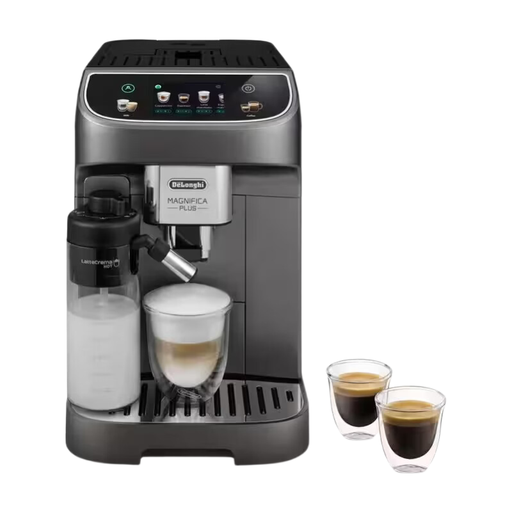
De'Longhi Magnifica Plus ECAM320.70.TB
Suitable for making cappuccinos with automatic milk frothing and minimal manual steps, provided it's used domestically.
The product description lists a cappuccino function, a built-in grinder, three milk froth textures and removable, dishwasher-safe parts.
According to the product information, this machine is intended for domestic use only, not commercial use.
View at Joybuy
 No image available
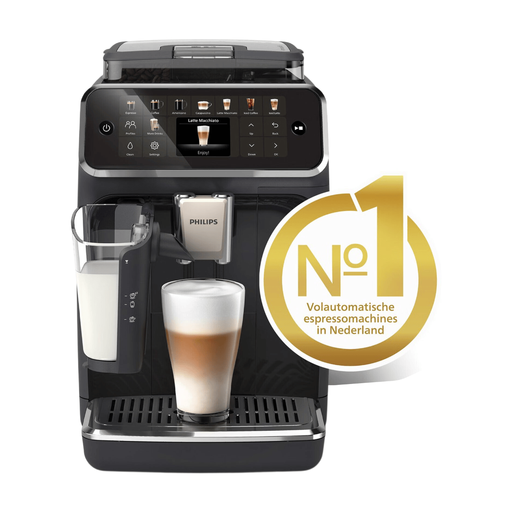
Philips EP5541/50 LatteGo Series 5500
Suitable for participants who want to make cappuccino without frothing the milk themselves.
The product information lists automatic milk frothing via LatteGo, a ceramic grinder with 12 grind settings and 20 drinks.
The title lists a 1,8 l water tank; the product description says LatteGo can be cleaned in the dishwasher.
View at Joybuy
 No image available
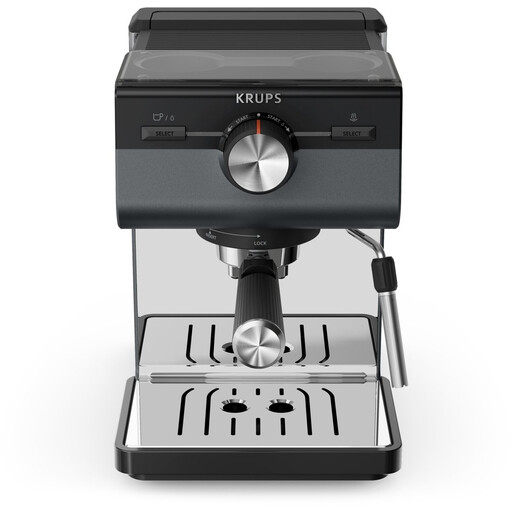
Krups Authentic+ C40 XP384G
Suitable for a workshop where participants make espresso and froth milk themselves.
The product description lists manual operation, a steam wand and compatibility with freshly ground or pre-ground coffee.
Check that your chosen coffee and the manual process suit the workshop programme and the time available.
View at Joybuy
 No image available
De'Longhi ECAM290.61.SB Magnifica Evo
Suitable for participants who want to make cappuccino with automatic milk frothing.
The product description lists LatteCrema Hot, a cappuccino function and a removable milk container that can be stored in the fridge.
The brewing unit is also removable, according to the product description.
View at Joybuy
 No image available
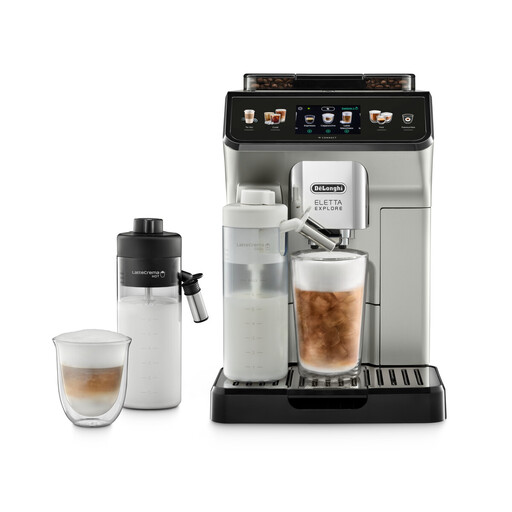
De'Longhi Eletta Explore ECAM450.65
Suitable for making cappuccinos with automatic milk frothing, so participants don't need to froth the milk themselves.
The product description lists the LatteCrema system and cappuccino as a recipe.
Automatic cleaning, a removable brewing unit and a detachable water tank are also listed.
View at Joybuy
Frequently asked questions
Does the machine need an automatic cappuccino button?
No, it doesn't. With a portafilter machine and steam wand, you froth the milk separately. Automatic milk frothing is particularly useful if you want fewer steps for each cup. Check the milk function on the exact model.
How should you store fresh milk during the workshop?
The Netherlands Nutrition Centre advises storing fresh chilled dairy products in the fridge at 4 °C, taking them out just before use and putting them straight back afterwards. Clean machine parts according to the instructions for the model you've chosen.
How often should you descale an espresso machine?
It depends on the model, the water and how often you use it. Follow the machine's prompts and instructions. Philips's claim of up to 5000 cups without descaling for the EP2333/40 assumes correct use and replacement of AquaClean filters; it doesn't automatically apply to every usage scenario.
Do food safety rules apply if you sell cappuccinos during a workshop?
Yes. If you sell food or drink to consumers, you must handle it safely in accordance with the Netherlands Food and Consumer Product Safety Authority's requirements. The Authority specifies registration and a food safety plan or hygiene code for sales several times a year. These requirements don't necessarily apply to a private workshop only.
Does a two-year manufacturer's warranty cover the full statutory warranty period?
No. According to the Dutch Government, there is no fixed statutory warranty period in the Netherlands: a product must meet what you can reasonably expect of it. If something goes wrong, contact the seller to find a solution.


