
Barista with limited worktop space
You want to make espresso and froth milk yourself. As well as space for the machine, leave room for your hands, a milk jug and, if needed, a grinder.


Measure not only the machine’s width and depth, but also the space needed to refill it with water and froth milk. A slim espresso machine with a portafilter suits anyone who wants to make their own espresso and milk foam. A bean-to-cup machine is an option if convenience matters more than space and cleaning, while a capsule machine is ideal if you want a compact, simple way to brew and are happy to use capsules.
You want to make espresso and froth milk yourself. As well as space for the machine, leave room for your hands, a milk jug and, if needed, a grinder.
You make cappuccino often and want the machine to prepare the milk automatically. Bear in mind that the milk system needs attention after use.
You’re looking for a small, simple machine and capsules suit the way you use it. Factor in the ongoing cost of the right capsules when making your choice.
Measure the whole area where you’ll use the machine before choosing: it needs to fit while you refill it with water and make cappuccino.
| What to consider | What should you check? | Who is this important for? |
|---|---|---|
| Space on and around the worktop | Measure the width, depth and clearance above the machine. Leave room to refill it with water and prepare milk, too. | If I have limited worktop space, I also want easy access to the machine while frothing milk and refilling it. Space is the main purchase concern for around 30% of consumers. |
| Frothing milk yourself | Check whether the model has a manual steam wand or an automatic milk function. | If I want to froth the milk myself, I’m happy to accept the extra steps involved. Around 20% of consumers give manual milk preparation top priority. |
| Ease of making coffee | See which steps are automatic and how the milk component is cleaned after use. | If I make cappuccino often, I want to do as little as possible while it’s being made. Ease of preparation comes first for around 20% of consumers. |
| Ongoing coffee costs | Compare costs for the same expected number of cups and check which capsule system or type of coffee you’ll need. | If I drink cappuccino regularly, I want to consider not only the machine but also the coffee I’ll need to buy again and again. Running costs are the main purchase concern for around 20% of consumers. |
| Cleaning and descaling | Read the instructions for cleaning the milk components and descaling the exact model. | If I want to spend little time cleaning after making coffee, it also matters how easy the components are to access. Maintenance is the main purchase concern for around 10% of consumers. |
A manual machine also needs room to use a milk jug and, depending on your choice, to position a separate grinder.
Measure the area where you’ll use the machine and decide in advance where you’ll froth the milk.
A capsule machine requires compatible capsules, while beans and capsules have different ongoing costs. The Consumentenbond also recommends considering coffee costs when buying an espresso machine.
Compare the options for the same expected number of cups and, for cappuccino, include your chosen way of preparing the milk.
Capsules, beans and milk products all add to the cost of using the machine.
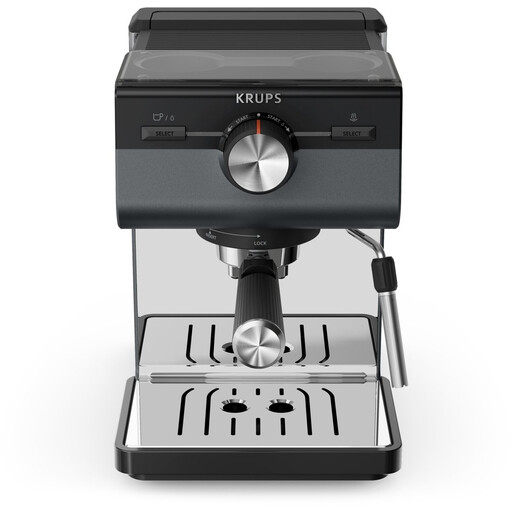
The Krups Piccolo XS KP1A0810 tested and the KP1A3AF0 listing on Joybuy have different model numbers.
Check the full model number and its specifications before comparing different versions.
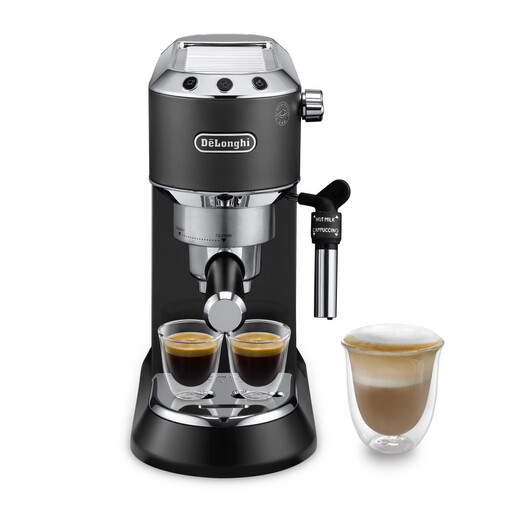
The Dedica Style EC685.BK EX:4 reviewed is a slim manual option for espresso and milk you froth yourself.
The Bambino SES450BSS4EEU1 reviewed uses a portafilter and a manual steam wand.
The fully automatic 2300 Series EP2334/10 reviewed prepares milk automatically with LatteGo.
The NESCAFÉ Dolce Gusto Piccolo XS KP1A0810 reviewed is a compact capsule machine for capsules from the Dolce Gusto system.
The products below include manual espresso machines and bean-to-cup machines for cappuccino. Compare frothing milk yourself with automatic milk preparation, and measure how much space the machine will take up on your worktop.
 No image available
Suited to anyone who wants to make espresso and milk foam themselves; the steam wand is operated manually.
The product name lists a 1,1 L reservoir and the option to make single or double espresso.
 No image available
Suited to anyone looking for a manual espresso machine with a steam wand who wants to froth milk themselves.
According to the product information, a separate filter is needed for E.S.E. pods.
 No image available
Suited to anyone who wants to make cappuccino with minimal effort; the product information lists automatic milk preparation with LatteGo.
Remember to clean the milk system after use.
 No image available
Suited to anyone looking for an espresso machine with a portafilter who wants to prepare milk manually using the milk frother.
The product information lists fresh or pre-ground coffee; clean the steam wand after use according to the instructions.
 No image available
Suited to anyone who wants to make cappuccino automatically; the product information lists a removable milk container.
Check that the listed dimensions of 24 × 44 × 36 cm fit the space you have available.
Compare the dimensions of the exact version with the available clearance, and check that you can refill it with water and remove the components. Krups lists the Piccolo XS KP1A0810 as measuring 14 × 28 × 27 cm, in the order width × height × depth; you may need more space to use it.
Yes. Philips recommends rinsing LatteGo after every use or cleaning its two components in the dishwasher. For another model, follow its own instructions.
According to De’Longhi, how often you need to descale it depends in part on the local water hardness. Follow the instructions and alerts for the exact version.
For a standard online purchase by a consumer, you generally have a statutory 14-day cooling-off period from the date of delivery. ACM ConsuWijzer highlights exceptions and conditions; check these and the seller’s information before using the machine beyond what’s necessary to assess it.