
Vandaag of morgen in huis

Kwaliteit gegarandeerd

Welkomstaanbiedingen ontgrendelen: GRATIS bezorging | Tot 80% korting | Gratis 30 dagen JoyPlus-proefperiode
Download de app
Buying an espresso machine seems straightforward until you have to choose between a fully automatic espresso machine, portafilter machine, bean-to-cup machine or coffee capsule machine. Marketing copy often focuses on high pressure, numerous programmes or a premium appearance. In practice, however, it is the everyday operation, maintenance and available space that mainly determine whether a machine remains convenient to use.
Before buying, watch out for three common pitfalls:
The right choice starts with how you want to make your coffee.
If you want to prepare both espresso and filter-style coffee, a more versatile model may be worth considering. The Ninja Luxe Café ES501EU combines espresso and filter brewing, but at 34.2 × 33.5 × 37 cm, it requires a more spacious spot.
Many models are described as an espresso machine 15 bar. Other appliances state 19 or 20 bar. Do not compare this figure as a direct ranking of quality. Also look at temperature control, heating technology and whether you can adjust the grind size.
A portafilter machine such as the De’Longhi Dedica EC685 lists 15 bar pump pressure, while the Xiaomi Semi-Automatic Espresso Machine has a rating of 20 bar. Both still require a suitable grind and even tamping.
A reservoir of around 1.1 litres is suitable for a smaller household or occasional use. Models with 1.5 to 1.8 litres offer greater convenience when several people drink coffee each day. Also consider the position of the reservoir: with some kitchen layouts, you may not be able to remove it easily from the back.
The De’Longhi Magnifica S has a 1.8-litre water reservoir and a 250-gram bean hopper. The Philips 1200 Series also has a 1.8-litre water reservoir and a ceramic grinder with 12 grind settings.
Check whether the brew group, drip tray and coffee grounds container can be removed. With a machine that has a milk function, it is important that the milk reservoir or steam wand can be rinsed easily.
A manufacturer may state that a filter lasts for thousands of cups or that a milk-frothing system is particularly quick to clean. Treat this as a brand claim: according to Philips’ own information, the AquaClean system can provide up to 5,000 cups without descaling, depending on usage and water hardness. Always follow the instructions and the machine’s notifications.
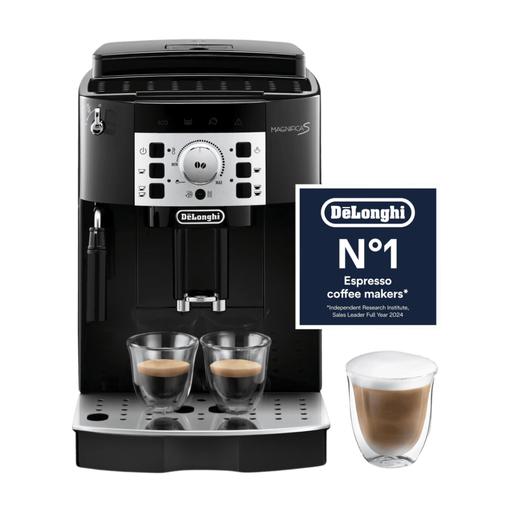
Why it suits this profile: This fully automatic bean-to-cup machine grinds the beans itself and can prepare two espressos or coffees at the same time. The strength and grind size can be adjusted.
The removable brew group and automatic descaling function make routine maintenance easier to manage.
1.8-litre water reservoir, 250-gram bean hopper, 15 bar pump pressure and manual steam wand.
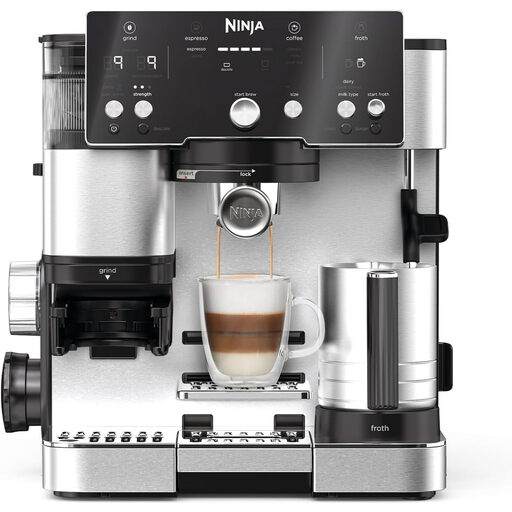
Why it suits this profile: For users who want both control and guidance. The machine has an integrated grinder with 25 grind settings, built-in scales and two milk-frothing settings.
The specifications make it clear that this is not a small machine; its dimensions and weight of 11.32 kg help prevent surprises when positioning it.
Espresso and filter coffee in one machine, 2-litre water reservoir and automatic rinsing support for the steam wand.
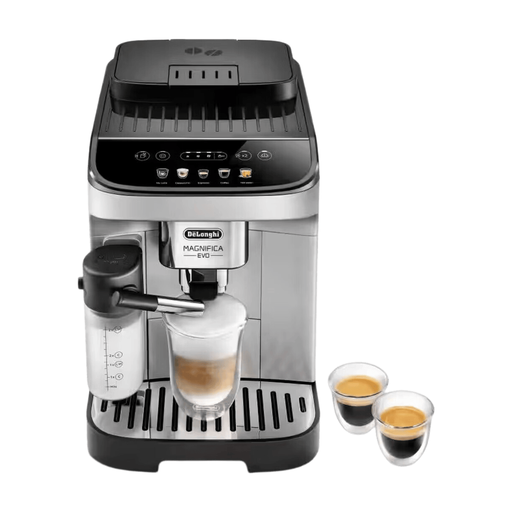
Why it suits this profile: A practical choice for households that prepare several types of coffee every day, including cappuccino and latte macchiato.
The milk reservoir is removable and the machine indicates when descaling is required. This reduces the risk of maintenance being overlooked.
13 grind settings, 1.8-litre water reservoir, 250-gram bean hopper and adjustable coffee strength.
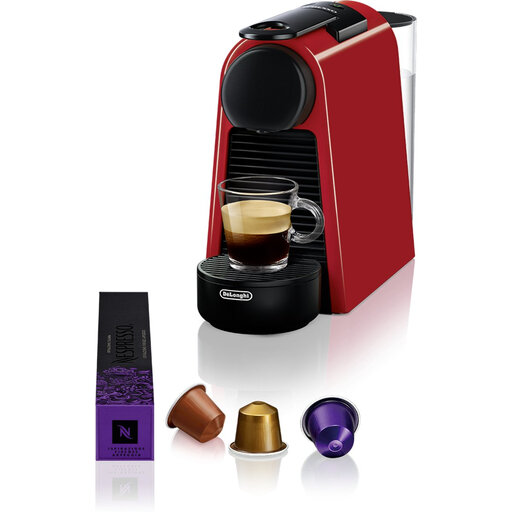
Why it suits this profile: This compact coffee capsule machine is 11 cm wide and has two programmable options for espresso and lungo.
The limited features make it easy to operate. Do bear the cost of capsules and your chosen capsule system in mind.
0.6-litre water reservoir, 19 bar pump pressure, automatic switch-off and eco mode.
We have put together a complete, up-to-date list of products that fully meet these strict selection criteria and the applicable European safety regulations.
To make a cappuccino with a manual steam wand, use cold milk in a metal jug. First, release condensation briefly, then place the steam tip just below the surface and heat the milk gently. Clean the wand immediately after use.
When making a latte macchiato, pour frothed milk into a tall glass and add the espresso slowly. A fully automatic espresso machine with a milk reservoir takes care of most of these steps, but still requires cleaning according to the instructions.
As well as the purchase price, you pay for coffee beans, capsules, water filters and descaler. Beans generally offer more flexibility, while capsules are convenient but can work out more expensive per cup. Therefore, compare the expected weekly cost, not just the price of the machine.
The lifespan depends on usage, water hardness and maintenance. Rinse the components according to the instructions, empty the drip tray on time and descale the machine when prompted. A machine with a removable brew group or easy-to-clean milk components can be practical for regular use.
Not if the machine has an integrated grinder. With a semi-automatic espresso machine or portafilter machine, a suitable coffee grinder is often useful because the grind size affects the extraction time and flavour. Also check whether the machine supports ground coffee or ESE pods.
