
Vandaag of morgen in huis

Kwaliteit gegarandeerd
Download de app
Categorieën
Buying an espresso machine can be an overwhelming experience. The market offers a wide range of models, from manual piston machines that give you complete control to capsule machines that focus on convenience. The right choice depends on your personal preferences, budget, and how much time you want to invest in preparing your coffee. This article will help you understand the key specifications, enabling you to make an informed decision for your home espresso setup.
Before you purchase an espresso machine, it's helpful to consider a few key aspects. These criteria will help you filter the options and find the model that best suits your needs.
The first and most important choice is the type of machine.
The pressure, expressed in bar, is the force with which water is pushed through the ground coffee. For a true espresso, a pressure of around 9 bar at the grouphead is ideal. Many machines advertise 15 bar or even 19 bar. This is the maximum pressure the pump can generate, not necessarily the pressure used during brewing. However, a higher maximum pressure can contribute to a more stable brewing process.
Consider how you drink your coffee. Fans of cappuccino or latte macchiato will need an espresso machine with a milk frother. This can be a steam wand (for manual frothing) or an integrated, automatic system.
The dimensions are also important. Do you live in an apartment or have a small kitchen? A compact espresso machine is a practical consideration. Compact models often deliver the same quality but may have a smaller water reservoir or drip tray.
Based on functionality, design, and user application, we have selected a few popular models.
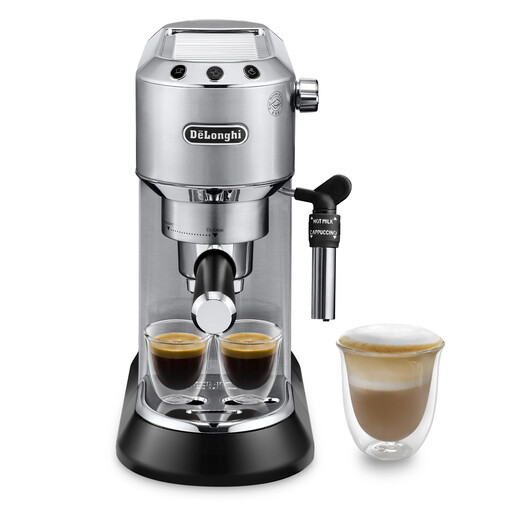
Why this product The De'Longhi Dedica is a popular semi-automatic machine due to its slim design and versatility. At only 14.9 cm wide, it fits in almost any kitchen. The machine works with both ground coffee and E.S.E. pods (requires a separate filter) and has a pump pressure of 15 bar. The Thermoblock system ensures a rapid heat-up. The manual steam wand allows you to froth your own milk for cappuccinos.
Advantages
Who is this for? For the aspiring to intermediate home barista who wants control over the brewing process without immediately investing in a large, complex machine. Ideal for those who value design and a compact footprint.
View the De'Longhi Dedica EC685 on Joybuy.nl
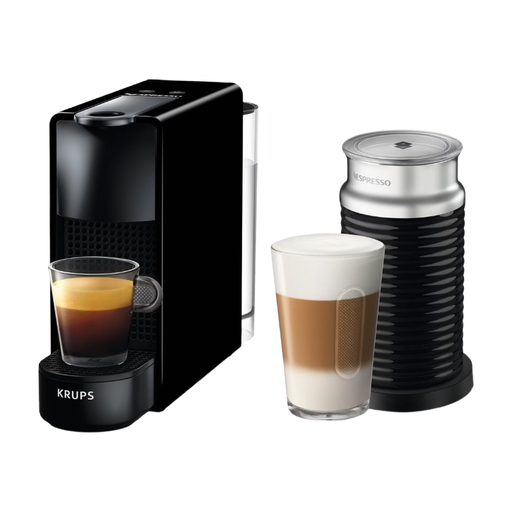
Why this product The Krups Essenza Mini is one of the most compact Nespresso machines on the market. This machine focuses on simplicity and speed. With 19 bar of pressure and a heat-up time of just 25 seconds, you can quickly brew an espresso or lungo. This model comes with the Aeroccino3, a separate milk frother, allowing you to easily prepare milk-based drinks. The machine switches off automatically to save energy.
Advantages
Who is this for? For the coffee drinker seeking maximum convenience, speed, and consistent results. Perfect for small households, student dorms, or as a second machine in the office.
View the Krups Nespresso Essenza Mini on Joybuy.nl
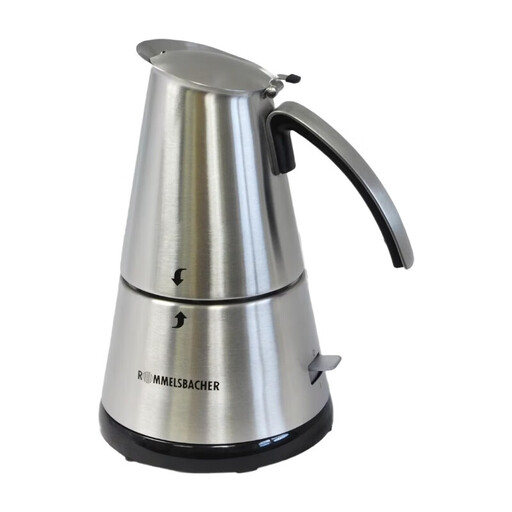
Why this product The Rommelsbacher EKO 366/E is a modern take on the classic Italian moka pot. This electric model doesn't require a stovetop. You fill it with water and coffee, place it on the base, and switch it on. The machine automatically shuts off when the coffee is ready. Made of stainless steel, it's a durable and stylish alternative to a traditional espresso machine. It can brew up to 6 cups of espresso-style coffee at once.
Advantages
Who is this for? For lovers of the strong, rich flavour of a moka pot who want the convenience of an electric appliance. It's an excellent choice for those who want a no-fuss, reliable, and stylish coffee maker without the complexity of a semi-automatic machine.
View the Rommelsbacher EKO 366/E on Joybuy.nl
A great espresso is the foundation, but the perfect cappuccino or latte macchiato requires perfectly frothed milk. If you already have a machine without a steam wand, or if you're looking for a separate, specialised solution for frothing milk, a standalone milk frother can be a great addition.
Check out our range of coffee frothers and other accessories to complete your coffee experience.
1. What is the difference between a semi-automatic and a fully automatic machine? A semi-automatic machine requires manual steps: you grind the beans, fill and tamp the portafilter, and start/stop the extraction. A fully automatic machine does all of this at the touch of a button: the machine grinds the beans, brews the coffee, and automatically ejects the used coffee puck. Semi-automatic machines offer more control and a more authentic experience; fully automatic machines offer more convenience.
2. How many bars of pressure does a good espresso machine need? For a proper espresso extraction, a pressure of around 9 bar on the coffee itself is ideal. Many consumer machines advertise a higher pump pressure (e.g., 15 bar). This is the maximum capacity of the pump and ensures a stable build-up to the required 9 bar. A machine with 15 or 19 bar is therefore perfectly suitable.
3. Can I use regular drip-filter coffee in an espresso machine? No, this is not recommended. Espresso machines require a much finer grind than drip coffee makers. Using a grind that is too coarse (like for filter coffee) will result in a watery, weak espresso because the water flows through it too quickly. Always use coffee with an espresso-specific grind or grind the beans yourself to the correct fineness.
Written by: Joybuy Product Recommendation Officer