
Hands-on coffee maker
You enjoy making espresso yourself and adding a little foam to suit your taste. A portafilter machine could be a good choice; Consumentenbond lists portafilter machines as one way to make espresso at home.


For an after-lunch espresso macchiato, a portafilter machine is a good choice if you want to prepare the espresso and milk foam yourself, while a bean-to-cup machine suits you if convenience with beans is important. A capsule machine is best for occasional use. Sage Appliances describes an espresso macchiato as espresso with a small amount of milk foam, so check each model’s milk-frothing system and cleaning requirements. You don’t need a latte macchiato programme for this drink.
You enjoy making espresso yourself and adding a little foam to suit your taste. A portafilter machine could be a good choice; Consumentenbond lists portafilter machines as one way to make espresso at home.
You want to make espresso and milk foam around lunchtime with as few steps as possible, and don’t mind that a milk system needs maintenance. Philips describes the EP2333/40 as having an automatic LatteGo milk system.
You mainly make espresso now and then and don’t want to grind beans yourself. According to Nespresso, the Essenza Mini makes espresso with Original capsules; you’ll need a separate device to froth milk.
First decide how much you want to do yourself. The brewing method, milk-frothing system and cleaning requirements all affect how well the machine fits into your lunchtime routine.
| What to consider | What to look for | Who is this most important to? |
|---|---|---|
| Making espresso and foam yourself | Check the brewing method and whether the model has a steam wand or another way to froth milk. | If I want to make the espresso myself and add foam to taste, I’m happy to do a few extra steps. Around 33% of consumers say making it themselves is their top priority. |
| Serving quickly | Check whether the model can make both espresso and foam, and what you need to do between cups. | Around lunchtime, I want to serve espresso and foam in as few steps as possible, even if I need to clean the milk system afterwards. Around 27% of consumers say quick operation is their top priority. |
| Costs for occasional use | Factor in capsules or beans and any separate milk-frothing equipment; check compatibility. | If I only make coffee now and then, I want to weigh up the purchase price and running costs together. Around 20% of consumers say keeping costs suitable for occasional use is their top priority. |
| Cleaning | Check the cleaning instructions for the exact milk system and find out which parts are dishwasher-safe. | After lunch, I want to clean the milk components easily and know what maintenance the machine needs. Around 20% of consumers say easy maintenance is their top priority. |
An espresso macchiato is espresso with a small amount of milk foam, while a latte macchiato contains more milk. A machine with an extensive milk-drink programme may offer more than you need for this small cup.
First decide which drink you want to make, then check the espresso and milk-frothing options separately. Sage Appliances and Café du Jour explain the difference between these drinks.
The product title for the De’Longhi EC230.BK mentions a manual milk frother, while the specifications say ‘No milk frother’. This discrepancy doesn’t make it clear which version you’ll receive.
Ask for confirmation of exactly which milk-frothing equipment is included with this model, and don’t assume the EC230.BK is identical to the EC260.BK.
If the version supplied doesn’t include a milk frother, you may need to buy one separately.
The brewing method and milk-frothing system also determine the ongoing purchases and cleaning involved.
Compare the options based on the same expected number of cups, and factor in capsules, any separate milk-frothing equipment and maintenance. Don’t assume one option has the lowest cost per cup without considering these factors.
A capsule machine may require capsules and a separate milk frother.
A relevant option if you’re looking for a manual espresso machine with a way to froth milk. The information below applies to the models listed, not every version from the brand.
A relevant option if you’re looking for a bean-to-cup machine with an automatic milk system. Philips lists LatteGo for the EP2333/40.
A relevant option for occasional espresso made with Original capsules; the Essenza Mini and Aeroccino 3 are separate products.
A relevant option if you want to make espresso yourself with a portafilter but prefer less manual effort when frothing milk with the Bambino Plus.
This selection includes portafilter machines for making espresso and foam yourself, a bean-to-cup machine with a steam wand, and a capsule machine with an integrated milk system.
 No image available
Ideal if you want to make espresso yourself and froth a little milk.
20Bar; steam wand; single or double shot; pressure gauge; removable 1.1 L water tank; cup warmer.
Making espresso with the portafilter and frothing milk with the steam wand both require manual operation.
 No image available
Ideal if you want to make espresso and froth milk yourself using a manual steam wand.
20 Bar; steam wand; 50 Oz water tank; cup warmer.
The portafilter and steam wand require manual operation.
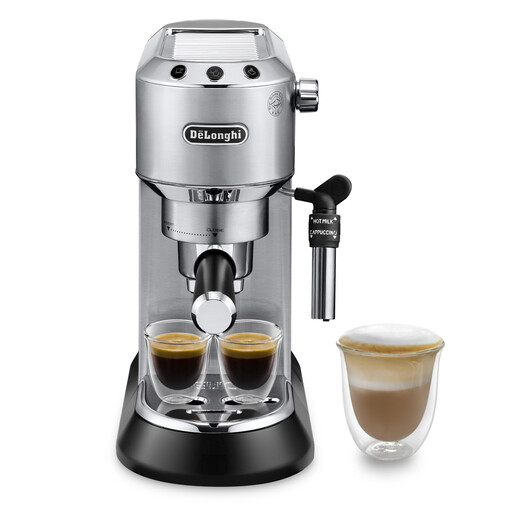 No image available
Ideal if you want to make espresso and milk foam yourself.
15 Bar; manual milk frother; suitable for ground coffee or E.S.E. pods.
A separate filter is required when using E.S.E. pods.
 No image available
Ideal if you want to make espresso from beans in just a few steps and froth the milk yourself.
Fully automatic brewing; Pannarello steam wand; One-Touch Brewing; Matt Black.
The Pannarello is a traditional milk frother, so you’ll need to froth the milk yourself.
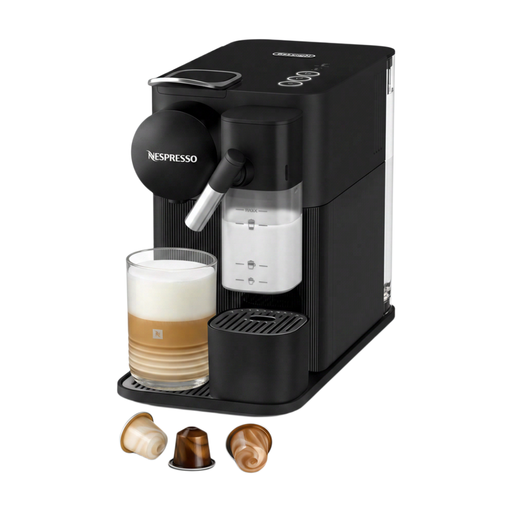 No image available
Ideal if you want to make espresso with capsules and are looking for an integrated milk system.
Nespresso Original capsules; 1.0 L capacity; latte and cappuccino preparation.
The machine uses Nespresso Original capsules and has an integrated milk system.
No. An espresso macchiato is espresso with a small amount of milk foam, so you can make the espresso and foam separately. A latte macchiato is a different drink with more milk.
Follow the instructions for the exact model. Philips says to rinse the two LatteGo parts after every use or clean them in the dishwasher; according to Nespresso, the Aeroccino 3 isn’t dishwasher-safe.
No. According to ACM ConsuWijzer, the statutory guarantee applies under the relevant conditions even if you haven’t bought a separate warranty. Your statutory rights apply against the seller if the product doesn’t meet the terms of the contract.
According to the Dutch government, when you buy a new, similar appliance, the seller must take back your old one free of charge. This also applies to online purchases, although the return arrangements may vary.
The Dutch government says electrical appliances sold in the EU must have a CE mark, and warns that it can be harder to verify compliance when buying from outside the EU. Check the seller, product information and marking; this doesn’t confirm that a specific model on offer meets the requirements.