Start with a model that the manufacturer specifies for espresso and lets you adjust the grind. Then measure the space for the grinder, as well as the room you’ll need to fill and operate it. You can put a hand grinder away after use, but you’ll have to grind the beans yourself. An electric grinder saves you from turning a handle, but needs a permanent spot and requires you to check the model’s design and electrical product information.
Who is this for?
Espresso makers with limited worktop space
You want to be able to adjust the grind for espresso, but also need to consider where the grinder will go and how much room you’ll need to use it. Baratza, 1Zpresso and Eureka describe different settings and ways of using their models.
Espresso makers who put their grinder away
You grind beans as needed and don’t want to set aside a permanent spot for an electric grinder. If so, grinding by hand is one of the factors to consider when comparing the 1Zpresso J-Ultra.
Espresso makers who want a quick routine
You don’t want to grind by hand, so you’re comparing electric operation, dosing and maintenance with the space you have available. Baratza, Eureka and TIMEMORE product information describes different operating methods and designs.
What should you look for when buying?
Manual espresso grinder
Best for: grinding beans as needed and putting the grinder away afterwards. 1Zpresso describes the J-Ultra as a hand grinder designed for espresso, with a foldable handle.
Trade-off: you turn the handle yourself. The manufacturer specifies an 8-micron adjustment per click, but this is not a measurement of the ground particles.
Electric grinder for espresso and other brewing methods
Best for: grinding electrically for espresso as well as coarser brewing methods. Baratza specifies settings 1–20 for espresso and 21–40 for other listed brewing methods on the Encore ESP.
Trade-off: the settings are stepped, and the grinder needs a permanent spot. Also check the clearance above it for adding beans.
Electric grinder designed for espresso
Best for: making espresso most of the time and looking for stepless adjustment. Eureka specifies this use for the Mignon Manuale.
Trade-off: according to Eureka, the model is 350 mm tall and has no dose counter. Here, ‘Manuale’ means manual activation of an electric grinder.
Portable electric grinder
Best for: grinding electrically and being able to put the grinder away afterwards. TIMEMORE specifies a battery and dimensions of 72 × 190 mm for the Whirly 01S.
Trade-off: TIMEMORE’s stated grinding time for an 18 g espresso dose is based on tests with pre-production samples.
| Consideration |
What should you check? |
Who is this important for? |
| Espresso grind setting |
Check whether the manufacturer specifies the exact model for espresso, and whether the setting is stepped or stepless. |
When I make espresso, I want to be able to adjust the grind and know that the model is designed for it. This is the top priority for around 31% of consumers. |
| Worktop and storage space |
Measure the width, depth and clearance above the grinder. Allow space for filling, the handle and operation, too. |
When my kitchen is short on space, both the room needed while grinding and the option to put the grinder away matter. Space is the top buying priority for around 31% of consumers. |
| Grinding and dosing |
Check how you start and stop the grinder, and whether the grounds container suits your dosing method and portafilter. |
I want to grind beans without turning a handle myself, and need controls that fit into my daily routine. Ease of use is the top priority for around 25% of consumers. |
| Cleaning and aftercare |
Read the model’s cleaning instructions, and check the information about the seller, spare parts and warranty in advance. |
Once my other requirements are covered, I want to know how to maintain the grinder and who to contact with questions. Maintenance and aftercare are the main consideration for around 13% of consumers. |
How to avoid common buying mistakes
-
Mistaking ‘Manuale’ for a hand grinder
According to Eureka, the Eureka Mignon Manuale is electric; ‘Manuale’ refers to manually activating the grinding process.
If you specifically want to grind without electricity, compare the drive and controls of the exact model.
-
Assuming a click measurement guarantees a particular result
The 8 microns specified by 1Zpresso for the J-Ultra describes the adjustment per click, not the measured size or consistency of all the ground particles.
Use the click measurement to compare how the grinder is adjusted, not as standalone proof of the results you’ll get with your beans and espresso machine.
-
Measuring only the grinder’s width
A narrow footprint doesn’t tell you how much depth, overhead clearance or operating space the appliance needs. According to Eureka, the Mignon Manuale measures 120 × 140 mm in width and depth and is 350 mm tall.
Measure the space where you’ll actually grind, including room for filling and operating the grinder.
-
Assuming a similar product title refers to the same model
A product description mentioning TIMEMORE and portable electric grinding doesn’t by itself confirm that the product is the Whirly 01S.
Compare the full model number and key specifications before linking product information to a specific model.
Brands to compare
1Zpresso
The manufacturer positions the J-Ultra as a hand grinder for espresso. It could suit you if you grind one dose at a time and want to put the grinder away afterwards.
- According to 1Zpresso, the J-Ultra has a foldable handle and an 8-micron adjustment per click.
- You grind the beans yourself. The manual recommends cleaning this model without water; the click measurement is not an independent measurement of the ground coffee.
Baratza
According to Baratza’s Dutch product page, the Encore ESP combines settings for espresso and coarser brewing methods with electric operation.
- Baratza specifies settings 1–20 for espresso and 21–40 for other listed brewing methods, plus a dosing cup and a quick-release burr.
- The settings are stepped, and the grinder needs a permanent place to use it.
Eureka
Eureka describes the electric Mignon Manuale as a model designed for espresso, with stepless adjustment and manual activation.
- The manufacturer specifies 50 mm flat burrs and dimensions of 350 × 120 × 140 mm (height × width × depth).
- The specifications state that this model has no dose counter. ‘Manuale’ does not mean it’s a hand grinder.
TIMEMORE
TIMEMORE positions the Whirly 01S as a small, portable electric grinder for uses including espresso. Storage and electric grinding are relevant considerations here.
- The manufacturer specifies a battery and dimensions of 72 × 190 mm.
- The stated grinding time of around 90 seconds for 18 g of coffee is based on tests with pre-production samples.
Joybuy products
According to their product information, these electric coffee grinders have adjustable grind settings for espresso. Compare the design, available space and dosing method with your own routine.
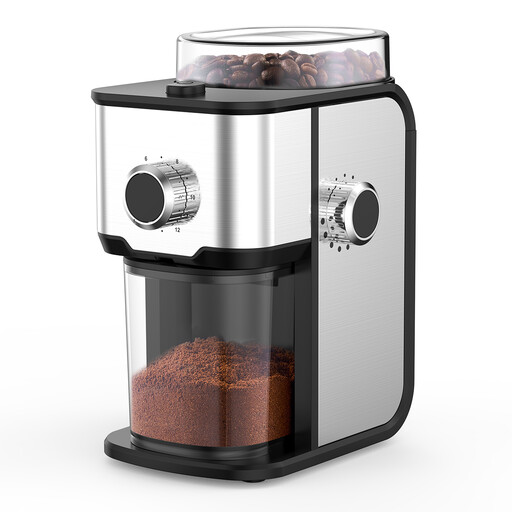 No image available
Ollygrin BG705 electric coffee grinder
The product description says the grinder is designed for everything from espresso to French press, making it an option if you use several brewing methods.
Flat burrs; 14 grind settings. The product description mentions a compact design that fits beneath kitchen cupboards.
View at Joybuy
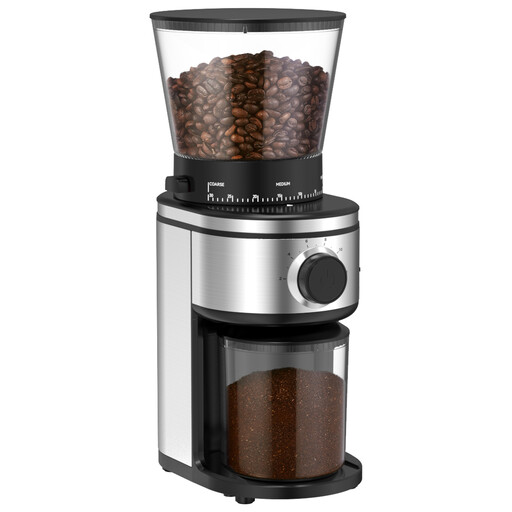 No image available
Ollygrin BG702 electric coffee grinder
The product description lists settings from extra fine for espresso to coarse for French press, which could be useful if you use different brewing methods.
30 grind settings, stainless steel conical burrs and a removable grounds container. The description mentions a compact design.
View at Joybuy
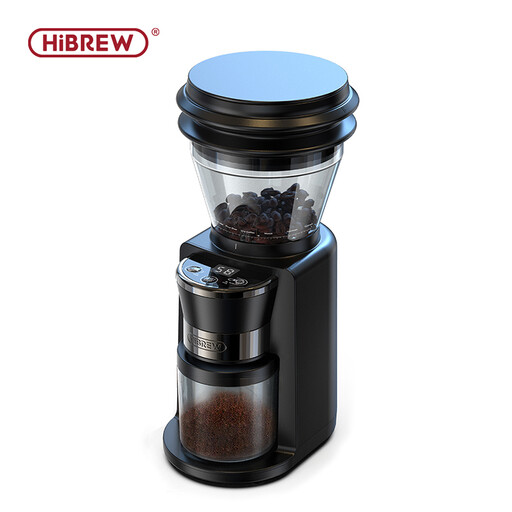 No image available
HiBREW G3 automatic coffee grinder
The product title mentions espresso and the specifications list 34 grind settings. Compare the controls and dimensions with the space where you plan to use the grinder.
Conical burr; dimensions 110 × 165 × 320 mm. Stated power supply: 220–240 V, 50 Hz. Before buying, check the connection, plug and product information for the version on offer.
View at Joybuy
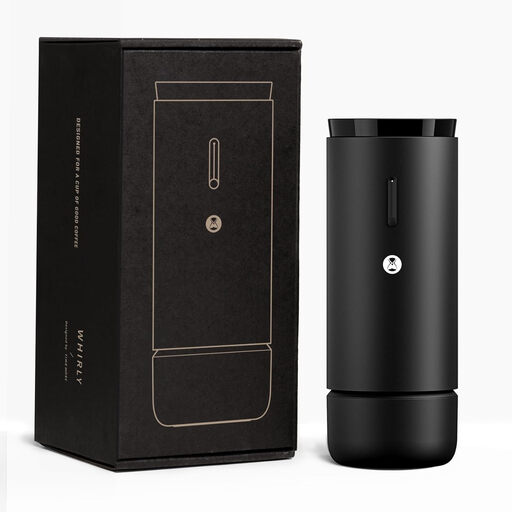 No image available
TIMEMORE portable electric coffee grinder
The product information lists 30 settings, from espresso to French press, and a rechargeable battery. It’s an option if you want to combine electric grinding with easy storage.
Stainless steel burrs; 1000 mAh battery; dimensions 7,2 × 7,2 × 19 cm. The instructions recommend grinding no more than six espresso batches in a row to prevent overheating.
View at Joybuy
 No image available
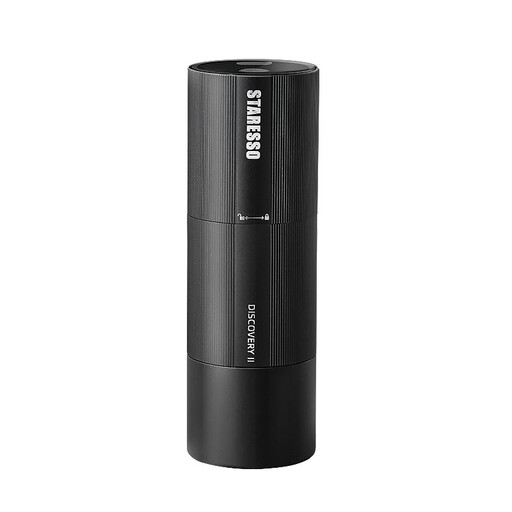
STARESSO D6E PLUS electric coffee grinder
The product description mentions adjustable grinding, from fine for espresso to coarse for French press, and one-button operation.
Rechargeable 1000 mAh battery with Type-C connection; approximately 150 mm tall and 52 mm in diameter. The instructions recommend not rinsing the burr with water and cleaning it with a dry brush.
View at Joybuy
Frequently asked questions
Is every burr grinder suitable for espresso?
No. Don’t assume it is just because it has burrs. Check whether the manufacturer specifies the exact model for espresso and how you can adjust the grind. Baratza lists a separate espresso range for the Encore ESP; Eureka names espresso as a recommended use for the Mignon Manuale.
How do I clean the 1Zpresso J-Ultra?
Follow the instructions for the specific model: 1Zpresso recommends not cleaning the J-Ultra with water and suggests using a brush and air blower. This guidance applies to this model and not automatically to every coffee grinder.
What should I check for electrical safety when buying a grinder in the Netherlands?
Check the product information for the version on offer, the connection and plug, and the relevant CE marking. The Dutch government states that electrical appliances placed on the EU market must meet safety requirements and carry a CE marking. This general information does not confirm the specifications of an individual version.
Do online purchases in the Netherlands come with a cooling-off period and statutory warranty?
For a standard online purchase, you generally have up to 14 days from delivery to change your mind, subject to statutory exceptions, according to ACM ConsuWijzer. The seller is also responsible if a product does not meet what you could reasonably expect when used normally. An additional commercial warranty does not replace this statutory right.


