
Vandaag of morgen in huis

Kwaliteit gegarandeerd

Welkomstaanbiedingen ontgrendelen: GRATIS bezorging | Tot 80% korting | Gratis 30 dagen JoyPlus-proefperiode
Download de app
A good cup of espresso starts with more than just the brand on the packaging. The choice between espresso beans, ground espresso coffee, espresso capsules, instant espresso coffee and an espresso coffee machine determines how much work is involved, what flavour you can expect and how much space you need.
Pay particular attention to three common pitfalls:
Espresso coffee beans are suitable for a bean-to-cup machine or a portafilter machine with a separate coffee grinder. You grind the beans just before brewing, giving you control over the grind size and quantity. According to the product description, a blend of Arabica and Robusta often delivers a bolder profile and more body. A blend made from 100% Arabica is generally chosen for a smoother, more aromatic flavour.
Darker or more intense beans are practical for making cappuccino, as the coffee flavour is more likely to hold its own alongside hot milk. If you drink espresso or lungo without milk, you may prefer a milder roast.
Ground coffee is convenient if you already have a portafilter machine and do not want to buy a separate grinder. However, check that the grind is suitable for espresso. Coffee that is too coarsely ground can produce a thin cup, while coffee that is too finely ground can slow the flow.
A 250-gram pack is suitable if you want to try a flavour profile first. Larger bags, such as 500 grams, are more practical for households that make several cups every day. Store opened coffee in a sealed container, somewhere dry and away from heat and direct sunlight.
Capsules offer a fixed dose and quick preparation. Check the machine system before buying. Nespresso-compatible capsules are designed for machines that use the classic Nespresso format, but compatibility should always be stated in the product information. Capsules for another system will not necessarily fit.
According to the product description, the L’OR Espresso Supremo capsules are listed as suitable for L’OR machines and Nespresso classic models. The Lavazza Espresso Maestro Ristretto capsules are also described as Nespresso-compatible. Also check the number of capsules per box, the intensity and the flavour profile.
Instant espresso coffee is primarily about speed. According to the product description, Nescafé Espresso Instant Coffee is prepared using 60 ml of hot water. The jar contains 100 grams and the description states that it makes 55 servings. Sticks are also practical for work, travel or a kitchen without a coffee machine.
Concentrate works differently from instant coffee. Nescafé Espresso Concentrate Caramel and Vanilla are concentrated coffee drinks in 500 ml bottles, containing sugar and flavourings. According to the product information, there are 16 servings. So check the ingredients and nutritional information if you are expecting an unsweetened espresso.
Measure the available worktop space, including room to fill the tank and remove components. According to the specifications, a compact portafilter machine such as the De’Longhi Dedica EC685.M is 14.9 cm wide, 33 cm high and 34 cm deep. The water tank has a capacity of 1.1 litres.
A bean-to-cup machine often takes up more depth. According to the product details, the De’Longhi Magnifica S has a 1.8-litre water tank and a 0.25-litre bean hopper. This reduces the need for refilling when used by several people, but it does require more space.
A bean-to-cup machine grinds the beans, doses the coffee and prepares the drink at the touch of a button. This suits households that value convenience every day. According to the product description, the Magnifica S can also use ground coffee, prepare two cups at once and froth milk with a steam wand.
A portafilter machine gives you more control over the dose, tamping and extraction time. The Dedica EC685.M works with ground coffee and E.S.E. pods, but according to the product information, these pods require a separate DLSC402 filter. This is a detail you should check before buying.
Many machines state 15 bar pump pressure. This is a technical characteristic of the pump, but on its own it is no guarantee of better espresso. Temperature control, the correct grind and regular cleaning also affect the result.
Check whether the water tank, drip tray and brewing unit can be removed. Descale the machine according to the instructions and clean the steam wand after use. With a machine featuring a built-in grinder, you should also take coffee residue into account and adjust the grind size when necessary.
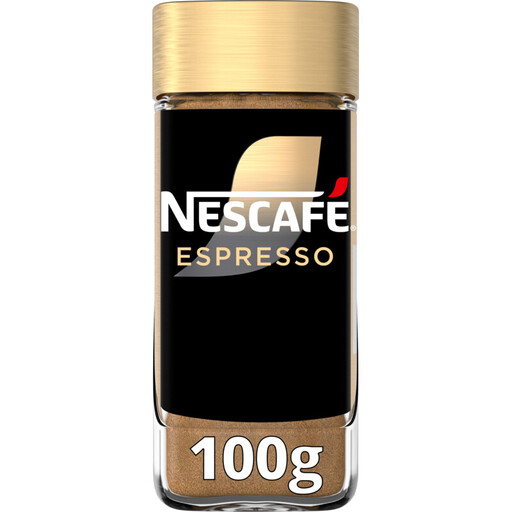
Why it suits this profile: A practical choice for anyone who wants to prepare espresso without a machine, grinder or capsule system.
You do not pay for features you will not use, and according to the description, you can easily prepare the serving size with 60 ml of hot water.
100% Arabica according to the product information; 100-gram jar stated to make 55 servings.

Why it suits this profile: For espresso and milk-drink enthusiasts who enjoy a pronounced flavour and want to set the grind themselves.
The blend and dark roast are clearly described, so you do not have to judge intensity based on a marketing name alone.
Blend of Arabica and Robusta; notes of nuts, cocoa and wood according to the product description.
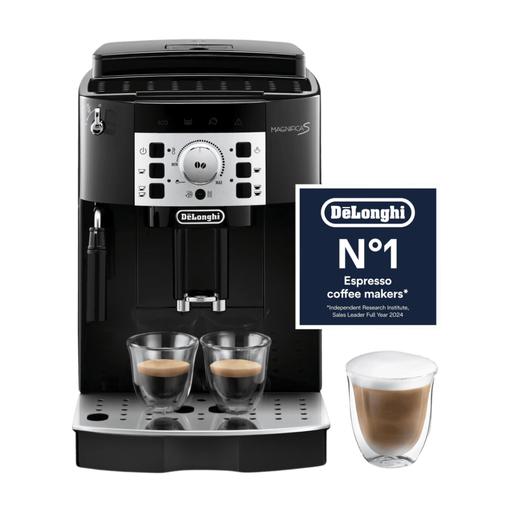
Why it suits this profile: Suitable for households that regularly prepare espresso, coffee or cappuccino and want minimal effort for each cup.
The specifications state the tank and bean capacities, so you can estimate in advance how often refilling will be needed.
0.25-litre bean hopper; 1.8-litre water tank; steam wand for milk froth according to the product details.
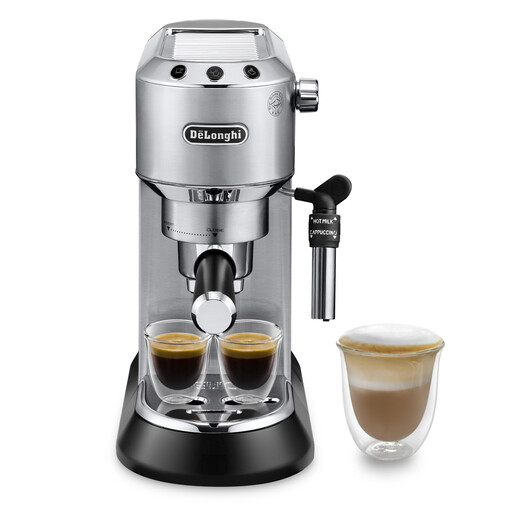
Why it suits this profile: A compact portafilter machine for anyone who wants to dose their own ground coffee and make cappuccino.
The 14.9 cm width and removable tank make it easier to assess the required kitchen space in advance.
15 bar pump pressure according to the specifications; suitable for ground coffee and E.S.E. pods with a separate filter.
We have put together a complete, up-to-date list of products that fully meet these strict selection criteria and the applicable European safety regulations.
That depends on the machine, the filter and your preferred cup size. First, follow the dosing instructions for the machine or capsule. For instant espresso, the recommended amount of water is usually stated on the packaging. More powder or less water will not automatically make the drink better; it may also make the flavour more bitter.
With a portafilter machine, you grind or dose the coffee yourself, tamp it and start the extraction. This involves more steps, but gives you greater control. A bean-to-cup machine grinds the beans and prepares the coffee largely by itself. The choice is mainly about convenience, available space and how much control you want over the preparation.
Store beans and ground coffee in a sealed container in a cool, dry place, away from direct sunlight and heat. Ideally, use the coffee within the period stated on the packaging. Seal the jar or bag properly after each use and check that the packaging is intact before use.
