
Vandaag of morgen in huis

Kwaliteit gegarandeerd

Welkomstaanbiedingen ontgrendelen: GRATIS bezorging | Tot 80% korting | Gratis 30 dagen JoyPlus-proefperiode
Download de app
An ergonomic baby carrier can be useful during a walk, while travelling or when doing household chores. You keep your hands free while your baby stays close to you. However, not every baby carrier is suitable for everyday use. Thin fabric, limited adjustability or an unclear weight limit can cause problems after just a few months.
So don’t focus only on colour, discounts or terms such as “extra comfortable”. Pay particular attention to the construction, the permitted weight and how the carrier can be adjusted.
A carrier for 3 to 20 kg may appear suitable for a long time. However, that does not automatically mean the same setting will work for a small baby and a toddler. Check whether the carrier has several settings and whether the leg openings, head support and shoulder straps are adjustable.
A newborn baby carrier must also be explicitly suitable for babies who cannot yet hold their head up independently. A model with a minimum weight of around 3.18 kg is not necessarily suitable from birth. Always follow the manufacturer’s age and usage instructions.
A breathable baby carrier with Air Mesh can be comfortable in warm weather. But airy fabric cannot make up for a poor fit. Your baby should sit close to your body, with their face visible and airway clear. A loose or sagging carrier may actually be impractical.
Also check the finish of the buckles, straps and seams. The carrier should be inspected before every use for wear, loose stitching or damage.
A baby carrier with lumbar support can distribute the weight more evenly across your body, but only if the waistband and shoulder straps are adjusted correctly. A firm or wide support is not equally comfortable for every parent. So look at the adjustment range, fastening and the way the back strap crosses.
Pain or pressure on your shoulders, hips or lower back is a reason to readjust the carrier or stop using it.
Compare the minimum and maximum weight with your child’s current and expected growth. For the Momcozy models mentioned, the stated range is around 3.18 to 19.96 kg. The product information refers to use from approximately 3 to 24 months, but the instructions remain the final authority.
A toddler carrier should provide sufficient support as your child gets heavier. Check that the carrier still fits closely and that your child’s legs can remain in a natural M-position, with the knees higher than the bottom.
A lightweight baby carrier weighing around 760 to 771 grams can be comfortable for everyday use. The wearer’s own weight is, after all, added to the weight of your baby. Air Mesh may be useful on warm days. A cotton baby carrier feels softer to some parents and is often machine washable according to the product description.
Always check the washing instructions. Regular washing is practical when using a carrier with a baby, but harsh detergents or high temperatures can damage the fabric and fastenings.
Look out for the following features:
A carrier that is easy to adjust is particularly useful when several carers use it.
The choices below are based on the stated materials, dimensions, weight limits and adjustment options. The performance of ergonomic shapes or support panels is not presented here as a medical property.
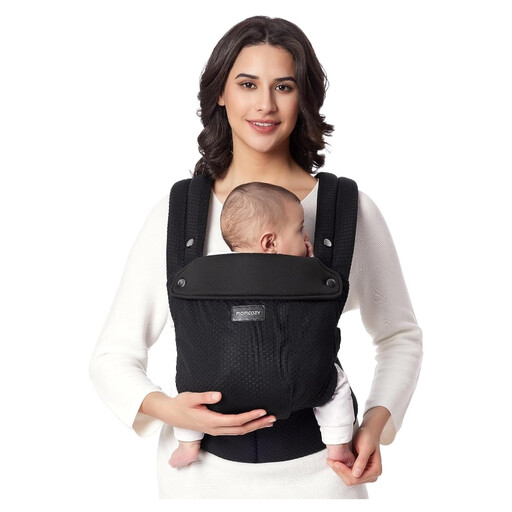
Why it suits this profile: The black Air Mesh version is aimed at parents looking for a simple, machine-washable carrier for everyday front carrying. The stated range is approximately 3.18 to 19.96 kg.
The product information states that it has three adjustment positions, an X-shaped back strap and built-in EVA hip support. This means you can adjust the fit rather than relying solely on the broad weight range.
Air Mesh, approximately 760 grams, machine washable and suitable for front carrying.
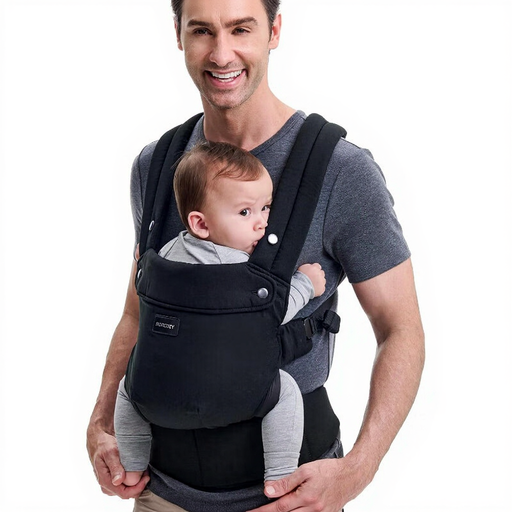
Why it suits this profile: This version is made from 100% cotton and features padded leg openings, a foldable neck support and adjustable straps. It is a good fit for parents who place particular importance on materials and finish.
The specifications mention three-point support, adjustable straps and a clear weight limit. Before buying, check whether cotton is better suited to your climate and carrying needs than mesh.
100% cotton, machine washable, approximately 771 grams and suitable for around 3.18 to 19.96 kg.
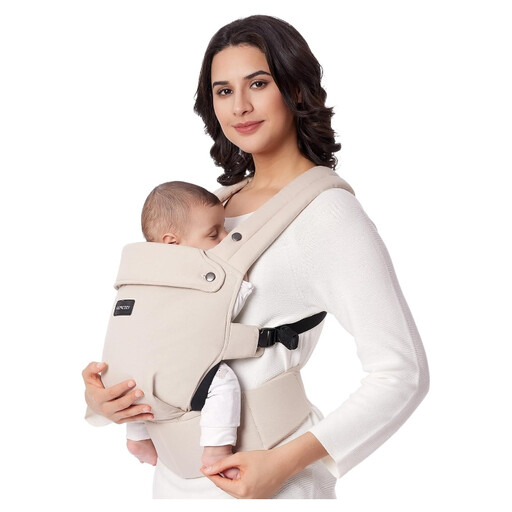
Why it suits this profile: This adjustable version is designed for everyday use, outings and travel when carrying your baby hands-free is practical. The front-carry design clearly defines how it is intended to be used.
The description mentions three settings, an X-shaped back construction, EVA hip support and padded straps. Use the model only within the stated limit and not during activities where there is a risk of falling.
100% cotton, machine washable, approximately 771 grams and a stated range of 3.18 to 19.96 kg.
We have put together a complete, up-to-date list of products that fully meet these strict selection criteria and the applicable European safety regulations.
Before every carrying session, check the following:
Do not use the carrier while running, cycling, cooking over an open flame or doing other activities where you could fall. A baby carrier does not protect against an accident or fall.
Not always. Check whether the manufacturer explicitly allows use with newborns and whether your baby needs to be able to hold their head up independently. The Momcozy models mentioned here state that they are suitable from approximately 3 months and warn against use with babies who cannot hold their head up independently.
The service life depends on wear, washing, fit and your child’s weight. A model with a range up to approximately 19.96 kg could theoretically support several stages of growth, but you should check the straps and fabric regularly. Stop using the carrier if you notice fraying, damaged buckles or persistent discomfort.
The lower weight can be beneficial, but carrying comfort also depends on the waistband, shoulder straps and weight distribution. Adjust the carrier for a short period first and check that your baby remains well supported. If you experience pain or pressure, adjust the fit or stop using the carrier.
