
Vandaag of morgen in huis

Kwaliteit gegarandeerd

Welkomstaanbiedingen ontgrendelen: GRATIS bezorging | Tot 80% korting | Gratis 30 dagen JoyPlus-proefperiode
Download de app
An ergonomic baby carrier can be useful during a walk, a journey on public transport or a busy morning at home. It keeps your hands free while your baby stays close to you. However, not every baby carrier is equally suitable for everyday use. A low price, soft fabric or the term “ergonomic” alone says little about fit, carrying comfort or how long the carrier will last.
As a Joybuy Product Recommendation Officer, I focus mainly on verifiable product details: weight limits, materials, adjustability, carrying positions and care requirements. This helps you avoid buying a comfortable carrier that nevertheless stops fitting properly after a few weeks.
A baby carrier suitable for 3 to 20 kg may appear suitable for a long period. In practice, the minimum weight is particularly important. A model recommended from around 3.18 kg is not automatically suitable for every newborn. Your child’s development also matters. According to the usage information, some baby carriers are intended for use from around 3 months and are not suitable for babies who cannot yet support their own head.
Always check:
An ergonomic design does not mean that every parent and child will need the same adjustments. The shoulder straps, waist belt and back panel need to fit properly. A carrier adjusted too loosely may feel uncomfortable and gives you less control over your baby’s posture. A model that is too tight can cause pressure points.
Look for adjustable baby carriers with several adjustment points. An X-shaped back strap, wide shoulder straps or a baby carrier with lumbar support can distribute the weight differently, but the result depends on correct adjustment.
An airy baby carrier made from Air Mesh can be appealing in warm weather. This material may feel more ventilated than thick cotton, but also check whether the carrier is machine-washable and how quickly the material dries. Cotton feels soft to many users, but may become warmer during a walk in hot weather.
So do not just look at the marketing name. Also check:
A lightweight baby carrier weighing around 760 to 771 grams is easier to pack in a changing bag or take with you when travelling. However, the product’s weight is only one factor. The carrier must also suit your child’s weight and your own body shape.
A model with a range of around 3.18 to 19.96 kg may be suitable for longer-term use, provided you follow the stated limits. Do not use a carrier outside the specified range.
The models in this selection are designed for front carrying. This is practical for bonding and short journeys. Check whether the carrier has an adjustable panel, a foldable neck support and softly finished leg openings.
According to Momcozy’s product information, several models support an M-shaped leg position and C-shaped back support. This should be viewed as a design feature described by the manufacturer, not as a medical guarantee. Your baby should sit upright, with their face visible and their airways clear.
Air Mesh is designed to promote ventilation and is combined with cooling fabric around the neck in Momcozy’s product information. According to the product specifications, the cotton models are made from 100% cotton and are machine-washable. Choose Air Mesh if ventilation is particularly important to you; choose cotton if you are mainly looking for a soft, easy-to-wash fabric.
Check the buckles, straps and seams before every use. If a buckle does not make a clear clicking sound, or if you notice wear, fraying or damage, do not use the carrier.
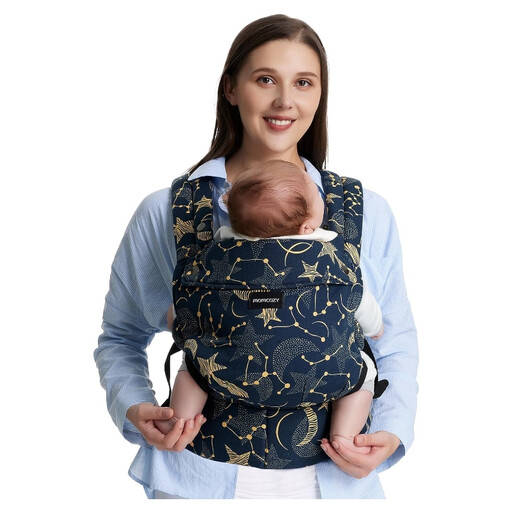
Why it suits this profile: According to the product specifications, this front-carrying model is suitable for approximately 3.18 to 19.96 kg and is machine-washable. This makes it a straightforward choice for parents looking for their first comfortable baby carrier.
The product information specifies a clear weight range, adjustable straps, a foldable neck support and padded leg openings. This means you do not have to rely solely on the term “ergonomic”.
100% cotton, machine-washable, front carrying and an EVA panel for lumbar support, according to the manufacturer’s description.
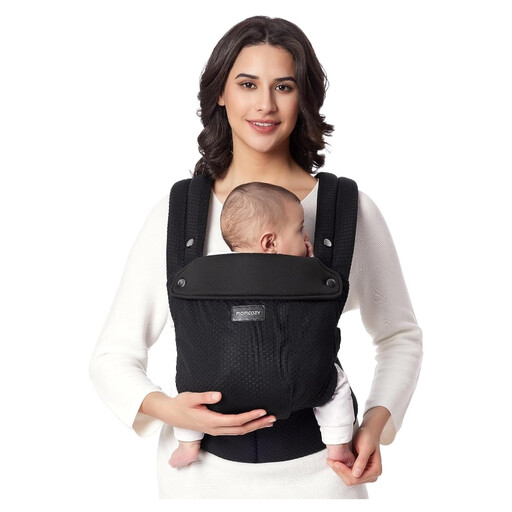
Why it suits this profile: Parents who often go for walks, travel or carry their baby for longer periods may wish to consider the Air Mesh version because of its stated product weight of 760 grams and breathable panel.
The product description mentions not only ventilation, but also three adjustable positions, an X-shaped back construction and built-in EVA lumbar support. Always check the fit yourself and follow the instructions.
Air Mesh, cooling neck fabric, machine-washable and a stated carrying range of approximately 3.18 to 19.96 kg.
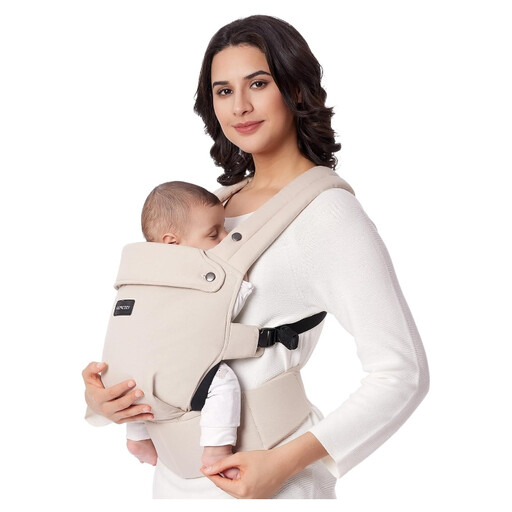
Why it suits this profile: This model is designed for everyday front carrying, outings and travel. The cotton version and adjustable components are well suited to situations where regular washing and readjustment are needed.
The stated specifications include 100% cotton, machine-washability, three adjustable positions and a range of approximately 3.18 to 19.96 kg. This gives you more to go on than a general claim about comfort.
EVA lumbar support, padded adjustable straps, foldable neck support and soft leg openings according to the product information.
We have put together a complete, up-to-date list of products that fully meet these strict selection criteria and the applicable European safety regulations.
Read the instructions before using the carrier for the first time and adjust it without your baby inside. Then check that:
Do not use the carrier while running, cycling, cooking over an open flame or carrying out other activities involving a risk of falling or burns. A baby carrier is not protective equipment in the event of an accident. Check the material before every carrying session.
Not always. Check the minimum weight and recommended age. According to the product information, the Momcozy models mentioned are intended for babies from around 3 months and are not suitable for children who cannot yet support their own head. A model specifically marketed for newborns should also be used in accordance with the accompanying instructions.
Its lifespan depends on use, washing and storage. Regularly check the buckles, seams, straps and fabric. Stop using the carrier if you notice wear, fraying or damage. A maximum weight of, for example, approximately 19.96 kg does not mean that every parent can carry a toddler of that weight comfortably.
A lower product weight can be helpful, but carrying comfort is also determined by the lumbar support, shoulder straps, back construction and adjustment. Start with short periods and check that both you and your child remain comfortable. If you experience pain or discomfort, readjust the carrier or stop using it.
