
Vandaag of morgen in huis

Kwaliteit gegarandeerd

Welkomstaanbiedingen ontgrendelen: GRATIS bezorging | Tot 80% korting | Gratis 30 dagen JoyPlus-proefperiode
Download de app
A baby carrier can be handy for a walk, a trip or a household task when you want to keep your hands free. However, not every model is right for every parent or baby. A carrier that looks comfortable on paper may feel too warm in practice, be difficult to adjust or offer insufficient support as your child gets heavier.
As a Joybuy Product Recommendation Officer, I filter product information by verifiable features. That helps you avoid paying for a marketing promise alone.
A baby and toddler carrier with a range up to 20 kg may seem useful for years. However, that doesn’t automatically mean it’s suitable for carrying a young baby from day one. Always check:
For several Momcozy models, the recommended range is around 3,18 to 19,96 kg, and use from around 3 months is stated. That is not the same as being suitable for a newborn.
The term ergonomic says little by itself about how well a carrier will fit your body. Look for specific features such as an M-position, adjustable straps, a wide seat and lumbar support. Your baby’s knees should sit higher than their bottom, while their face remains visible and their airway clear.
A baby carrier with an M-position also needs to be adjusted properly. Incorrect tension can cause pressure points around the legs or leave your baby sitting too loosely.
A cotton baby carrier often feels soft and is practical if you’re looking for a machine-washable model. In warm weather, a breathable baby carrier with Air Mesh may feel more comfortable. Don’t rely on the words “lightweight” alone: also check the carrier’s weight, ventilation panels and lining around the neck and leg openings.
A model for around 3,2 to 20 kg can grow with your child from baby to toddler, but the fit changes as your child gets taller. At each stage, check that:
A baby carrier for use from 3 months is a different choice from a model that explicitly supports newborns. If in doubt, follow the instructions and seek advice from a midwife, health visitor or other appropriate healthcare professional.
An adjustable baby carrier needs to fit the wearer as well as the baby. Look for:
According to the product description, a lumbar panel can offer extra support, but it’s no substitute for correct adjustment. Stop carrying your baby if you experience pain, tingling or persistent discomfort.
A machine-washable carrier is practical for everyday use. A model made from 100% cotton may feel soft, while Air Mesh can offer more ventilation. Also check:
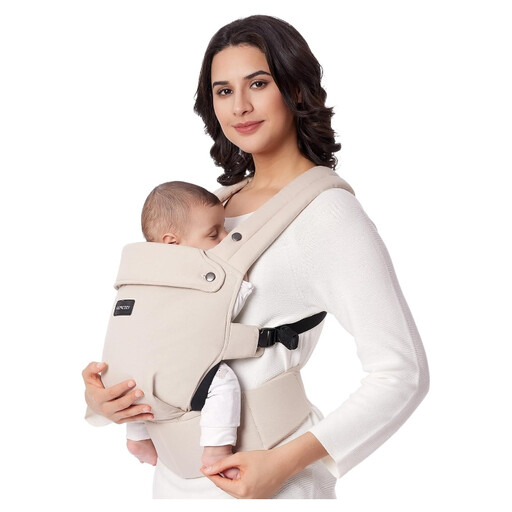
Why it suits this profile: This front carrier weighs around 771 grams and has three adjustable size settings. That makes it a straightforward option for parents looking for their first ergonomic baby carrier.
The product specifications state a clear range of around 3,18 to 19,96 kg, so you don’t have to rely on a vague age claim alone.
100% cotton, machine washable, X-shaped straps and EVA lumbar support, according to the product description.
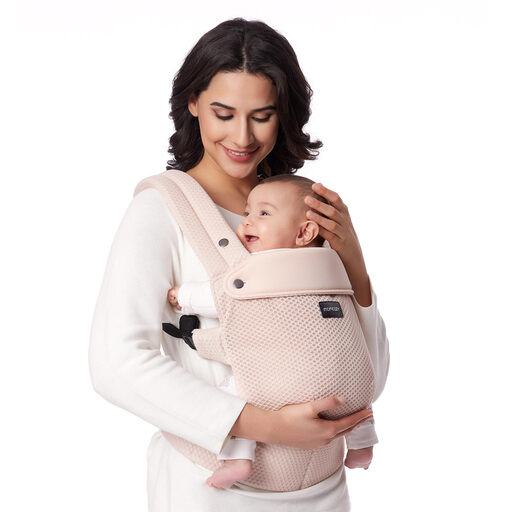
Why it suits this profile: This lightweight baby carrier is designed for parents who often go for walks, travel or carry their baby indoors, and want extra ventilation.
The Air Mesh panel and cooling material around the neck make its ventilation features more specific than a general “summer comfort” claim.
Air Mesh, three adjustable positions, EVA lumbar support and a stated carrying range of around 3,18 to 19,96 kg.
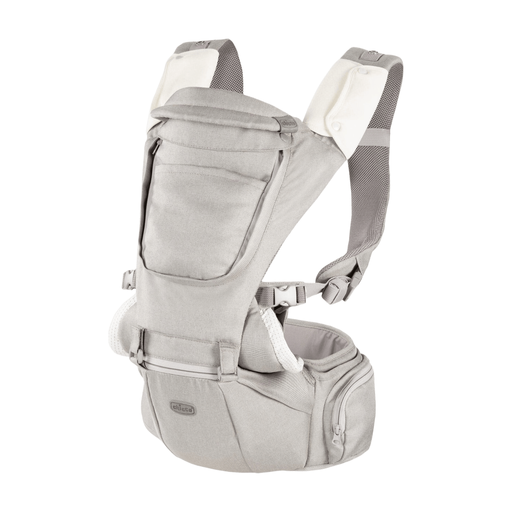
Why it suits this profile: With its separate hip seat and carrier, this model may appeal to parents who want to use different carrying styles on outings.
The product description specifies three configurations and several carrying positions. Check the age limits and safety instructions for each position.
A 3-in-1 design, carrying positions from the stated age and a base that helps distribute weight across the shoulders and hips, according to the product information.
Check the baby carrier before every use. Look for wear, loose stitching, damaged straps and buckles that don’t close properly. Follow these steps when putting it on:
Don’t use the carrier while cycling, running, cooking over an open flame or doing other activities that pose a risk of falling or burns. A baby carrier won’t protect your baby in a car accident or a fall.
We’ve put together a complete, up-to-date list of products that meet these strict selection criteria and the applicable European safety requirements.
It depends on the model. Some carriers are suitable from birth, while others are recommended from around 3 months. Always check the minimum weight, head support and carrying position in the instructions.
How long you can use it depends on the maximum weight, adjustability and the condition of the fabric and buckles. A model with a range up to around 20 kg may suit several stages of your child’s growth, but inspect the carrier regularly. Replace it if the straps, buckles or seams are damaged.
Cotton is soft and often easy to machine wash. Mesh can offer more ventilation in warm weather or when carrying your baby for longer periods. Choose based on how you’ll use the carrier, your clothing, the season and how often you plan to wash it.
