
Vandaag of morgen in huis

Kwaliteit gegarandeerd

Welkomstaanbiedingen ontgrendelen: GRATIS bezorging | Tot 80% korting | Gratis 30 dagen JoyPlus-proefperiode
Download de app
An ergonomic baby carrier can be useful during a walk, a trip to the supermarket or a journey on public transport. You have your hands free and your baby stays close to you. However, a carrier can be disappointing in practice if the fit is wrong, the material is too warm or the stated weight range is not suitable.
So don’t focus only on words such as “comfortable” or “lightweight”. Above all, check the construction, adjustability, materials and safety instructions. Below, you’ll find the pitfalls that are often overlooked and the product features that matter for different situations.
A baby and toddler carrier with a range of, for example, 3 to 20 kg may appear to be useful for a long time. However, this does not automatically mean that the same setting is suitable for every age. A young baby needs different support from a toddler who can already sit independently.
Therefore, check:
The carrier must be adjusted correctly according to the product information. Never use a model outside the stated weight range.
A cotton baby carrier often feels soft, but in warm weather it may let through less air than mesh. A breathable baby carrier with Air Mesh panels can provide greater ventilation, while cotton may feel more comfortable to some parents for everyday use.
Pay attention to the difference between:
Even in the Netherlands, walks, travel and warm rooms can quickly lead to additional body heat. Dress your baby appropriately and regularly check that their face remains uncovered and their airway is not obstructed.
A baby carrier with lumbar support can distribute the weight differently across your body. This is useful, but only when the waist belt, shoulder straps and back strap are adjusted correctly. A sturdy EVA panel does not automatically make an incorrect position comfortable.
Adjust the carrier while standing upright, then check:
For many parents, a baby carrier for 3 to 20 kg is appealing because it can grow with your child. However, check the exact product listing: some models state 3.18 to 19.96 kg, while others round this up to 20 kg.
An adjustable seat area or several size positions can help you adapt the carrier to your child’s body size. For example, a product with three adjustment positions offers more options than a model with one fixed width. Always follow the manufacturer’s instructions.
A lightweight baby carrier reduces the total weight you carry. The models in this selection weigh approximately 760 to 811 grams. This difference may seem small, but it can become noticeable during longer walks.
As well as the product weight, consider:
Low weight is therefore just one part of carrying comfort.
A machine-washable baby carrier is practical for everyday use. Spit-up, crumbs and stains are normal with baby products. Check whether the carrier can be machine washed and at what temperature. Fasten the buckles before washing the product and allow the straps and fabric to dry completely before using the carrier again.
A cotton baby carrier can be a soft choice for use indoors or in mild weather. Mesh is particularly useful when ventilation is important, for example during holidays, travel or summer walks.
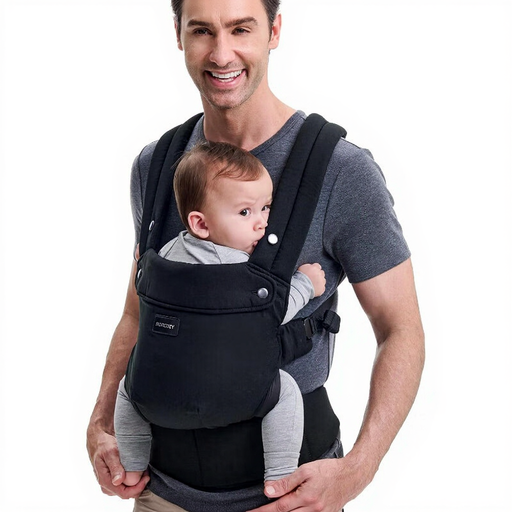
Why it suits this profile: The cotton version is designed for straightforward front carrying from approximately 3.18 kg to 19.96 kg. This makes it a simple choice for parents looking for their first baby carrier.
The product description specifies three adjustment positions, an M-shaped seat and clearly defined weight limits. This means you don’t have to rely solely on general comfort claims.
100% cotton, machine washable, X-shaped back straps and EVA lumbar support according to the product information.
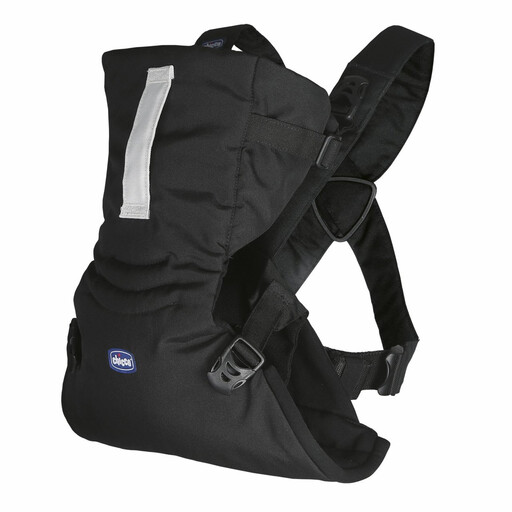
Why it suits this profile: This model is designed to be put on like a T-shirt and, according to the product information, is suitable from birth up to a maximum of 9 kg. This suits parents looking for a particularly simple starting solution.
The weight range is clearly limited to 9 kg. You therefore won’t buy this model expecting it to last into the toddler stage.
T-shirt style, adjustable seat area, machine washable at 30 °C according to the product information, and a weight of approximately 575 grams.
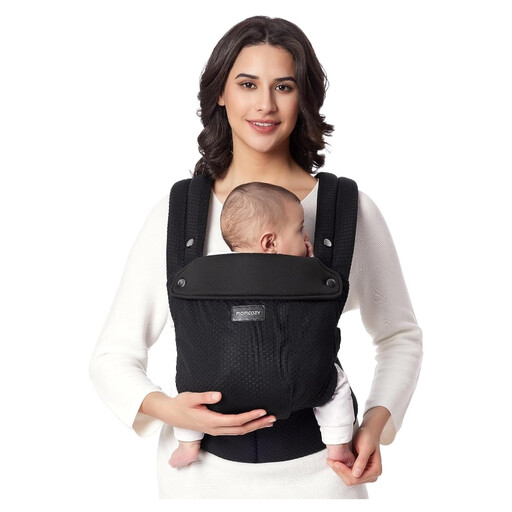
Why it suits this profile: The Air Mesh version is designed to provide ventilation on warm days, during outings and while travelling. The model is intended for front carrying from approximately 3.18 to 19.96 kg.
The material is clearly described as Air Mesh with cooling neck fabric. This gives you more useful information than the word “breathable” alone.
Air Mesh panels, approximately 760 grams, three adjustment positions and EVA lumbar support according to the product description.
We’ve put together a complete, up-to-date list of products that fully meet these strict selection criteria and the applicable European safety regulations.
Before every use, check the buckles, seams, straps and fabric. Do not use the carrier if any parts are damaged, worn or have come loose. Fasten all closures securely and check that they are fully closed.
While carrying your baby, pay attention to the following:
A baby carrier is not protective equipment in the event of a fall or road accident. Always read the instructions before use and follow the age and weight limits.
This varies by model. Many of the selected models start at around 3.18 kg and go up to approximately 19.96 or 20 kg. According to the product information, the Chicco EasyFit is suitable from birth up to a maximum of 9 kg. Always check the specific instructions and fit.
Position your baby upright and make sure their knees are higher than their bottom. The seat area should support the upper legs without pressing the legs tightly downwards. Then check that their face is visible, their airway remains clear and your baby is held securely against your body without feeling restricted.
Its service life depends on the material, how often it is used and how well it is maintained. Wash it according to the care label, do not use damaged buckles or worn straps, and check the seams regularly. A model suitable for up to approximately 20 kg may remain useful for longer than a carrier with a 9 kg limit, but the physical condition of the product remains the deciding factor.
