
Vandaag of morgen in huis

Kwaliteit gegarandeerd

Welkomstaanbiedingen ontgrendelen: GRATIS bezorging | Tot 80% korting | Gratis 30 dagen JoyPlus-proefperiode
Download de app
An ergonomic baby carrier can be a real help when you want to carry your baby on a walk, while shopping or when travelling on public transport. Your hands stay free and your little one stays close to you. Not every baby carrier is automatically comfortable or the right fit, though. A carrier that seems fine in the shop can prove tricky to adjust after a few weeks, or offer insufficient support as your child gets heavier.
So don’t focus only on colour, price or marketing claims like “all-day comfort”. Pay particular attention to the carrying position, the weight range, how adjustable it is, and how well the carrier fits your body.
A baby-and-toddler carrier is often promoted for a broad age range. That doesn’t automatically mean one setting suits every stage. A young baby needs different support to an 18 or 20 kilo toddler.
So check:
Some models list a range of around 3,18 to 19,96 kg, that is 7 to 44 lbs. Also read the manual: the stated range is no substitute for correct adjustment.
The term ergonomic on its own doesn’t say much. Look at the concrete construction. According to the product information, the legs should be in an M position, with the knees higher than the bottom. Your baby’s face must remain visible and airways clear.
According to Momcozy’s own information, certain models are designed with an M-shaped seat and C-shaped back support. This is a product feature, not a medical guarantee. Always check that your baby is actually seated well and follow the instructions in the manual.
A cotton carrier often feels soft and many models are machine-washable. In warm weather, however, a dense fabric can feel hotter. A breathable carrier with Air Mesh panels can be more practical then.
Note the difference between:
“Breathable” isn’t a fixed performance class. Base your choice on the material description, ventilation panels and the conditions in which you plan to use the carrier.
For a carrier for 3 to 24 months, it’s important that the stated range matches your child’s actual weight. Do not use a carrier for a baby who, according to the manual, cannot yet support their own head. Also stop when the maximum weight has been reached.
A baby carrier with lumbar support can help distribute weight more evenly across your body. Look for a firm waistband, adjustable shoulder straps and how the straps cross or connect.
An EVA panel or padded waist area is a tangible construction feature. It doesn’t guarantee that every parent will avoid back pain. Adjust the straps properly and stop if you feel pain or discomfort.
Check before each use:
A machine-washable lightweight baby carrier is practical for daily use. The carrier’s own weight matters too: the Momcozy models mentioned weigh around 771 grams, while wearing comfort mainly depends on the combination of fit, load and adjustment.
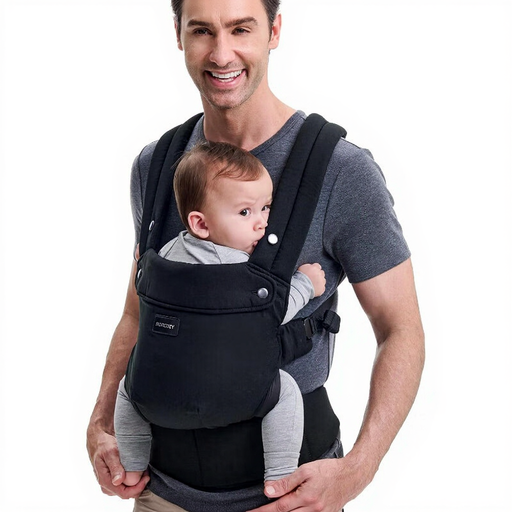
Why this suits the profile: This model is designed for everyday front carrying and has a stated range of around 3,18 to 19,96 kg. That makes it a straightforward choice for parents who want to start hands-free babywearing without lots of extra features.
The product specifications list the weight range, an M-shaped leg position and adjustable straps. Check the correct setting for each growth stage in the manual.
100% cotton, machine-washable, around 771 grams and, according to the product description, fitted with an EVA panel for lumbar support.
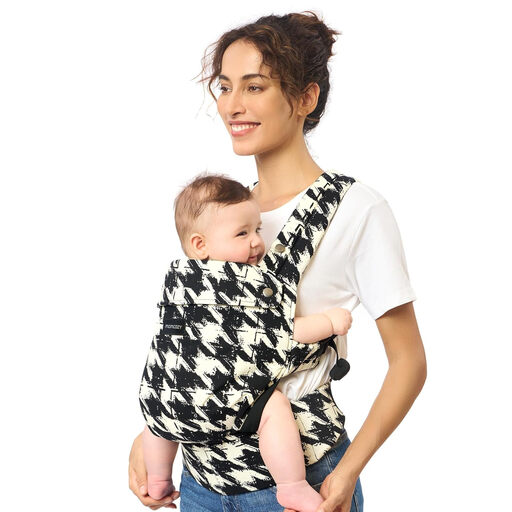
Why this suits the profile: The combination of cross-back straps, three adjustable positions and a wide, padded seat suits parents who pay close attention to finish and adjustability.
The information specifies tangible materials and adjustment positions rather than just a generic ergonomics claim. The material is described as OEKO-TEX Standard 100 certified cotton.
Cotton, machine washability, cross-back straps and a stated carrying range of around 3,18 to 20 kg.
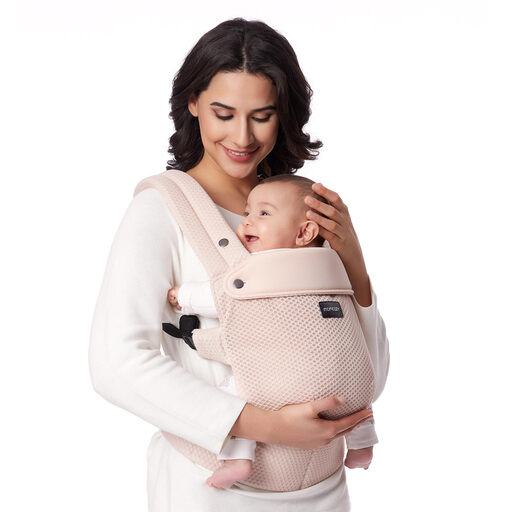
Why this suits the profile: For parents who are outside a lot, travel frequently or use a carrier in warmer conditions, Air Mesh fabric can be a practical material feature.
Ventilation is linked to a specific Air Mesh panel and cooling fabric at the neck. That’s more verifiable than just the term “breathable”.
Air Mesh material, adjustable positions, EVA lumbar support and a stated range of around 3,18 to 19,96 kg.
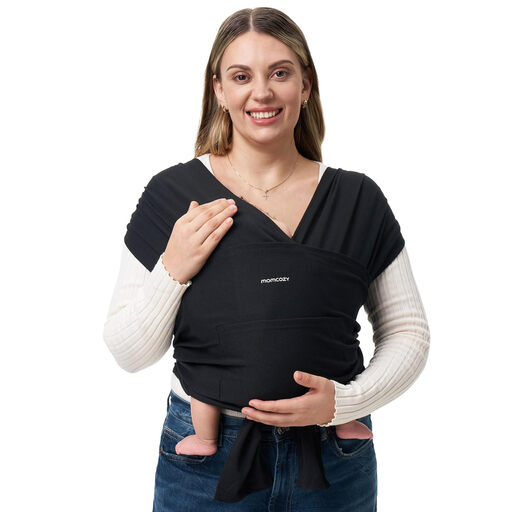
Why this suits the profile: The double-ring fastening is intended to adjust without tying. That can be handy for short carrying moments, at home or on the go.
The fastening and wearing method are described specifically. Spread the fabric evenly across your back and shoulder and check the rings before each use.
Around 660 grams, double-ring adjustment, cotton with elastane and a stated carrying range of 3,6 to 15 kg.
We’ve compiled a complete, up-to-date list of products that fully meet these strict selection criteria and comply with current European safety regulations.
A comfortable carrier only works well when it’s used correctly. Stick to these basic rules:
That varies by model. The ergonomic carriers mentioned are, according to the product information, intended for babies from around 3 months and a minimum weight of approximately 3,18 kg. Do not use a carrier when your baby, according to the manual, does not yet have sufficient head control.
Service life depends on the material, how often you use it and your child’s weight. A model with machine-washable fabric is practical for daily use, but wear to buckles, seams or straps means you should replace the product. The maximum weight and age indication also determine when the carrier is no longer suitable.
Lumbar support, a wide waistband and crossed shoulder straps can distribute weight differently. Whether that’s more comfortable for you depends on your body shape, the adjustment and your child’s weight. Take time to adjust the carrier and stop if you feel pain or discomfort.
