
Vandaag of morgen in huis

Kwaliteit gegarandeerd

Welkomstaanbiedingen ontgrendelen: GRATIS bezorging | Tot 80% korting | Gratis 30 dagen JoyPlus-proefperiode
Download de app
An ergonomic baby carrier may seem straightforward to choose at first. However, small differences in fit, material and carrying weight can make a big difference to everyday use. A carrier that feels comfortable in the shop may become too warm after a few weeks, be tricky to adjust or offer insufficient support as your baby gets heavier.
So look out for these common pitfalls:
Always check the minimum and maximum weight. Many models in this selection are designed for around 3.18 to 19.96 or 20 kg, which, according to the product descriptions, corresponds to approximately 3 to 24 months. That doesn’t mean every model is suitable for a newborn.
If your baby can’t yet support their head independently, only carry them in a carrier if the manufacturer expressly permits it and the carrier is correctly designed for this purpose. Follow the instructions and check that their airway remains clear. So a carrier for 3 to 20 kg isn’t necessarily suitable for newborns.
In a baby carrier with an M-position, your baby’s knees sit higher than their bottom, with their legs supported rather than hanging straight down. According to Momcozy’s own product information, the models mentioned are designed to support this position. Treat this as a product feature stated in the description, not a medical guarantee.
When trying on the carrier, check that:
A breathable baby carrier made from Air Mesh can be practical for travelling, walks and warm days. Some parents may find a cotton baby carrier softer and prefer it for everyday use indoors. Also check the weight of the carrier itself. The models below weigh approximately 760 to 811 grams.
A baby carrier with hip support or an integrated EVA panel may distribute weight differently across your waist, shoulders and back. The product descriptions for several Momcozy models mention an X-shaped back and additional waist support. Your personal comfort will still depend on your build, the fit and how long you wear the carrier.
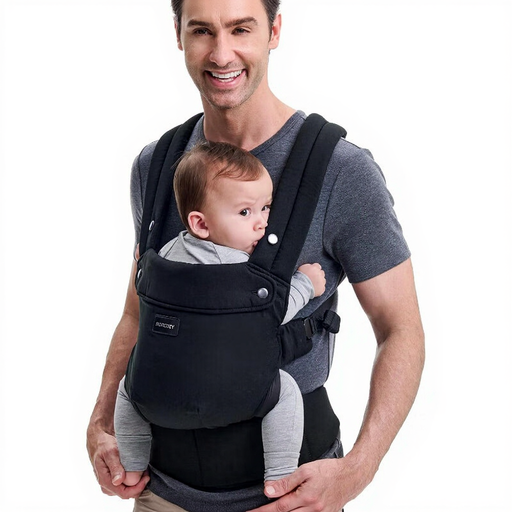
Why it suits this profile: This cotton baby carrier is designed for front carrying and has three adjustable positions for children weighing approximately 3.18 to 19.96 kg. It’s a good choice for parents looking for a straightforward model for everyday use.
The product information lists the weight range, adjustable straps, a fold-away neck support and padded leg openings. Before use, check that the fit is right for your baby.
100% cotton, machine washable, front carrying, EVA support and a weight of approximately 771 grams.
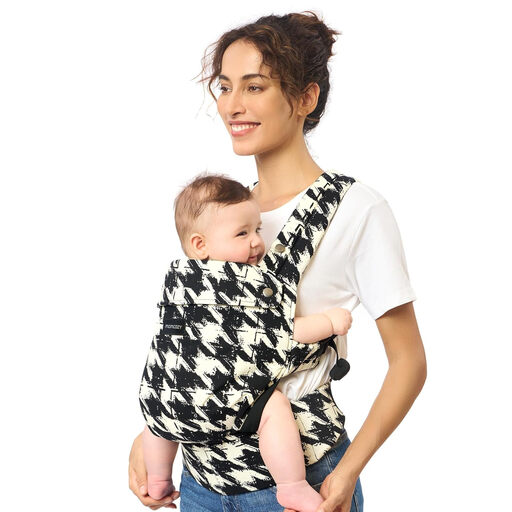
Why it suits this profile: This model combines a cotton construction with adjustable buckles, cross straps and a wide, padded seat. The description states that the material is OEKO-TEX Standard 100 certified; check the current product and certification information before buying.
The product details list three adjustable positions and a shaped seat. This lets you adjust the fit as your child grows, rather than focusing only on the maximum weight.
100% cotton, cross straps, machine washable, wide padded seat and a stated carrying range of approximately 3.18 to 20 kg.
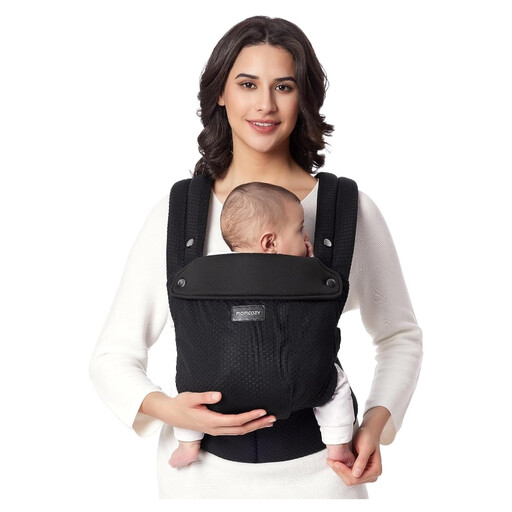
Why it suits this profile: According to the product description, the Air Mesh panels and cool-feeling neck fabric are designed to improve airflow in warm weather. This lightweight carrier is well suited to travel, walks and carrying your baby hands-free every day.
The description mentions more than just ventilating fabric: it also lists three adjustment positions, an X-shaped back and EVA waist support. Remember to check the buckles, seams and fabric regularly.
Air Mesh, machine washable, front carrying, approximately 760 grams and a stated carrying range of around 3.18 to 19.96 kg.
Before each use, check the fabric, seams, buckles and straps. Fasten all closures according to the instructions and check that your baby is upright, visible and close to your body. A baby carrier won’t protect you or your baby in a fall or road traffic accident. Don’t use it while cycling, running, cooking over an open flame or doing anything else that could put you at risk of falling or burns.
Wash a cotton baby carrier or mesh model according to the care instructions. Machine washing is convenient, but check again after washing that the buckles and seams are intact. Stop carrying your baby if either of you experiences pain, pressure or discomfort.
We’ve put together a complete, up-to-date list of products that meet these strict selection criteria and the applicable European safety regulations.
It varies by model. In this selection, the stated minimum is usually around 3.18 kg. Also check the age guidance, instructions on head support and maximum weight. Don’t use a model below its stated minimum weight.
Its lifespan depends on how it’s used, washed and stored. Check the buckles, seams, straps and fabric before every use. If you notice wear, fraying or damage, stop using the carrier, even if the maximum carrying weight hasn’t been reached.
According to the product description, a mesh model may offer more airflow than more tightly woven fabric. This won’t necessarily prevent your baby from getting warm. Dress your baby lightly, keep them out of direct sunlight and regularly check their face, neck and position.
