
Vandaag of morgen in huis

Kwaliteit gegarandeerd

Welkomstaanbiedingen ontgrendelen: GRATIS bezorging | Tot 80% korting | Gratis 30 dagen JoyPlus-proefperiode
Download de app
An ergonomic baby carrier can be useful on a walk, while travelling, doing household chores or visiting the city. It keeps your hands free while your baby stays close to you. However, not every baby carrier is equally practical. A lovely fabric or a wide age range tells you little about the fit, support and day-to-day use.
Look out for these three common pitfalls:
First, check the minimum and maximum weight. According to the product specifications, the Momcozy models in this selection are designed for babies weighing approximately 3.18 to 19.96 kg, or around 7 to 44 lb. The recommended age range is approximately 3 to 24 months, but your child's weight and development matter more than their age in months alone.
Your baby should sit upright in the carrier, with their face visible and airway clear. The product information also states that you should not use a carrier for a baby who cannot yet support their head independently. Always follow the instructions for your chosen model.
Check the carrying direction, too. The Momcozy versions mentioned here are designed for front carrying. So, if you're looking for a baby and toddler carrier for back carrying, don't assume that every model is suitable.
In the ergonomic M-position, your baby's knees sit higher than their bottom, with their thighs supported. The carrier needs to be wide enough to support their legs comfortably, without creating pressure points behind the knees.
According to the product descriptions, the Momcozy carriers support this position with an adjustable panel and padded leg openings. This is a product specification, not a guarantee that every baby will automatically sit correctly. Once the carrier is on, check that your baby is close to your body and that the fabric isn't covering their face.
A practical check:
For warm weather, an airy baby carrier made with Air Mesh may be worth considering. According to the product information, mesh lets more air through than an all-cotton version. The Momcozy Mesh models also have cooling fabric around the neck. This can be useful when travelling, on summer walks or indoors, but it won't necessarily prevent you or your baby from getting warm.
The Mesh versions weigh approximately 760 to 771 grams. According to the stated specifications, the cotton models weigh approximately 771 grams and are machine washable. A lightweight baby carrier is especially handy if you often pack it in a changing bag or take it with you on outings.
Check the carrying support, too. The models below list features including EVA hip or lumbar support, an X-shaped back design or a three-point support system. These features are intended to distribute the weight. If you experience pain, tingling or discomfort, stop using the carrier and adjust it.
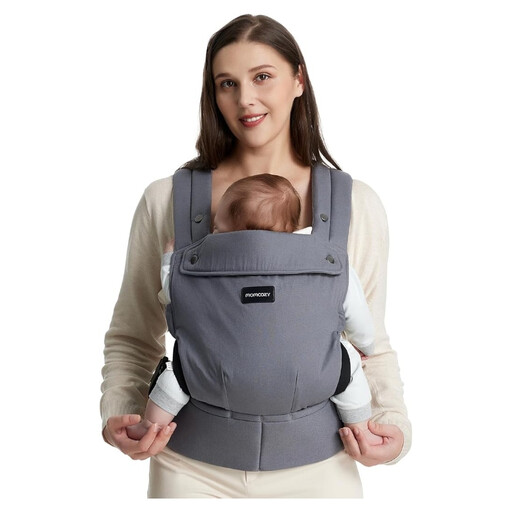
Why it suits this profile: A straightforward cotton option for first-time carrier buyers who mainly plan short daily walks, trips to the shops or journeys.
The product information lists a weight of approximately 771 grams, machine-washable cotton, adjustable straps and a weight range of around 3.18 to 19.96 kg.
100% cotton, an adjustable fit, EVA support and padded leg openings.
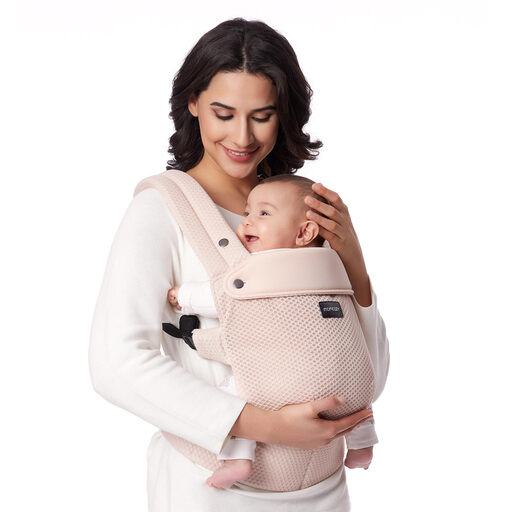
Why it suits this profile: A good choice for parents who spend lots of time outdoors and value ventilation, multiple adjustment options and a clearly stated weight range.
The Air Mesh panel, cool-touch neck fabric and three adjustable positions provide specific details, rather than relying on a general comfort claim.
Breathable mesh, EVA lumbar support, an X-shaped back and a stated weight range of approximately 3.18 to 19.96 kg.
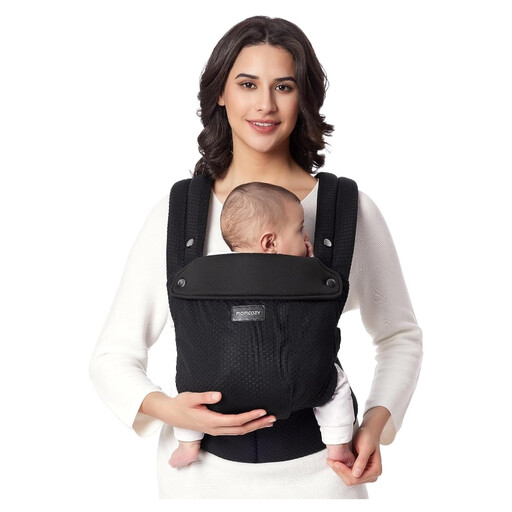
Why it suits this profile: A practical option for everyday hands-free baby carrying, outings and travel, where easy washing and ventilation matter.
The specifications mention machine washing, front carrying, padded leg openings and clear safety limits. This makes it easier to check the carrier before each use.
Air Mesh, cooling neck fabric, an adjustable fit and a product weight of approximately 760 grams.
We've put together a complete, up-to-date list of products that meet these strict selection criteria and current European safety regulations.
A baby carrier is not protective equipment in the event of a fall or accident. So don't use one while running, cycling, cooking over an open flame or doing other activities that involve a risk of falling or burns. Before each use, check:
Follow the instructions and readjust the straps as your baby grows. Stop immediately if you or your child experiences pain, pressure or discomfort.
According to the product information, the Momcozy models discussed here have a minimum weight of approximately 3.18 kg. Only use a carrier if your baby can also control their head sufficiently and the instructions say it is suitable.
Its lifespan depends on how it's used, washed and stored, as well as general wear and tear. Regularly check the buckles, seams, straps and fabric. Stop using the carrier if any parts are damaged, stretched or worn, even if your child's weight is still within the stated limit.
An Air Mesh model can be handy in warm weather, when travelling and on longer walks. For everyday use, a good fit, easy adjustment, washability and adequate support matter more than the material alone. Always check that the carrier you choose is suitable for your baby and the way you plan to carry them.
