
Vandaag of morgen in huis

Kwaliteit gegarandeerd

Welkomstaanbiedingen ontgrendelen: GRATIS bezorging | Tot 80% korting | Gratis 30 dagen JoyPlus-proefperiode
Download de app
An ergonomic baby carrier can be handy for a walk, a trip, or doing chores around the house. It keeps your hands free and your baby close to you. However, not every baby carrier is automatically suitable for daily use. A low price, soft fabric, or the term 'ergonomic' says little on its own about fit, support, and safe use.
That's why it's important to focus on product specifications you can check. The following pitfalls are common when choosing a carrier for your baby or toddler.
A carrier for 3 to 20 kg might seem usable for a long time, but the minimum weight and your child's developmental stage are just as important. According to the product information, the Momcozy models in this selection are intended for babies from around 3 months old, with a recommended weight of approximately 3.18 to 19.96 kg.
A higher maximum weight doesn't mean you can use the carrier right from birth. If your baby cannot yet support their own head, always check the manual and the manufacturer's advice first.
A cotton carrier feels different from a breathable carrier with Air Mesh. Cotton can be pleasant for everyday use and is machine-washable, according to the product information. Mesh might be a more logical choice in warm weather, when travelling, or if both parent and child tend to get warm quickly.
However, pay attention to the entire construction. A breathable back or front panel doesn't automatically prevent your baby from getting too hot. Regularly check their temperature, posture, and make sure their face is visible.
A carrier with lumbar support can help to distribute weight more evenly across your shoulders, back, and hips. But this only works when the waistband and shoulder straps are adjusted correctly. A carrier that's too loose will let your baby sag away from your body, while one that's too tight can be uncomfortable.
Therefore, don't just look for the presence of an EVA panel or X-shaped straps, but also consider the adjustability and how the carrier fits your body.
In a carrier that supports the M-position, the baby's knees are higher than their bottom, and their legs are supported. The product descriptions for the Momcozy models mentioned refer to an M-shaped seat. Think of this as a design feature and always follow the user manual for correct adjustment.
Your baby's back should be straight and held close against your body. Their face must be visible, and their nose and mouth should not be covered by fabric or your body.
Compare the main materials:
Being machine-washable is practical for daily use. After washing, check that the seams, straps, and buckles are still intact. Always follow the care label and the manual.
According to the provided product specifications, the Momcozy carriers weigh approximately 760 to 771 grams. This puts them in the lightweight category, but the overall feel also depends on weight distribution and fit.
Most of the Momcozy models mentioned are designed for front-carrying. A model with multiple carrying positions isn't automatically more convenient: extra features can also mean more adjustments are needed. Choose based on your daily routine.
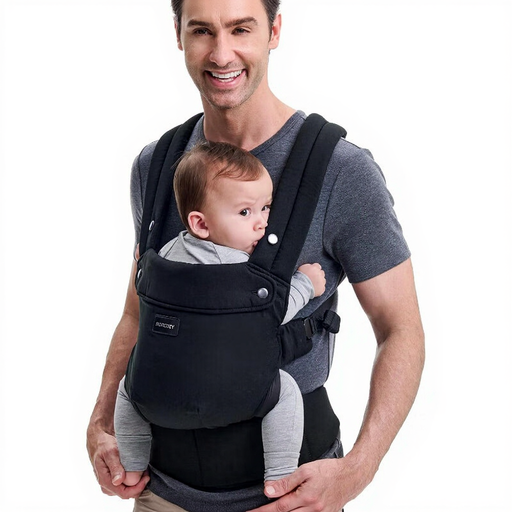
Why it's a good fit: A straightforward front carrier for parents looking for their first carrier for shopping, short walks, and daily use.
The product information specifies a weight range of approximately 3.18 to 19.96 kg, three adjustment positions, and an M-shaped seat. This allows you to compare the specifications clearly beforehand.
100% cotton, machine-washable, adjustable straps, EVA lumbar support, and a foldable neck support.
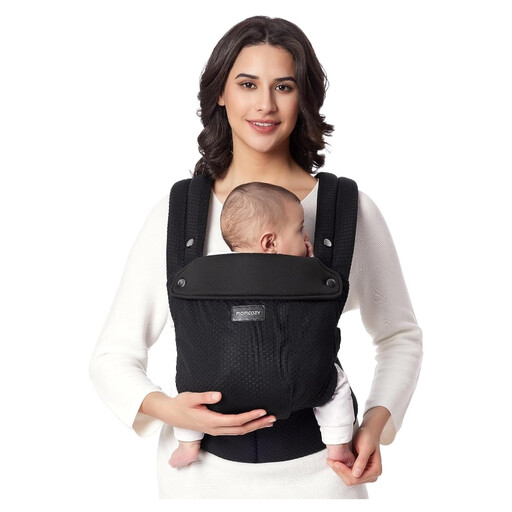
Why it's a good fit: Suitable for parents who are often on the go and value air circulation, lumbar support, and hands-free baby carrying.
Air Mesh and cooling neck contact fabric are explicitly mentioned in the product description. This means the carrier is designed for ventilation, so you don't have to assume 'breathable' is just a general claim.
Approximately 760 grams, machine-washable, three adjustment positions, X-shaped back straps, and built-in EVA lumbar support.
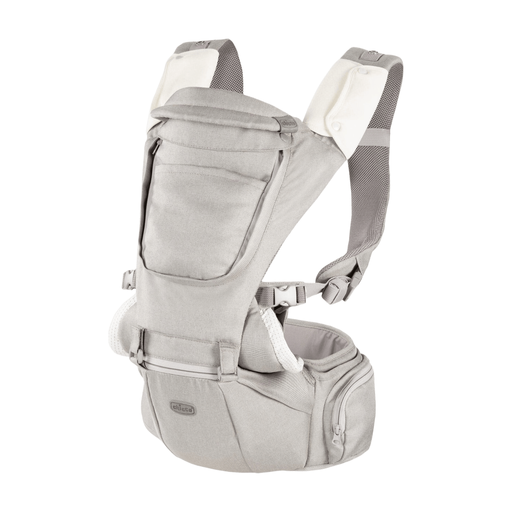
Why it's a good fit: An option for carers who want to use different carrying styles during outings and longer journeys.
According to the product description, the base, carrier, and combination mode can be used separately. Be sure to check the age limit and safety instructions for each carrying position.
3-in-1 use, removable hip seat, multiple carrying positions, and materials with breathable mesh.
Before each use, check the buckles, straps, seams, and fabric. Do not use the carrier if any parts are damaged, worn, or missing. Fasten every buckle completely and check that it is secure.
Also, pay attention to these points:
We have compiled a complete, up-to-date list of products that fully meet these strict selection criteria and comply with current European safety regulations.
This varies by model. According to the product information, the Momcozy carriers mentioned have a recommended range of approximately 3.18 to 19.96 kg. The age recommendation is around 3 to 24 months. Always check both limits and do not use the carrier for a baby who cannot yet support their own head if the manual advises against it.
The lifespan depends on use, washing, and storage. Regularly check for loose seams, discolouration, wear and tear, damaged buckles, and stretched straps. Replace the carrier if you have any doubts about its structural integrity or if a part no longer fastens properly.
Cotton is often a good fit for parents looking for a soft, machine-washable carrier for everyday use. Mesh can be more convenient in warm weather or for longer outings, as the material is designed for air circulation, according to the product description. The right choice depends on the season, clothing, duration of use, and personal fit.
