
Vandaag of morgen in huis

Kwaliteit gegarandeerd

Welkomstaanbiedingen ontgrendelen: GRATIS bezorging | Tot 80% korting | Gratis 30 dagen JoyPlus-proefperiode
Download de app
An ergonomic baby carrier can come in handy on a walk, when travelling around the Netherlands or while doing household chores. It keeps your hands free and your baby close. However, not every baby carrier is suitable for long-term use. A poor fit, inadequate support or material that feels too warm can mean the carrier is barely used after a few weeks.
So when comparing carriers, look beyond terms such as “ergonomic”, “lightweight” or “all-day comfort”. Check the product specifications, recommended weight and how the carrier can be adjusted.
A baby carrier for 3 to 20 kg might seem practical because you can use it for longer. In reality, the carrier needs to be adjustable in several ways. The seat width, back panel height and strap positions must suit both a young baby and a toddler.
So check:
According to the product information, a carrier with a weight range of around 3.18 to 19.96 kg is suitable for babies from around 3 months to about 24 months. That doesn’t automatically mean the model is suitable from birth.
A breathable carrier should specify the material or ventilation panel. An Air Mesh panel can feel cooler in warm weather, while 100% cotton often feels softer and can be easily machine washed.
Think about your baby’s clothing, too. A carrier designed for warm weather won’t stop you and your baby from sharing body heat. Check regularly that your baby isn’t getting too warm, and always keep their face uncovered.
A carrier with lumbar support can distribute weight more evenly across your torso, but only when the waist belt and shoulder straps are properly adjusted. If the carrier is too loose, your baby may slip down; if it’s too tight, it may be uncomfortable for you or your baby.
Every time you use it:
An ergonomic carrier with an M-position isn’t necessarily suitable for a newborn. Some models are designed for babies from around 3 months, when they can support their own head. Other models, such as the Chicco EasyFit, are listed as suitable from birth up to a maximum of 9 kg.
So check the specific instructions rather than relying on the product title alone. The Momcozy models in this selection are mainly designed for front carrying and for babies weighing around 3.18 to 19.96 kg.
An X-shaped back design, padded shoulder straps and an EVA panel at the waist can help distribute weight evenly. These are product features you can check, but comfort will vary depending on your body shape.
When trying on a carrier, check:
The lightweight carriers in this selection weigh around 760 to 810 grams. This can be useful for everyday use, but the total weight will also depend on your baby, their clothing and any accessories.
Being machine washable is handy for everyday use. Always follow the care label. After washing, check that the buckles, straps and seams are still intact before using the carrier again.
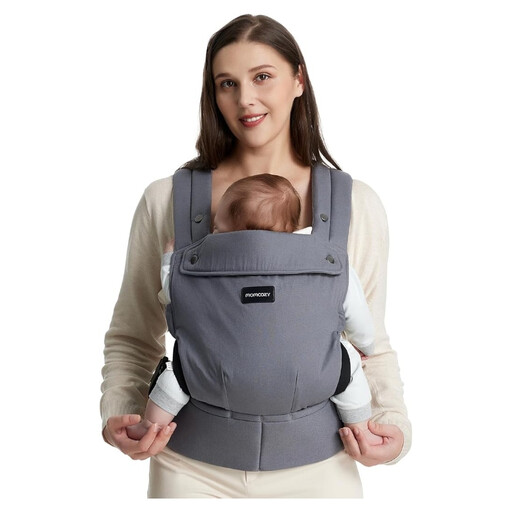
Why it suits this profile: This model is designed for straightforward front carrying and is suitable for babies weighing around 3.18 to 19.96 kg. Its neutral colour and machine-washable 100% cotton fabric make it a good choice for everyday use.
The product specifications include the weight range, adjustable straps and waist support. This makes it easier to check whether the carrier is suitable than with a model described only in general marketing terms.
100% cotton, machine washable, EVA waist support, adjustable straps and a foldable neck support.
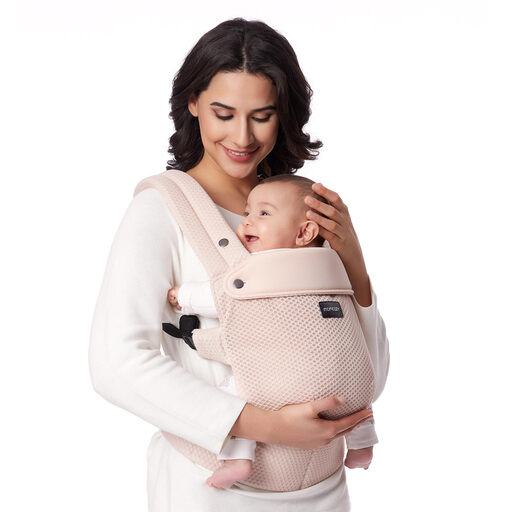
Why it suits this profile: The Air Mesh panels and cooling neck fabric are designed for parents who often go walking or travelling, or are looking for a carrier for warm weather.
Its breathable design is backed up by the use of Air Mesh material. The product information also lists three adjustable settings and a weight range of around 3.18 to 19.96 kg.
Air Mesh, cooling neck fabric, X-shaped back, EVA lumbar support, machine washable and weighs around 771 grams.
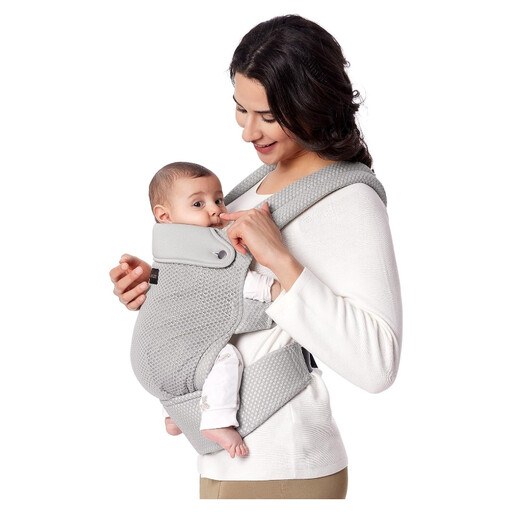
Why it suits this profile: This model is designed for frequent use during everyday tasks, outings and travel. Its low weight and front-carrying design keep things straightforward.
The adjustable settings, padded leg openings and lumbar support make it easier to check the fit. Use the carrier only within the specified weight range and in accordance with the instructions.
Air Mesh, weighs around 771 grams, X-shaped back straps, EVA lumbar support and suitable for around 3.18 to 19.96 kg.
We’ve put together a complete, up-to-date list of products that meet these strict selection criteria and current European safety regulations.
It depends on the model. According to the product information, the Momcozy carriers above are designed for babies from around 3 months and weighing at least about 3.18 kg. A model such as the Chicco EasyFit is listed as suitable from birth up to 9 kg. Always check the instructions, and don’t use a carrier if your baby can’t yet support their own head, unless the model is specifically designed for this.
How long it lasts depends on the material, your child’s weight and how often you use the carrier. A weight range up to around 20 kg may cover several stages of growth, but check the buckles, seams, straps and fabric before every use. Replace the carrier if any parts are damaged, worn or missing.
A low weight is handy, but it doesn’t tell you everything about comfort. Also consider lumbar support, padded shoulder straps, weight distribution and adjustability. Start with short periods of use, readjust the carrier if you feel any pressure or pain, and take breaks during longer outings.
