
Vandaag of morgen in huis

Kwaliteit gegarandeerd

Welkomstaanbiedingen ontgrendelen: GRATIS bezorging | Tot 80% korting | Gratis 30 dagen JoyPlus-proefperiode
Download de app
An ergonomic baby carrier can be useful on a walk, during a trip to the supermarket or when travelling with your baby. It keeps your hands free while your little one stays close to you. However, not every baby carrier is automatically suitable for everyday use. Marketing terms such as “lightweight”, “ergonomic” and “suitable for all ages” only mean something if the product details back them up.
Look out for these three common pitfalls:
A baby carrier should suit your child’s current weight, not just their expected growth. According to the product information, the Momcozy models in this selection are designed for babies weighing approximately 3.18 to 19.96 kg, or around 7 to 44 lbs. The stated age range is approximately 3 to 24 months.
Also check the restrictions on how it can be used. The product specifications state that these models are designed for front carrying. They are not automatically suitable for back carrying or forward-facing carrying. Always follow the instructions for the specific model.
Young babies need extra support. The product information advises against using these carriers for babies who cannot yet support their head independently. Keep their airway clear, make sure their face is visible and ensure your baby is upright and close against your body.
In a baby carrier with an M-position, your baby’s knees sit higher than their bottom, with their legs supported. This prevents their legs from dangling straight down. Check that the seat is wide enough and that you can adjust its width to suit your baby’s height.
A carrier with several settings may last longer as your baby grows. The Momcozy models are described as having three adjustable positions. This is practical as your baby gets bigger, but you’ll need to adjust the carrier correctly every time you use it. A roomy carrier won’t necessarily fit a smaller baby.
A cotton baby carrier can feel soft and is often machine washable. According to the product description, the Momcozy cotton models are made from 100% cotton and weigh approximately 771 grams. This puts them in the lightweight baby carrier category, but overall comfort also depends on how the weight is distributed.
A breathable baby carrier with Air Mesh panels may be a better choice for warm days, travelling or longer walks. According to the product information, the Momcozy mesh versions feature breathable Air Mesh material and cooling material where the carrier touches the neck. This doesn’t guarantee that you or your baby won’t get warm; clothing, the temperature outside and how the carrier is adjusted all play a part too.
A baby carrier with lumbar support can distribute pressure around your lower back differently. The models mentioned feature an EVA lumbar support panel combined with an X-shaped back design. Check that the waist belt fits securely without digging in. Stop using the carrier if you or your child experiences pain or discomfort.
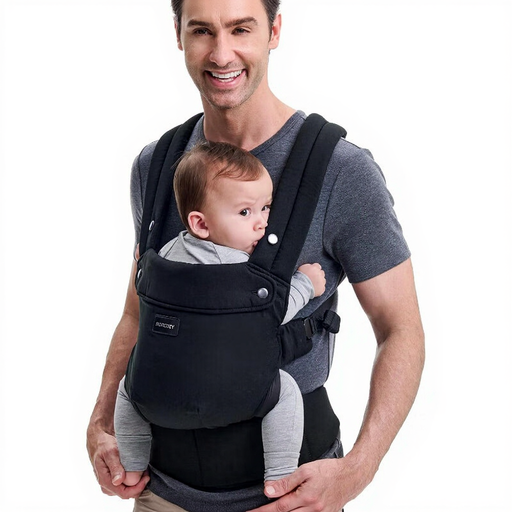
Why it suits this profile: This front-facing model combines cotton, adjustable straps and a carrying range of approximately 3.18 to 19.96 kg, making it a straightforward option for everyday use.
The weight limits and minimum age are clearly stated, so you don’t have to rely solely on a general age claim.
100% cotton, machine washable, approximately 771 grams and fitted with EVA lumbar support, according to the product specifications.
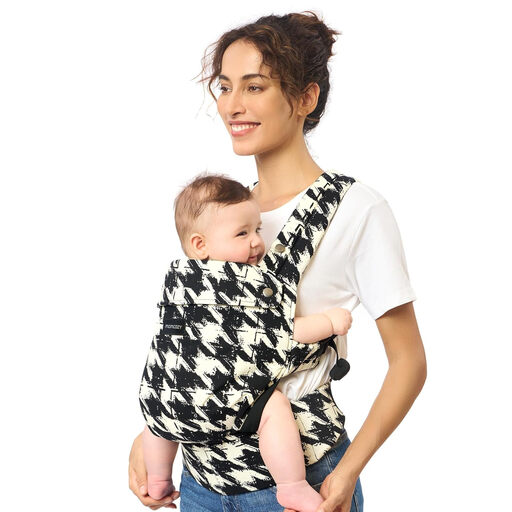
Why it suits this profile: A good option for parents who pay attention to material details and want an adjustable carrier for both babies and toddlers.
The description specifies 100% cotton, adjustable buckles and three carrying positions. This makes the features easier to verify than a vague claim about comfort.
OEKO-TEX Standard 100 is mentioned in the product information; X-shaped straps, a wide seat and machine washability are also listed.
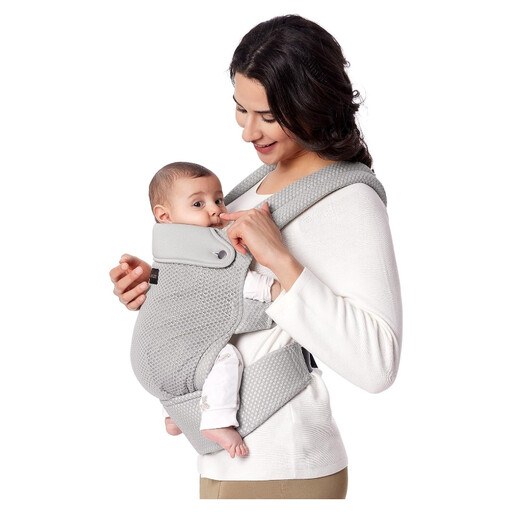
Why it suits this profile: This breathable baby carrier is a good match for parents who often use a carrier on days out, when travelling or in warmer weather.
As well as the mesh fabric, the product information gives the weight, carrying direction and maximum load. This means you’re not choosing based on the word “breathable” alone.
Air Mesh, cooling material where the carrier touches the neck, three adjustable positions, EVA lumbar support and a stated carrying range of up to approximately 19.96 kg.
Before each use, check:
Do not use the carrier while cycling, running, cooking over an open flame or doing other activities where you could fall or lose your balance. A baby carrier does not protect your child in an accident. If you’re unsure about the position or suitability, consult the instructions and seek advice from an appropriate healthcare professional if needed.
We’ve put together a complete, up-to-date list of products that meet these strict selection criteria and the applicable European safety regulations.
That depends on the model, your baby’s weight and their development. The Momcozy carriers mentioned here are stated as suitable from approximately 3 months and 3.18 kg. Don’t use the carrier if your baby cannot yet support their head independently, unless the instructions specifically say otherwise.
Its lifespan depends on how often it’s used, how it’s washed and stored, and the load it carries. Check the seams, buckles and straps regularly. Stop using it if you notice damage or wear, or if a buckle no longer fastens properly. A higher maximum weight limit doesn’t mean the carrier will last indefinitely.
Many parents like cotton because it feels soft and is easy to wash. Mesh may be more suitable for warm weather and frequent use on the go. Alongside the material, consider the weight, adjustment options, carrying position and support for both you and your child.
