
Vandaag of morgen in huis

Kwaliteit gegarandeerd

Welkomstaanbiedingen ontgrendelen: GRATIS bezorging | Tot 80% korting | Gratis 30 dagen JoyPlus-proefperiode
Download de app
An ergonomic baby carrier can be useful on a walk, on a train journey or while doing household tasks. It keeps your hands free and your baby close to you. But sometimes a carrier can disappoint in practice. A seat that’s too narrow, straps that are difficult to adjust or insufficient support around your waist can mean you barely use the carrier after a few weeks.
Use these checks to cut through the marketing language and focus on information that’s genuinely useful.
A baby and toddler carrier is often advertised with a broad weight range, for example from 3 to 20 kg. That doesn’t automatically mean one setting will suit every baby. Check whether the carrier has several adjustment points and whether the seat can be adjusted to fit your child’s height.
It’s particularly important for younger babies that their head is well supported and their face remains visible. Always follow the age and weight limits in the instructions.
The word ergonomic doesn’t tell you much on its own. Look for specific features. An M-position baby carrier supports the legs so that the knees sit higher than the bottom. The back should also be well supported, without your child slumping down.
A brand’s product description is no substitute for the instructions. According to Momcozy’s product information, certain models have an M-shaped seat and adjustable positions. While carrying your baby, check that they’re sitting upright, held close to your body and able to breathe freely.
A lightweight baby carrier is handy when you’re out and about, but a low product weight doesn’t tell you how the carrier will feel as your toddler gets heavier. Pay attention to the shoulder straps, waist belt and how the weight is distributed across your back, too.
A baby carrier with lumbar support can distribute pressure around your lower back differently. This is particularly relevant if you use the carrier for longer walks or journeys. Stop carrying your baby if you experience pain or numbness, and readjust the straps.
The models in this selection have a stated weight range of around 3.18 to 19.96 kg, or approximately 7 to 44 lbs. According to the product information, this corresponds to a period of use of around 3 to 24 months. The right time to use a carrier also depends on your child’s development.
Don’t use a carrier for a baby who can’t yet support their head independently if the instructions rule this out. Also check the buckles, straps and fabric for wear before every use.
A good M-position baby carrier should be adjustable to suit your child’s build. Their legs shouldn’t hang straight down, and the fabric shouldn’t dig into the backs of their knees. Padded leg openings can make contact more comfortable, but always check for pressure points.
Pay attention to the position of your baby’s head and neck, too. A foldable neck support can be practical, but it mustn’t cover their face. Their airway must remain clear, and you should be able to check on your baby at all times.
A cotton baby carrier feels soft to many parents and is often machine washable. However, cotton can feel warmer than mesh in hot weather. A breathable baby carrier made with Air Mesh fabric may therefore be a better choice for summer walks or trips to a warm climate.
Always check the washing instructions. If the product information says to do so, make sure the buckles are fastened before washing. A carrier for everyday use should also be easy enough to put on and take off without help.
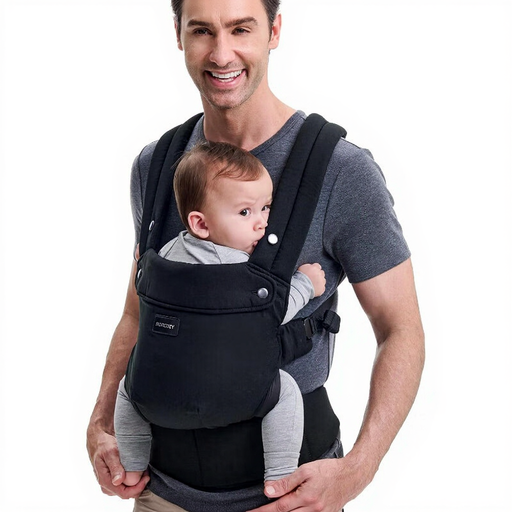
Why it suits this profile: This cotton baby carrier is designed for babies from around 3 to 24 months and has a stated weight range of approximately 3.18 to 19.96 kg. It’s a good choice for parents looking for one adjustable carrier for everyday use.
The product information lists three adjustable positions, an M-shaped seat and adjustable straps. Always check the instructions to make sure you’ve chosen the right setting.
100% cotton, machine washable, front carry, foldable neck support and an EVA panel for lower back support.
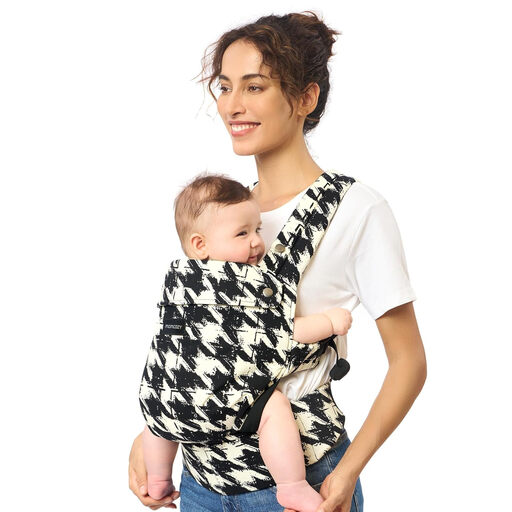
Why it suits this profile: This model combines a cross-back design, adjustable buckles and a wide, padded seat. It’s a good fit for parents who value certified materials and comfort when using a carrier regularly.
The description lists 100% cotton with OEKO-TEX Standard 100 certification and three adjustable positions. Check the latest product information and the label when you buy.
Machine washable, front carry, padded leg openings, cross-back straps and lumbar support.
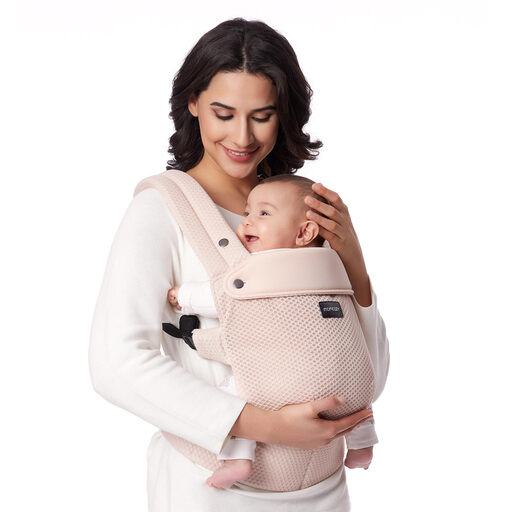
Why it suits this profile: According to the product description, the Air Mesh fabric and material around the neck are designed to feel more breathable in warm weather. This makes the model worth considering for summer outings and trips.
The stated weight range is approximately 3.18 to 19.96 kg, and the carrier has three adjustable positions. Check the fit at every stage of your child’s growth.
Air Mesh, machine washable, front carry, EVA lumbar support and a stated carrying weight of approximately 3.18 to 19.96 kg.
We’ve put together a complete, up-to-date list of products that meet these strict selection criteria and the applicable European safety regulations.
A baby carrier won’t protect your child in a fall or car accident. Don’t use one while cycling, running, cooking over an open flame or doing other activities that involve a risk of falling or burns.
Check before every use:
It varies by model. The Momcozy models mentioned have a minimum weight of approximately 3.18 kg, but some aren’t suitable for babies who can’t yet support their head independently. Read the instructions before use.
Its lifespan depends on how often it’s used, how it’s washed and how much strain it’s under. Check the buckles, stitching, straps and fabric regularly. Stop using the carrier if you notice fraying, tears or a fastening that won’t click securely into place.
Cotton can feel comfortable, but a breathable baby carrier with mesh can offer more ventilation in warm weather. Choose lightweight clothing and stay in the shade, too, and check your temperature and your baby’s regularly.
