
Vandaag of morgen in huis

Kwaliteit gegarandeerd

Welkomstaanbiedingen ontgrendelen: GRATIS bezorging | Tot 80% korting | Gratis 30 dagen JoyPlus-proefperiode
Download de app
A baby carrier can come in handy for a walk, a journey on public transport or everyday tasks at home. However, some models can disappoint in practice. For example, the carrier may feel too warm, offer little scope for adjustment or be unsuitable for your child’s age and weight.
The term ergonomic baby carrier doesn’t tell you enough on its own. Always check the specific product details, carrying positions and safety instructions. That way, you can avoid paying for marketing claims that don’t suit your needs.
A baby and toddler carrier may appear suitable for a wide weight range, such as 3 to 20 kg. But that doesn’t automatically mean one setting will be comfortable at every age. Check whether the carrier has several width or height settings and whether the straps offer enough adjustment.
If you’re looking for a baby carrier for a baby aged 3 months or older, it’s also important that your child can support their head independently, unless the manufacturer explicitly specifies suitable support for younger babies.
A cotton baby carrier feels different from a breathable mesh carrier. Cotton can feel soft and is often machine washable. Mesh can offer better airflow in warm weather. However, check which parts of the carrier are made from mesh, how the neck area is finished and whether the carrier can be washed according to the instructions.
Cooling fabric doesn’t guarantee that overheating will be prevented. Check your baby’s temperature regularly and make sure their face is always visible.
A narrow waist belt or thin shoulder straps can become uncomfortable over time. Look for a carrier with lumbar support, wide straps and a design that distributes weight across your shoulders, back and hips.
According to the product descriptions for various Momcozy models, an EVA panel, an X-shaped back and adjustable straps are designed to improve weight distribution for the person carrying the baby. These are product specifications; comfort can vary depending on your build.
Check these three details separately:
A carrier for 3 to 20 kg is suitable only if your child is within the specified weight range and the carrier can be adjusted correctly. Don’t use a model for a baby who can’t yet support their head independently if the instructions say not to.
In an ergonomic M-position, your baby’s knees sit higher than their bottom and their legs are supported. The carrier shouldn’t let their legs hang straight down. After fastening the carrier, check that:
Brands may say that their design supports an M-shape or C-shape. According to Momcozy’s own product information, these shapes are intended to support your baby’s posture. Treat this as a design specification and always follow the instructions provided.
A lightweight baby carrier weighing around 760 to 771 grams can be handy when you’re out and about, but overall comfort also depends on the fit and padding. Also check for:
Check the carrier before every use. Don’t use it if a buckle, strap, seam or piece of fabric is damaged.
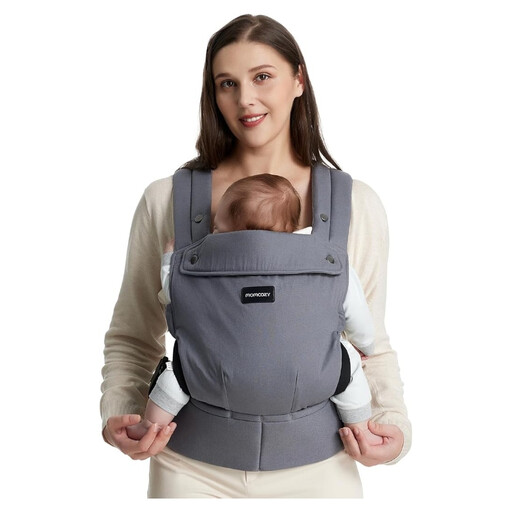
Why it suits this type of buyer: A straightforward front carrier for everyday use, with a stated weight range of around 3,18 to 19,96 kg and a machine-washable cotton construction.
The product information clearly states the weight range, age guidance, adjustable straps and care instructions. Still, check that the fit works for you and your child.
100% cotton, weighs around 771 grams, front carrying position and a stated carrying range of up to around 20 kg.
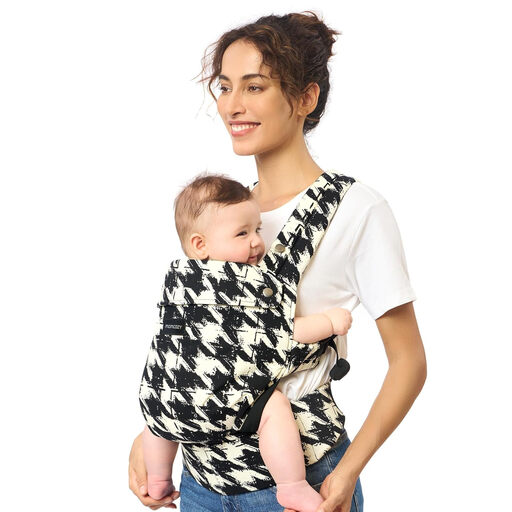
Why it suits this type of buyer: Designed for parents who value material, adjustability and support for longer periods of everyday carrying.
The listed X-shaped back, adjustable buckles, wide seat and lumbar support give you specific features to check, rather than just a general comfort claim.
100% cotton according to the product information, machine washable, three adjustment positions and a stated weight range of around 3,18 to 20 kg.
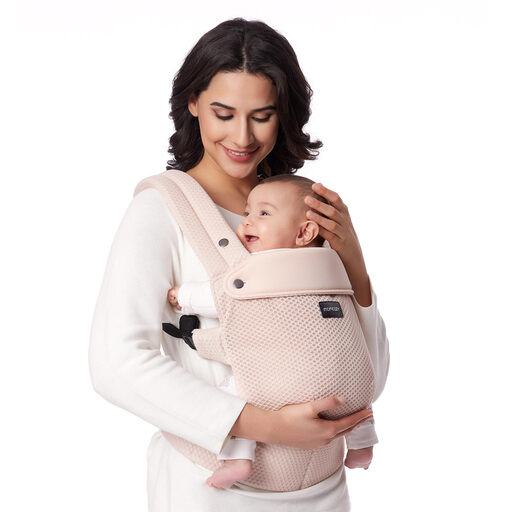
Why it suits this type of buyer: A practical choice for warmer days and travel, and for parents looking for a lightweight baby carrier made from more breathable material.
The product description mentions Air Mesh, a cooling neck area, adjustable positions and a machine-washable design. Even so, check the temperature and ventilation while using it.
Breathable mesh, EVA lumbar support, an X-shaped back and a stated weight range of around 3,18 to 19,96 kg.
We’ve put together a complete, up-to-date list of products that meet these strict selection criteria and current European safety requirements.
A baby carrier isn’t protective equipment in the event of a fall or accident. So don’t use one while running, cycling, cooking over an open flame or doing anything else that could affect your balance.
Before every use, check:
Stop carrying your baby if you or your child experiences pain, pressure or obvious discomfort.
It varies by model. Some carriers are suitable from birth, while others are intended for babies aged around 3 months and up, according to the product information. Always check the minimum age, minimum weight and whether your baby needs to be able to support their head independently.
How long you can use it depends on the maximum weight, your child’s growth and the condition of the carrier. A model with a weight range up to around 20 kg may last longer than one with a 9 kg limit. Check the buckles, straps, seams and fabric regularly. Replace the carrier if it’s damaged, even if your child hasn’t reached the maximum weight.
Cotton can be comfortable for everyday use and the models mentioned are machine washable. Mesh is particularly useful in warm weather or if you want better airflow. Don’t just look at the material: consider the fit, support, care instructions and how the carrier adjusts to your baby.
