
Vandaag of morgen in huis

Kwaliteit gegarandeerd

Welkomstaanbiedingen ontgrendelen: GRATIS bezorging | Tot 80% korting | Gratis 30 dagen JoyPlus-proefperiode
Download de app
An ergonomic baby carrier can come in handy on a walk, when travelling on public transport or while doing household chores. In practice, though, a carrier can sometimes disappoint. A model may look lightweight and adjustable on paper, yet still feel uncomfortable if it doesn’t fit both you and your baby properly.
So don’t focus only on the colour or discounted price. Pay particular attention to the carrying position, material, adjustment options and safety instructions. Below, you’ll find the key things to look out for, along with some popular options for different needs.
A baby and toddler carrier with a range of, for example, 3.2 to 20 kg may seem suitable for a long time. However, that range doesn’t mean one setting will suit every baby. The width of the seat, the height of the back support and the position of the leg openings should all be adjusted to suit your child’s build.
Check the instructions to see:
A mesh baby carrier may feel airier than one made entirely from cotton. Even so, you and your baby will still be sitting close together. According to the product description, mesh models have Air Mesh panels and cooling fabric around the neck to help improve airflow. This doesn’t guarantee that heat won’t build up.
During use, check regularly that your baby’s face is visible and their nose and mouth are unobstructed. Dress them in lightweight clothing in warm weather and avoid carrying them in direct sunlight for long periods.
A carrier with lumbar support can help distribute your baby’s weight, but a waist belt or shoulder strap that isn’t adjusted correctly can still cause pressure. An X-shaped back design and EVA support are practical features, but they’re no substitute for a good fit.
The carrier should sit securely against your body without restricting your baby’s breathing. There shouldn’t be a large gap between you and your baby.
In a carrier with an M-position, your baby’s knees sit higher than their bottom, with their thighs supported. Check that the seat is wide enough and that the leg openings don’t dig into their skin. The product descriptions for the models below list an M-shaped leg position as a design feature.
A foldable neck support can provide extra support, but always follow the age and usage instructions. A baby who can’t yet hold their head up independently shouldn’t be carried in a model intended for use from around 3 months.
A cotton baby carrier generally feels soft and is often machine washable. Cotton may be suitable for everyday use indoors or in moderate temperatures. A mesh model is worth considering if you’re looking for a baby carrier for warm weather or often spend time outdoors.
Check the care instructions. Being machine washable doesn’t necessarily mean the material will retain the same fit after every wash. Check the seams, buckles and straps before each use.
Many of the models in this selection weigh around 760 to 771 grams and measure approximately 36 × 15 × 13.5 cm. This is useful to know if you plan to pack the carrier in a changing bag or hand luggage.
A lightweight baby carrier isn’t necessarily more comfortable. Also look for:
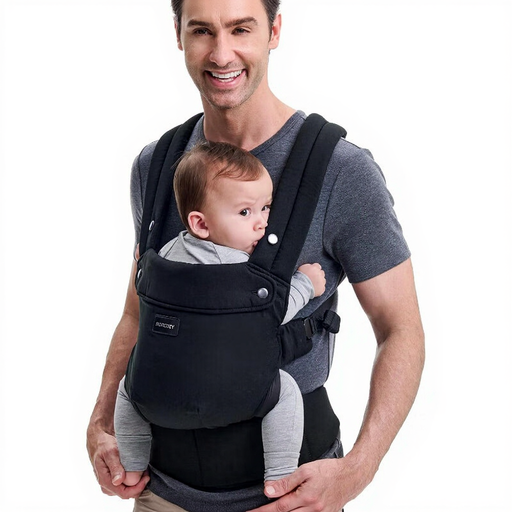
Why it suits this profile: This front carrier is designed for babies weighing approximately 3.18 to 19.96 kg and has a machine-washable cotton construction.
The product description lists an M-shaped leg position, adjustable straps and a foldable neck support. Check the fit before each use.
100% cotton, machine washable, EVA lumbar support and an X-shaped back strap, according to the product information.
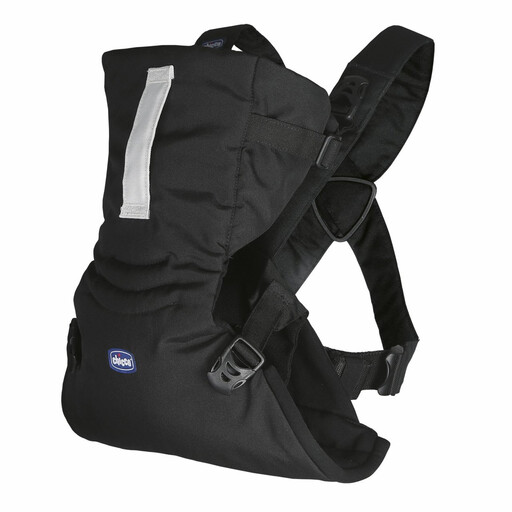
Why it suits this profile: According to the product information, this model is suitable from birth up to 9 kg and is designed to be put on like a T-shirt.
The carrier has a wide, adjustable seat and a foldable upper section. Use it only within the stated weight limit and for front carrying only.
Weighs around 575 grams, suitable from 0 months up to 9 kg and machine washable at 30 °C, according to the product details.
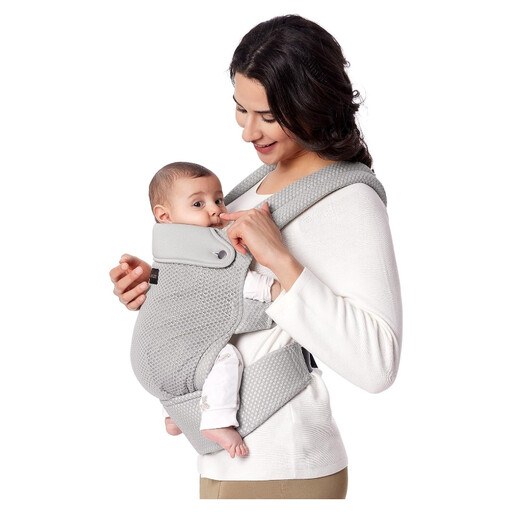
Why it suits this profile: The Air Mesh version is designed for everyday use, travel and situations where you’d prefer a breathable baby carrier.
The product description lists three adjustment settings, an X-shaped back and EVA waist support. Check the buckles, seams and straps before each use.
Air Mesh, cooling neck fabric, machine washable and a stated carrying range of approximately 3.18 to 19.96 kg.
We’ve put together a complete, up-to-date list of products that meet these strict selection criteria and current European safety regulations.
Read the instructions before using the carrier for the first time and, if possible, practise over a soft surface. Then check each time that:
Don’t use a baby carrier while cycling, running, cooking over an open flame or doing anything else that involves a risk of falling or burns. Stop if you feel pain or discomfort, and don’t use a damaged carrier.
It depends on the model. Some are suitable from birth, while others can only be used from around 3 months or once your baby can hold their head up independently. Always check the age, weight and positioning instructions for the specific product.
How long it lasts depends on the material, how often it’s used and its maximum carrying weight. A model for 3.2 to 20 kg may grow with your baby into toddlerhood, but check the seams, buckles, straps and leg openings regularly. Replace the product if it becomes worn or damaged.
As well as the purchase price, maintenance and how long you can use it are important considerations. A machine-washable carrier can be practical for everyday use. So compare more than just prices: consider the weight range, adjustability, material and whether the model suits your child and daily routine.
