
Vandaag of morgen in huis

Kwaliteit gegarandeerd

Welkomstaanbiedingen ontgrendelen: GRATIS bezorging | Tot 80% korting | Gratis 30 dagen JoyPlus-proefperiode
Download de app
An ergonomic baby carrier might seem easy to choose at first. However, attractive product photos and terms such as “lightweight” or “all-day comfort” can hide important differences. A carrier that doesn’t fit properly can quickly become uncomfortable for you or your baby.
When comparing carriers, look out for these three common pitfalls:
Always check the minimum and maximum carrying weight before buying. According to the product information, the Momcozy models in this selection are designed for around 3,18 to 19,96 kg, or approximately 7 to 44 lb. The stated age range is around 3 to 24 months. This doesn’t automatically mean every child within that age range will fit: weight, head control and the carrier’s adjustment are also important.
A baby and toddler carrier that can only be used for front carrying offers less flexibility than a model with several carrying positions. So think about whether you’ll mainly use it for short walks, everyday errands, longer outings or travel.
Don’t use a baby carrier for cycling, running, cooking over an open flame or other activities where you could fall or lose your balance. A baby carrier won’t protect your baby in a fall or car accident.
A baby carrier with an M-position supports your baby’s legs so their knees sit higher than their bottom. Check whether the seat is adjustable and whether the leg openings have soft edges. A foldable head support can provide extra support, but it doesn’t replace correct adjustment.
According to Momcozy’s product information, the models mentioned have an M-shaped leg position and C-shaped back support. These are product features stated in the manufacturer’s description; they don’t guarantee a medical benefit or that the carrier is suitable for every child.
If your baby can’t yet hold their head up independently, follow the instructions especially carefully. Momcozy’s product information advises against using its models for babies who don’t yet have independent head control. A model specifically advertised as suitable from birth, such as the Chicco EasyFit, has its own instructions and a lower maximum weight limit.
A cotton baby carrier can feel soft and is often machine washable. However, cotton also retains heat. For warm days or an active parent, a breathable baby carrier made with Air Mesh may be a better option. Also check:
A lightweight baby carrier isn’t automatically more comfortable. Weight distribution, strap width and how well it fits your body are just as important.
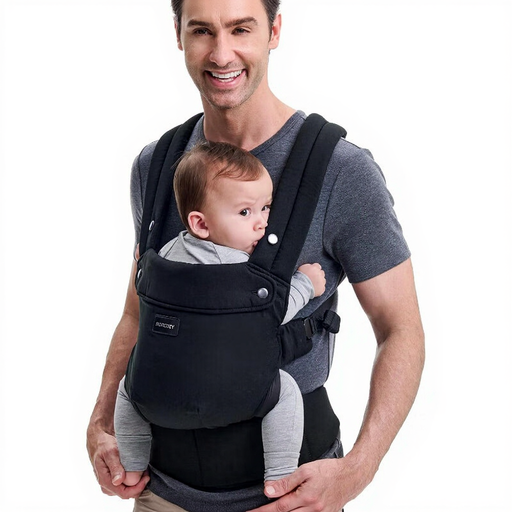
Why it suits this profile: A cotton baby carrier for parents looking for a simple model for everyday walks, errands and short outings. The manufacturer states that it can be used from around 3,18 kg up to 19,96 kg and is designed for front carrying.
The product information gives clear weight limits, adjustable parts and an M-shaped seat. Be sure to check these details against the manual supplied with the carrier.
100% cotton, machine washable according to the description, EVA lumbar support and a foldable head support.
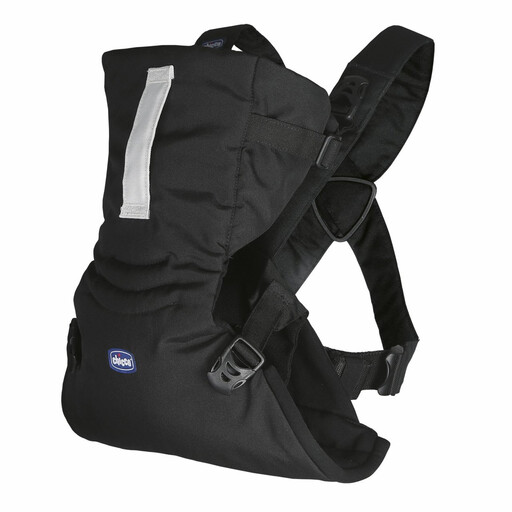
Why it suits this profile: A good choice for parents who value simplicity and want a carrier that can be used from birth. According to the product information, this model is intended for babies from 0 months up to a maximum of 9 kg and is worn on the front.
The product description gives specific age and weight limits, making it clear that this isn’t a carrier for a toddler weighing up to 20 kg.
T-shirt-style design, adjustable seat, foldable head support and machine washable at 30 °C according to the product information.
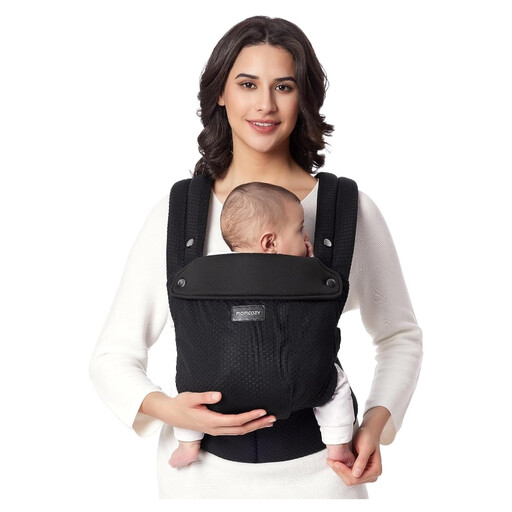
Why it suits this profile: A practical choice for warm days, travel and parents who regularly want to carry their baby hands-free. The manufacturer specifies Air Mesh, a cooling neck fabric and front carrying for babies weighing around 3,18 to 19,96 kg.
The material is specifically identified as Air Mesh rather than simply being described as “breathable”. The stated limits and three adjustment positions help you make a more informed choice.
Air Mesh, an X-shaped back, EVA lumbar support, three adjustment positions and machine washable according to the product description.
We’ve put together a complete, up-to-date list of products that meet these strict selection criteria and the applicable European safety regulations.
Before each use, check the buckles, straps, seams and fabric. Don’t use the carrier if it’s damaged or any parts are missing. Fasten all the buckles until you hear a click, then check that they’re secure.
Keep your baby’s face visible and their airway clear. Your baby should sit upright and close against your body. Readjust the shoulder straps and any lumbar support if you feel pressure, pain or instability. Stop using the carrier if it becomes uncomfortable.
A carrier won’t necessarily remain suitable until your child reaches the maximum weight limit. Wear and tear, frequent washing and changes in your child’s proportions can all affect how long the product remains usable. Keep the carrier out of children’s reach when it’s not in use.
It varies by model. Some carriers are designed for use from birth, while the Momcozy models mentioned are, according to the product information, suitable from around 3 months and 3,18 kg. Always follow the manual, and don’t use a model for a baby who can’t yet hold their head up independently if the manufacturer advises against it.
Your baby’s knees should sit higher than their bottom, and their legs should be supported by the seat. Check that their face remains visible, they’re sitting upright and the fabric doesn’t cover their nose or mouth. If you’re unsure, follow the manual again or ask a qualified healthcare professional for advice.
Follow the care label for your specific model. According to the product information, the cotton and mesh models mentioned are machine washable. Before each use, check that the fabric, buckles and seams are intact, and let the carrier dry completely before using it again.
