
Vandaag of morgen in huis

Kwaliteit gegarandeerd

Welkomstaanbiedingen ontgrendelen: GRATIS bezorging | Tot 80% korting | Gratis 30 dagen JoyPlus-proefperiode
Download de app
An ergonomic baby carrier can come in handy on a walk, when travelling or whenever you want to keep your hands free. Yet at first glance, one baby carrier can look very much like another. Marketing terms such as “ergonomic”, “lightweight” and “all-day comfort” only tell you so much unless the specifications behind them are clear.
So focus on fit, carrying position, material and weight range. That way, you can avoid buying a carrier that becomes uncomfortable after a few weeks or doesn’t adapt well as your child grows.
A baby and toddler carrier might, for example, be suitable for around 3.2 to 20 kg. That doesn’t automatically mean the same setting will fit well at every age. Check whether the carrier has several adjustable positions and whether you can adjust the seat width.
A younger baby needs good head and neck support and a secure fit. For a bigger child, the fabric should still support their legs and back sufficiently. A carrier with fixed, limited dimensions can therefore become impractical sooner.
A cotton baby carrier may feel soft, while a mesh model allows more air to circulate. Neither material is automatically right for every situation. Check the type of fabric, whether there are ventilation panels and how the areas around the neck and leg openings are padded.
A breathable carrier or a carrier for warm weather is particularly worth considering if you’re often outdoors in summer or if you and your child tend to get warm quickly. Check the washing instructions too, as regular washing can affect how easy the carrier is to use.
A carrier with lumbar support can distribute weight differently, but only if the waist and shoulder straps are adjusted correctly. A wide strap that’s too loose won’t offer much support in practice. An X-shaped back strap can also feel different depending on your body shape.
So look for adjustable shoulder straps, easy-to-use fastenings and the option to put the carrier on without help. Once it’s fastened, check that your child is sitting high and close against your body, with their face clear of the fabric.
Always check the minimum and maximum weight in the product information and manual. According to their product descriptions, the Momcozy models in this selection are designed for children weighing around 3.18 to 19.96 kg, generally from around 3 to 24 months. The Chicco EasyFit is described in the product information as suitable from birth up to a maximum of 9 kg.
A carrier designed only for front carrying is not the same as a model with several carrying positions. Choose according to how you’ll use it day to day: at home, on short walks, when travelling or on longer outings.
With a carrier that supports the M-position, the knees sit higher than the bottom, with the legs supported. The product descriptions for the models mentioned refer to this position. It’s a design feature, not a guarantee that every child will automatically sit correctly. The carrier must be adjusted properly, and your child must be within the specified weight range.
Also check whether the carrier has adjustable head and neck support. Only use a carrier in line with the instructions and its age and weight limits. Young babies who can’t yet hold their head up independently need extra support and clear airways.
A lightweight carrier is handy if you take it with you often. According to the product information, the Momcozy models weigh around 760 to 771 grams. The mesh versions use Air Mesh and cooling fabric around the neck; the other versions are made from 100% cotton.
The right material depends on what you prefer:
Check the buckles, seams and straps before each use. Don’t use the carrier if any parts are damaged, worn or missing.
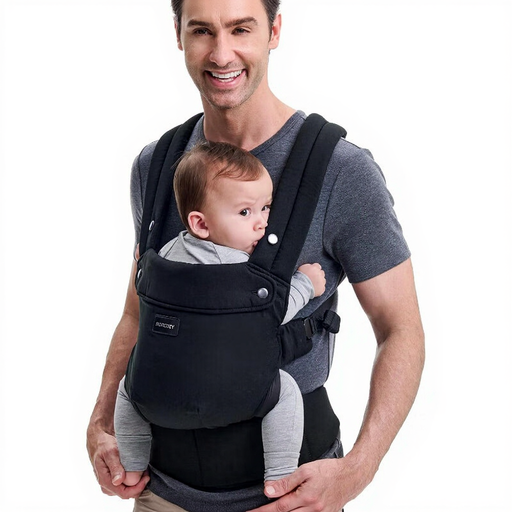
Why it suits this profile: According to the product information, this cotton baby carrier is suitable for around 3.18 to 19.96 kg and is designed for front carrying. That makes it a straightforward choice for everyday use and your first experiences of carrying your baby.
The product description specifies an adjustable fit, an M-shaped leg position and padded leg openings, rather than relying on a generic comfort claim.
100% cotton, machine washable, an X-shaped back strap and an EVA panel for support, according to the product specifications.
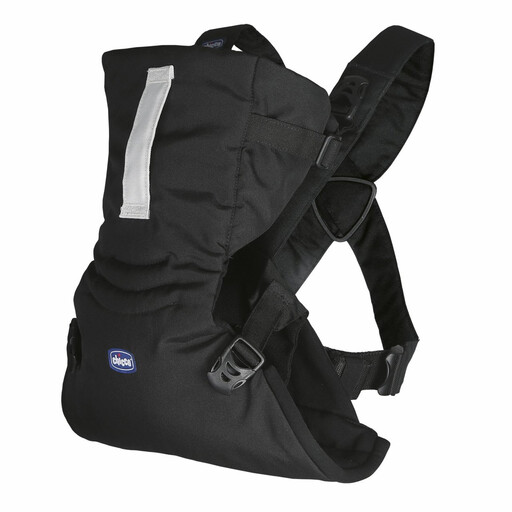
Why it suits this profile: According to the product information, this carrier is suitable from birth up to 9 kg and is worn like a T-shirt. It could be a good fit for parents looking for a simple carrier for young babies.
The stated weight range clearly ends at 9 kg. So you won’t accidentally buy this model expecting it to last into the toddler years.
Suitable from 0 months according to the product description, with an adjustable wide seat and machine washable at 30 °C according to the care label.
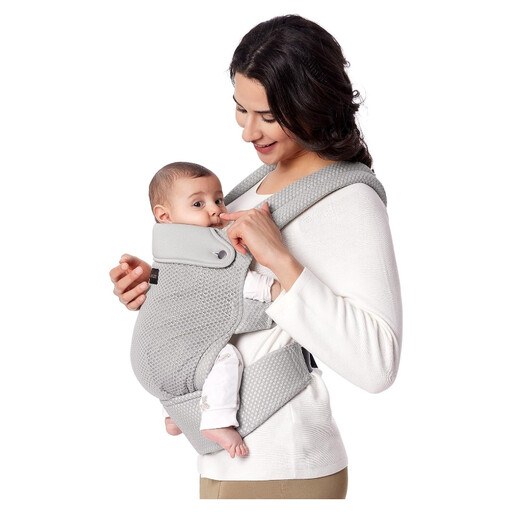
Why it suits this profile: According to the product description, the mesh version is designed to allow air to circulate and for use in warm weather. It’s a good fit for parents who often use a carrier on walks, when travelling or while getting on with everyday tasks.
The Air Mesh panels and cooling fabric around the neck are clearly specified. This makes it easier to understand what “breathable” means than with a product that only makes a general marketing claim.
Around 760 grams, machine washable, three adjustable positions and EVA lumbar support, according to the product information.
We’ve put together a complete, up-to-date list of products that meet these strict selection criteria and the applicable European safety requirements.
A carrier is not protective equipment in the event of a fall or accident. Before each use, check that the buckles click shut and that the straps, seams and fabric are intact. While carrying your baby, keep the following points in mind:
It depends on the model. According to the product information, the Momcozy carriers mentioned are suitable from around 3.18 kg. The Chicco EasyFit is described as suitable from birth. Always check the manual, rather than relying on the age guidance alone.
Position your baby upright with their face clear of the fabric. Adjust the carrier so your baby sits securely against your body, with their knees higher than their bottom. The seat shouldn’t dig into their groin, and their back should be supported. Check the fit again as your baby grows or when you change your clothing.
How long you can use it depends on the maximum weight, wear and tear, and how well you look after it. A model for 3.2 to 20 kg can grow with your child for longer than a carrier rated up to 9 kg, but only if all its parts remain in good condition. Follow the washing instructions, let the carrier dry completely and replace it if the buckles are damaged, the seams come loose or the straps are worn.
