
Vandaag of morgen in huis

Kwaliteit gegarandeerd

Welkomstaanbiedingen ontgrendelen: GRATIS bezorging | Tot 80% korting | Gratis 30 dagen JoyPlus-proefperiode
Download de app
An ergonomic baby carrier can come in handy on a walk, when travelling or at home when you want to keep both hands free. However, the difference between a carrier that feels comfortable and one that ends up unused after a few weeks can be greater than the product photo suggests.
Look out for these three common pitfalls:
A carrier for a newborn isn’t the same as one for a child who can already support their own head. So check:
According to the product information, the Momcozy models in this selection are designed for babies weighing around 3.18 to 19.96 kg, or approximately 7 to 44 lbs. The stated age range is around 3 to 24 months. This makes them worth considering if you want to use one carrier through several stages of growth, but weight alone doesn’t determine whether the fit is right.
In a carrier that supports the M-position, your baby’s knees sit higher than their bottom. The fabric or seat should support their legs sufficiently without digging into the backs of their knees. Also look for:
Brands may say that their design supports development or hip positioning. According to Momcozy’s product descriptions, the models are designed with an M-shape for the legs and a C-shape for the back. Treat this as a design specification, not a medical guarantee.
A lightweight baby carrier is easier to take with you, but remember to consider its construction and the area that bears the load too. The carriers in this selection weigh around 760 to 810 grams. A cotton baby carrier can feel comfortable and is practical if it’s machine washable. For warmer days, a model with breathable mesh may be a better choice.
A carrier with hip or lumbar support can distribute pressure differently across your body. Getting the fit right is still important: tighten the straps enough to keep your baby close to you, but avoid pressure points or pain. Stop using the carrier if you or your baby feels uncomfortable.
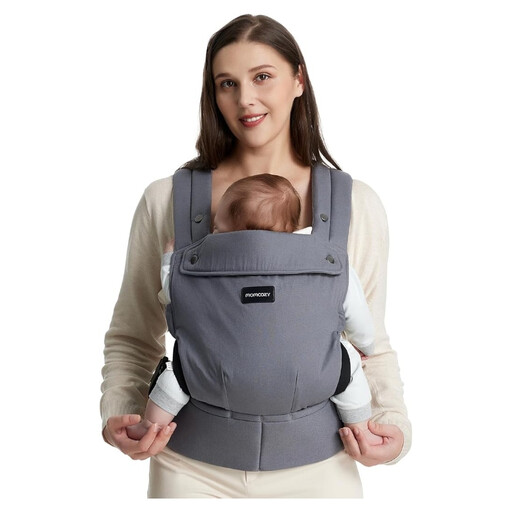
Why it suits this profile: This model combines a front-carrying position, adjustable straps and a weight of 771 grams. According to the product information, it’s suitable for babies weighing around 3.18 to 19.96 kg and is machine washable.
The product details include specific weight limits, material information and safety warnings, rather than making only a general claim about comfort.
100% cotton, machine washable, an EVA panel according to the product description and a foldable neck support.
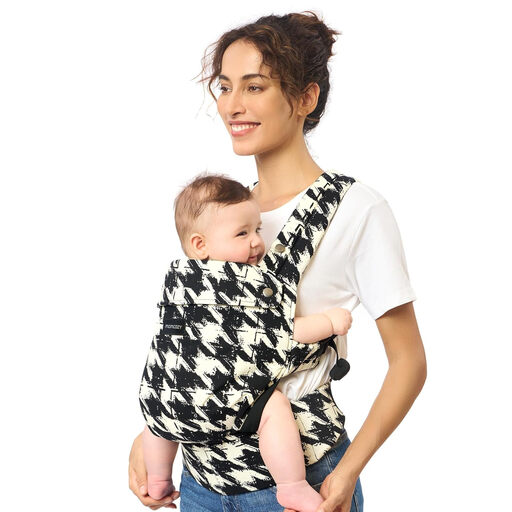
Why it suits this profile: The product information lists OEKO-TEX Standard 100-certified cotton, cross straps and three adjustable positions. It’s a good match if you want to check details about the material and fit.
The specifications cover the material, carrying style, weight and care instructions. Before buying, check that the adjustment you want is suitable for your baby.
OEKO-TEX Standard 100 according to the product information, 100% cotton, machine washable and an X-back for weight distribution.
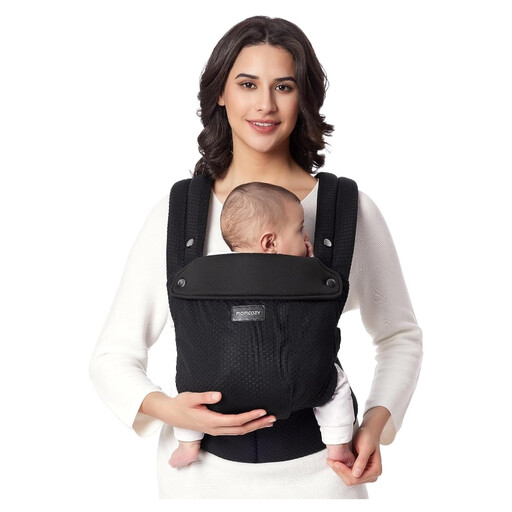
Why it suits this profile: The breathable Air Mesh fabric and weight of 760 grams make this a good option for parents who often use a carrier on warm days, when travelling or on longer everyday outings.
Rather than simply calling it “breathable”, the product description specifies Air Mesh, cooling neck fabric and machine washability. Always check the fit and ventilation while using it.
Air Mesh, an X-shaped back, EVA lumbar support according to the product description and a carrying range of around 3.18 to 19.96 kg.
Always follow the instructions for your chosen model. Check the fabric, buckles and straps before every use. Hearing the buckles click into place doesn’t replace a full check.
While carrying your baby, make sure:
A baby carrier won’t protect your baby in a fall or road accident. Never leave your baby unattended in the carrier.
We’ve put together a complete, up-to-date list of products that meet these strict selection criteria and the applicable European safety regulations.
It depends on the model. Some carriers are designed for use from birth, while others are only suitable once your baby can support their own head. Check the instructions, minimum weight and age guidance. The Momcozy models mentioned above list around 3 months as the recommended starting age.
How long you can use a carrier depends on the material, care instructions, your child’s weight and the condition of the buckles and straps. Check regularly for fraying, wear, tears and misshapen fastenings. Stop using the carrier if any part is damaged, even if your child is still within the weight range.
Not for every parent. Hip or lumbar support can change how the weight is distributed, but the fit, your body shape and correct adjustment matter too. Choose a model with adjustable straps and try the carrier indoors for a short time first. Pain, tingling or pressure means you should adjust the straps or stop using it.
