
Vandaag of morgen in huis

Kwaliteit gegarandeerd

Welkomstaanbiedingen ontgrendelen: GRATIS bezorging | Tot 80% korting | Gratis 30 dagen JoyPlus-proefperiode
Download de app
An ergonomic baby carrier can be handy when you’re out for a walk, doing the shopping or travelling on public transport. It keeps your hands free while your baby stays close to you. But not every baby carrier is suitable for everyday use. Marketing terms such as “ergonomic”, “lightweight” and “suitable for all ages” only tell you so much: check the specifications behind them.
Look out for these three common pitfalls:
Always check the minimum and maximum carrying weight in kilograms. Some models are designed for babies from around 3 months, while others can be used from birth. This difference matters: a baby who can’t yet hold their head up independently needs extra support.
A baby carrier for 3 to 20 kg can be practical if you want to use one model for longer. Check:
According to the product information, the Momcozy models in this selection are designed for babies aged around 3 to 24 months and weighing up to approximately 19.96 kg. Always follow the instructions for the specific model and don’t exceed its stated limits.
In a carrier with an M-position, your baby’s knees sit higher than their bottom, with their thighs supported. This is different from letting their legs hang straight down. The seat width should suit your baby’s height and mustn’t dig into the backs of their knees.
The product descriptions for the selected Momcozy carriers refer to an M-shaped leg position. This is a design feature, not a guarantee of a medical outcome. After putting the carrier on, check that:
A lightweight baby carrier weighing around 760 to 771 grams can be handy if you take it with you often. For warm weather, a breathable baby carrier with Air Mesh panels may be worth considering. According to the product descriptions, the Momcozy Mesh models feature Air Mesh and cooling fabric around the neck.
A cotton baby carrier feels soft to many people and is suitable for everyday use. Cotton may feel different from mesh in warm weather, though. Also check whether the carrier is machine washable, as milk, spit-up and food can quickly make a mess when you’re out and about.
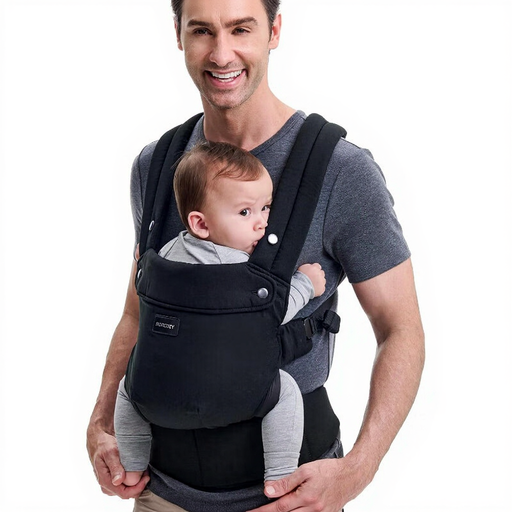
Why it suits this profile: A practical cotton baby carrier for parents looking for a simple model for everyday use, visits and short trips.
The product information gives a weight range of around 3.18 to 19.96 kg, and mentions adjustable straps and a foldable neck support. This gives you a clearer idea of what the model is designed for.
100% cotton according to the product description, machine washable, with EVA lumbar support and an X-shaped back strap.
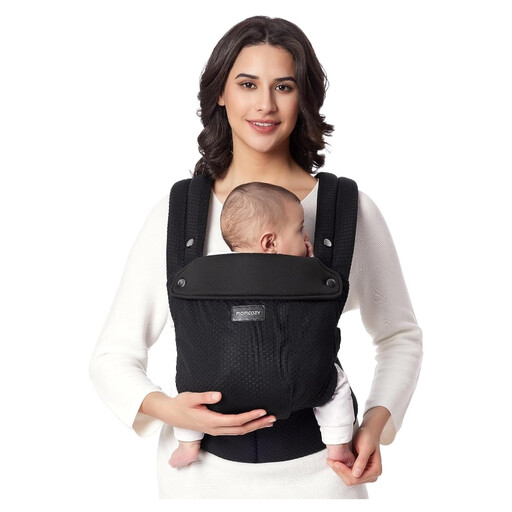
Why it suits this profile: Designed for parents who spend plenty of time outdoors and want to weigh up the material and carrying design carefully.
The material description specifies Air Mesh and cooling fabric where it touches the neck. That tells you more than the general term “breathable” alone.
Weighs 760 grams according to the product information, suitable for around 3.18 to 19.96 kg, with EVA lumbar support and three adjustable positions.
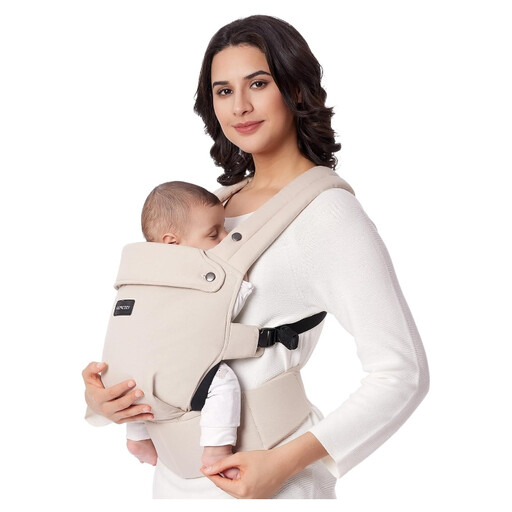
Why it suits this profile: Handy for parents who regularly use a carrier when out and about, visiting others, travelling and for longer stretches of everyday use.
The product description mentions a tri-point support system, an X-shaped back strap and adjustable sizing. Even so, check the fit yourself before wearing it for longer periods.
100% cotton according to the product details, machine washable, suitable for around 3.18 to 19.96 kg and fitted with wide, padded straps.
We’ve put together a complete, up-to-date list of products that meet these strict selection criteria and the applicable European safety regulations.
Read the instructions before using the carrier for the first time. Check the fabric, seams, buckles and straps before every use. Don’t use the carrier if any parts are damaged, worn or missing.
Also bear the following in mind:
A baby carrier won’t protect you or your baby in a fall or road accident. Take extra care with newborns and babies who can’t yet hold their heads up independently. Only choose a model whose age and weight limits are suitable for them.
Position your baby upright, with their face clear and their knees higher than their bottom. Adjust the waist belt first, then the shoulder straps. The carrier should fit snugly without restricting your chest or breathing. Also check that both buckles are fully fastened.
Its lifespan depends on how often you use it, wash it and store it. Regularly check for fraying, loose seams, fading, damaged buckles and stretched straps. Replace the carrier if you’re unsure it’s still secure, even if it hasn’t reached its maximum weight limit.
Most baby carriers don’t need batteries or disposable supplies. Ongoing costs mainly come from washing and replacing the carrier if parts wear out. Follow the care label, avoid products that could damage the fabric and let the carrier dry completely before storing it.
