
Vandaag of morgen in huis

Kwaliteit gegarandeerd

Welkomstaanbiedingen ontgrendelen: GRATIS bezorging | Tot 80% korting | Gratis 30 dagen JoyPlus-proefperiode
Download de app
An ergonomic baby carrier might seem straightforward to choose at first glance. However, carriers vary greatly in fit, carrying position, adjustability and how long you can use them. A model that feels comfortable for a newborn can become too snug or too loose after just a few months.
As Joybuy Product Recommendation Officer, I filter product information based on practical points. Pay particular attention to these three common pitfalls:
A broad age claim without a clear weight limit
“For newborns and toddlers” says little without a minimum weight, maximum weight and conditions for head support. Always check the official product specifications.
Ergonomic used as a marketing buzzword
A baby carrier should be adjustable and support your baby securely, upright and with their face visible. The term “ergonomic” alone is no guarantee of a good fit.
Comfort for the parent, but not for the child
Soft shoulder straps or a carrier with lumbar support alone are not enough. Leg openings, the back panel, neck support and the position of the buckles all determine how comfortable the baby carrier is for daily use.
First, look at the minimum and maximum weight. The Momcozy models below are intended for approximately 3.18 to 19.96 kg and around 3 to 24 months, according to the product information. That does not automatically mean every baby from three months old will have the same fit. The carrier must fit snugly, and your child must have sufficient head control according to the safety instructions.
A carrier for baby and toddler is practical if the straps and seat area can be adjusted as your child grows. Also check whether the carrier is designed only for facing-in carrying. The Momcozy models in this selection are described as designed for front-facing carrying with the baby facing you; other carriers may offer more positions.
With a carrier that supports the M-position, the knees sit higher than the bottom and the thighs are supported. Check that the leg openings do not dig into the groin area and that the seat is wide enough for your child.
The Momcozy product description also mentions C-shaped spine support and padded leg openings. These are product features, not medical guarantees. Always follow the instruction manual and stop using the carrier if your baby shows signs of discomfort.
Also look for an adjustable neck support. For young babies, the head must be well supported without the fabric covering their face. The nose and mouth must always remain clearly visible.
A lightweight baby carrier is handy for errands, walks and short trips around the house. However, the weight of the product itself is only one factor. A carrier with wide straps, good weight distribution and possibly a carrier with lumbar support can be more comfortable when you want to carry your baby hands-free for longer periods.
Also check:
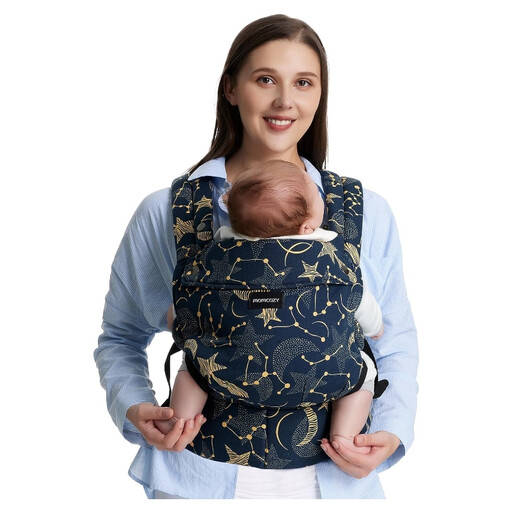
Why this fits the profile: A straightforward model for parents looking for a carrier for baby and toddler without needing multiple carrying positions. The product specification states a usage range of approximately 3.18 to 19.96 kg.
The weight limits, adjustable straps and padded leg openings are clearly stated in the product information. According to the description, the carrier is machine washable.
100% cotton, a weight of approximately 771 grams, adjustable straps and support for the aforementioned M-position.
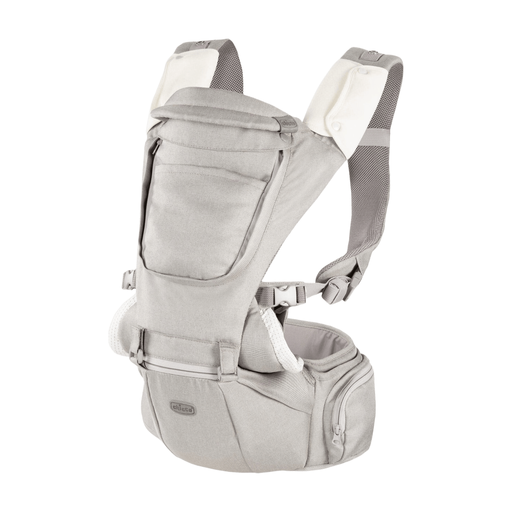
Why this fits the profile: Suitable for parents who value flexibility and want to use different carrying methods. The product description mentions a detachable hip seat and three configurations.
The carrier is not limited to one setup: the base and carrier can be used together or separately according to the description. Check the age requirements for each position in the instruction manual.
3-in-1 use, multiple carrying positions and a detachable hip seat with materials such as breathable mesh and an anti-slip surface.
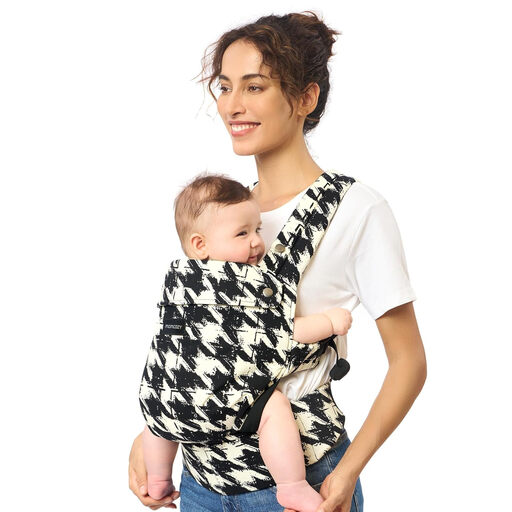
Why this fits the profile: A practical choice for daily use, for example when walking, travelling or doing household chores. The cross-back straps are designed to distribute weight across the shoulders and back.
The product information states three adjustable positions, a wide seat and machine washability. This means fit and care are verifiable points of attention rather than just marketing terms.
100% cotton, cross-back straps, lumbar support according to the product description and a stated range of approximately 3.18 to 20 kg.
We have compiled a full, up-to-date list of products that fully meet these strict selection criteria and comply with current European safety regulations.
A good fit starts with careful adjustment. Place your baby upright and check that their face remains visible. The airway must not be covered by fabric or by a chin dropping onto the chest. Fasten all buckles and check they are fully closed before you start walking.
Do not use a carrier during activities with a risk of falling, such as cycling, running or cooking over an open flame. Never leave a baby unattended in the carrier. Check the seams, straps and fastenings before each use. If you are unsure about the carrying position or your child's development, consult a midwife, health visitor or doctor.
This varies by model. Check the minimum weight, age and head control requirement in the instruction manual. A carrier for newborns is only suitable when the design and adjustment fit a young baby. Never rely solely on the general term “from birth” if the concrete product specifications indicate otherwise.
The length of use depends on the stated weight range, your child's growth and the condition of the material. A model up to approximately 20 kg can be usable for several months or years, but only as long as the fit remains good. Replace the carrier if there are frayed edges, tears, loose stitching or damaged buckles.
Not automatically. Lumbar support can be pleasant for longer carrying sessions, but the overall fit remains decisive. Adjust the shoulder straps, hip belt and back panel to your body. If you experience pain or pressure, readjust the carrier or stop using it.
