
Vandaag of morgen in huis

Kwaliteit gegarandeerd

Welkomstaanbiedingen ontgrendelen: GRATIS bezorging | Tot 80% korting | Gratis 30 dagen JoyPlus-proefperiode
Download de app
An ergonomic baby carrier can be a great help during a walk, a trip on public transport or while doing household chores. It allows you to keep your baby close while leaving your hands free. However, not every baby carrier is suitable for every age, body type or situation.
Marketing terms like “all-day comfort”, “ergonomic” and “for newborns” mean little on their own. Always check the product details, weight limits and instructions for use. Below, you can read about the features that really make a difference and see which popular choices suit different families.
A carrier for newborns needs to offer more than just a low minimum weight limit. A young baby who can't yet support their own head needs proper head and neck support. Some models are only suitable from around 3 months of age, even if the stated minimum weight is around 3.2 kg.
Therefore, pay attention to:
The term ergonomic is no guarantee that a carrier is well-adjusted. For the baby, the leg position is particularly important. In an ergonomic M-position, the knees are higher than the bottom, and the legs are supported without letting them dangle straight down.
For the parent, factors like the shoulder straps, waistband and how the weight is distributed are what count. A carrier with lumbar support or an X-back can feel different from a model with straight shoulder straps. The fit also varies depending on your body type.
A breathable carrier with Air Mesh can be pleasant in warm weather, but ventilation alone won't fix a poor fit. A cotton carrier feels different and can be suitable for everyday use, while mesh is often chosen for summer walks or travel.
Also, check if the fabric is machine-washable. Spit-up, spills and sweat are part of daily use; a complicated cleaning process can quickly make the carrier less practical.
Don't just look for a “carrier for 3.2 to 20 kg”. Check if the range is genuinely right for your child and from what age the model can be used. The Momcozy models in this selection state a range of approximately 3.18 to 19.96 kg, or about 7 to 44 lb, and according to the product information, are intended for ages of around 3 to 24 months.
A model suitable from birth may have a lower maximum weight. The Chicco EasyFit, for example, is used from birth up to a maximum of 9 kg, according to its product information. This makes such a model relevant for a different period of use than a carrier designed for both babies and toddlers.
A wide, adjustable seat helps to place the baby's legs in the M-position described. Check that the seat grows with your baby and that the leg openings don't pinch. A foldable neck or headrest can provide extra support, but it must be used in a way that keeps the baby's face visible and their nose and mouth clear.
Brands sometimes describe these features as supporting hip or spine development. According to the brands' own product information, this refers to the design that facilitates the M-position and C-shaped back support. This is not a substitute for medical advice. If you have any doubts about the position or using the carrier with a young baby, you can consult your health visitor or a healthcare professional.
A lightweight carrier in this selection weighs around 575 to 771 grams. That might not seem like much, but with a toddler, it's the combination of the child's weight and carrying comfort that really counts. Look for:
Only use a baby carrier within the specified weight limits. Before each use, check the seams, buckles and straps. Stop if you or your baby experience pain or discomfort, and do not use the product while running, cycling, cooking over an open flame or during other activities with a risk of falling.
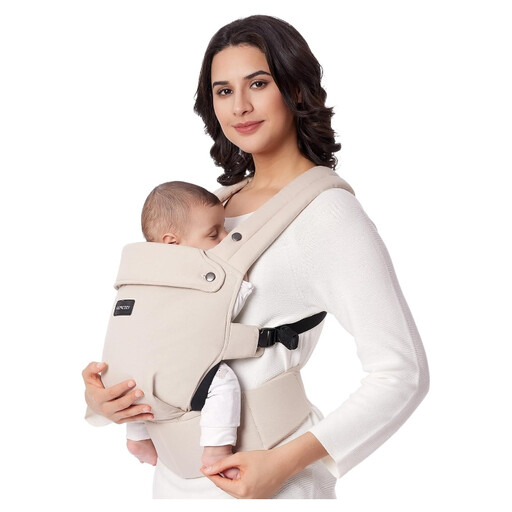
Why it's a good fit: A 100% cotton front carrier with three adjustment positions for parents looking for a straightforward model for daily use.
The product information specifies clear limits of approx. 3.18 to 19.96 kg and describes its adjustable straps, M-shaped seat and foldable neck support.
100% cotton, machine-washable, X-back and an EVA panel for wearer support.
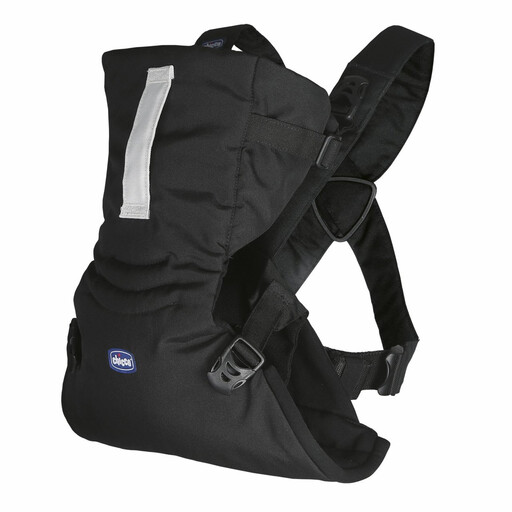
Why it's a good fit: A carrier for newborns and young babies that is easy to put on like a T-shirt and is designed for front carrying.
The product information states it can be used from birth up to 9 kg and provides separate instructions for head and neck support for young babies.
Weighs approx. 575 grams, has a wide adjustable seat and is machine-washable at 30°C according to the care instructions.
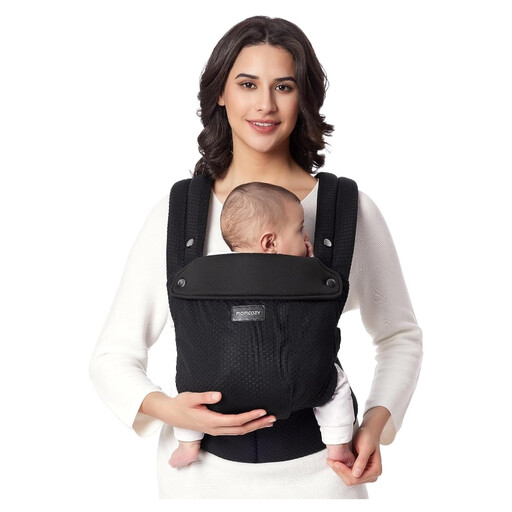
Why it's a good fit: A lightweight, breathable carrier for warm days, travel and parents who regularly practise hands-free babywearing.
According to the product information, the Air Mesh and cooling neck fabric are designed for air circulation. The carrier also has a stated range of approx. 3.18 to 19.96 kg.
Weighs approx. 760 grams, is machine-washable, and features an X-shaped back and integrated EVA lumbar support.
We have compiled a complete, up-to-date list of products that fully meet these strict selection criteria and comply with applicable European safety regulations.
Always use the baby carrier according to the manual. Before each use, check the following points:
A baby carrier offers no protection in a fall or traffic accident. Therefore, do not use it while cycling, running or during other activities where your balance could be compromised.
This varies by model. Some carriers are suitable from birth, according to the product information, while other models are only recommended from around 3 months of age. Look not only at the weight but also at head control, neck support and the permitted carrying positions.
Its lifespan depends on use, washing and storage. Regularly check the fabric, seams, buckles and adjustment straps. Stop using the carrier if any parts are worn, torn or damaged. The maximum weight and age limit also determine how long the model will remain practical to use.
A breathable carrier with mesh can be suitable for warm weather and frequent outdoor use. Many parents find cotton comfortable for everyday use, and it is often machine-washable. The right choice depends on the climate, clothing, how long you'll be wearing it, and the desired fit; always check the product specifications and care instructions.
