
Vandaag of morgen in huis

Kwaliteit gegarandeerd

Welkomstaanbiedingen ontgrendelen: GRATIS bezorging | Tot 80% korting | Gratis 30 dagen JoyPlus-proefperiode
Download de app
An ergonomic baby carrier can come in handy on a walk, on public transport or when you want to keep your hands free at home. But sometimes a purchase doesn’t live up to expectations. A carrier may look comfortable and adjustable on paper, yet feel too warm in use, be difficult to adjust or stop fitting properly after a short time.
So don’t focus only on colour and discounts. Above all, check the carrying position, weight range and support for both you and your baby.
A baby and toddler carrier designed, for example, for around 3 to 20 kg needs to be adjustable in several places. Longer straps alone aren’t enough. The seat, leg openings and height of the back panel should all be adjustable for a proper fit.
Check the minimum age too. A model recommended from around 3 months isn’t automatically suitable for a newborn. Always follow the instructions and don’t use a carrier with a baby who can’t yet support their head independently if the model doesn’t allow it.
A breathable baby carrier can be comfortable in warm weather, but check the material and construction. Air Mesh may let more air through than tightly woven cotton, while cotton often feels soft and is machine washable. No material automatically prevents a baby or parent from getting warm.
Pay attention to your baby’s clothing, check their face regularly and make sure their nose and mouth are clear. Don’t use a carrier during activities where there’s a risk of falling, such as cycling, running or cooking over an open flame.
A baby carrier with lumbar support can help distribute weight more evenly across your hips and torso. However, the result depends on getting the fit right. A waistband that’s too high, too low or too loose can create pressure points instead.
According to the product descriptions, the Momcozy models mentioned feature details such as EVA support, padded shoulder straps and an X-shaped or cross-back design. These are specific construction features you can check, but personal comfort varies depending on your body shape.
In a baby carrier with an M-position, your baby’s knees sit higher than their bottom, with their legs supported. Once the carrier is fastened, check that the seat isn’t too narrow and your baby’s legs aren’t hanging straight down. Your baby should sit upright and close to your body, with their face visible.
Many models in this selection are designed for front carrying with your baby facing you. This is different from a carrier with multiple carrying positions. If a model is listed as a front carrier only, don’t assume it can be used for back carrying or with your baby facing forwards.
A carrier for 3 to 20 kg sounds versatile, but the actual minimum and maximum weight limits should be stated on the product and in the instructions. The Momcozy carriers below typically list a range of 3.18 to 19.96 kg, or around 7 to 44 lb, for approximately 3 to 24 months.
Also check:
A lightweight carrier isn’t automatically more comfortable. Check the net weight, strap thickness and how the weight is distributed. The cotton Momcozy models mentioned weigh around 771 grams and are machine washable according to the product information. The mesh version uses Air Mesh and a cooling contact material around the neck.
Check the care instructions before buying. A travel carrier that’s easy to wash is often better suited to everyday use than a model that needs complicated care.
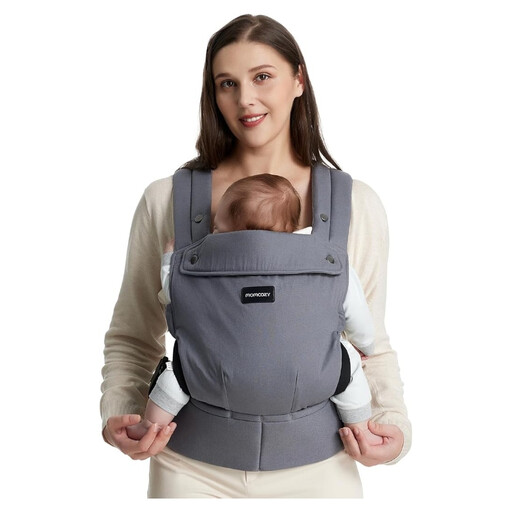
Why it suits this profile: A cotton carrier with adjustable straps for parents looking for a simple front-facing model for everyday use and short outings.
The product description says the model has an adjustable system, padded leg openings and a foldable neck support. Always adjust it according to the instructions.
100% cotton according to the product specifications, machine washable and suitable for approximately 3.18 to 19.96 kg.
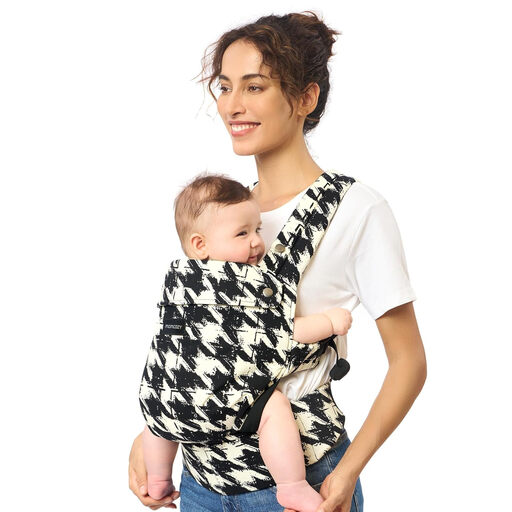
Why it suits this profile: A good fit for parents who pay attention to the material, cross-back straps and support, and want a carrier they can use with a baby or toddler.
The description lists three adjustable positions, cross-back straps and a wide, padded seat. These are specific features to check when trying it on.
According to the product information: 100% cotton, machine washable, X-back design and suitable for approximately 3.18 to 20 kg.
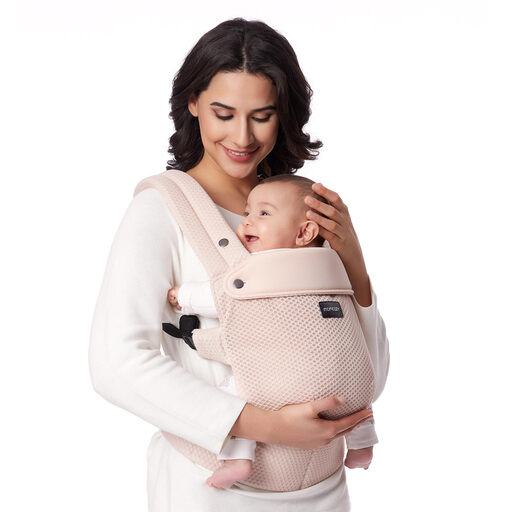
Why it suits this profile: A practical choice for warm days, travelling and walks, and for parents who prefer a breathable design.
The Air Mesh panels make the material clearer than the word “breathable” alone. Even so, check the temperature, clothing and your baby’s clear airways while using it.
Air Mesh, machine washable, three adjustable positions and a stated weight range of approximately 3.18 to 19.96 kg.
We’ve put together a complete, up-to-date list of products that meet these strict selection criteria and the applicable European safety regulations.
A baby carrier is not protection against falls or road traffic accidents. Never leave your baby unattended, and don’t use the product during activities where you could fall.
It varies by model. The Momcozy carriers mentioned list a minimum of around 3.18 kg and a maximum of around 19.96 kg. Always check the label and the instructions. A weight range alone doesn’t mean that every child will fit well in every position.
The product descriptions for these models give an approximate age range of 3 to 24 months, depending on weight and development. Check regularly that your baby is still well supported and that the straps, buckles and fabric are intact. Replace the carrier if it’s worn or damaged.
Many users find cotton soft to the touch, and the models mentioned are machine washable according to their specifications. Mesh is designed to allow more air to circulate, which can be useful in warm weather. Choose based on the season, clothing, how long you’ll carry your baby and how easy the carrier is to care for. Neither material is a substitute for correct adjustment and supervision.
