
Vandaag of morgen in huis

Kwaliteit gegarandeerd

Welkomstaanbiedingen ontgrendelen: GRATIS bezorging | Tot 80% korting | Gratis 30 dagen JoyPlus-proefperiode
Download de app
An ergonomic baby carrier can come in handy on a walk, a trip to the supermarket or when travelling. You’ll have your hands free while keeping your baby close. However, not every baby carrier is equally practical. A lovely fabric or a promise of “all-day comfort” means little if the carrier is difficult to adjust, gets hot quickly or doesn’t offer enough support.
In this buying guide, the Joybuy Product Recommendation Officer focuses on product information you can verify. This will help you see which features matter for your needs and which marketing claims are worth questioning.
A baby and toddler carrier with a range of 3 to 20 kg may look appealing. However, check the weight and developmental stage from which the product is actually suitable. Some models are suitable from around three months, while others can be used from birth.
If your baby can’t yet hold their head upright without help, check whether the carrier provides suitable head and neck support. Always follow the instructions and the stated minimum and maximum weight limits.
The word ergonomic often appears in product titles. The practical details matter more:
According to the product descriptions for various Momcozy models, the seat and adjustable positions support an M-position. This is a design feature, not a guarantee that the fit will be right for every child. Always check your baby’s position and airway while carrying them.
A lightweight baby carrier is handy when you’re out and about, but also consider the material and ventilation. A cotton baby carrier often feels soft, while a breathable carrier with Air Mesh panels allows more airflow in warm weather. On the other hand, mesh can feel different against the skin and may be less cosy in cold weather.
Also check the care instructions. Being machine washable can be a practical benefit for everyday use, but always follow the care label. Damaged seams, buckles or straps are reasons to stop using the carrier.
According to the product information, the Momcozy models in this selection are designed for babies aged around three to 24 months and weighing approximately 3,18 to 19,96 kg. They’re designed for front carrying. This makes them suitable for parents who want to keep their baby close during everyday activities.
A model for newborns has different requirements from a carrier for a baby who can already sit independently or has good head control. So don’t just look at the maximum weight capacity. Pay particular attention to the minimum age, minimum weight and neck support.
A carrier with lumbar support can help distribute the weight more evenly. The Momcozy carrier product descriptions mention features including an EVA panel, an X-shaped back and padded straps. These are design features you can check. Whether the carrier feels comfortable for you will depend on your build and how you adjust it.
Start with short periods of use. If you feel pain or discomfort, stop using the carrier and readjust the straps.
Before each use, check:
A baby carrier is not protective equipment in the event of a fall or accident. Don’t use one while cycling, running, cooking over an open flame or doing other activities where there’s a risk of falling.
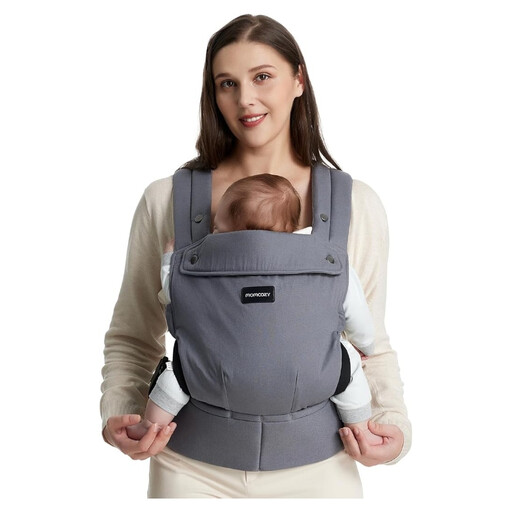
Why it suits this profile: This cotton model is designed for simple front carrying and, according to the product information, is suitable for around 3,18 to 19,96 kg. The machine-washable fabric is handy for everyday use.
The product information mentions an adjustable fit, an M-position and EVA support. Remember to check the fit each time you use the carrier.
100% cotton, machine washable, front carrying and a stated weight range of around 3,18 to 19,96 kg.
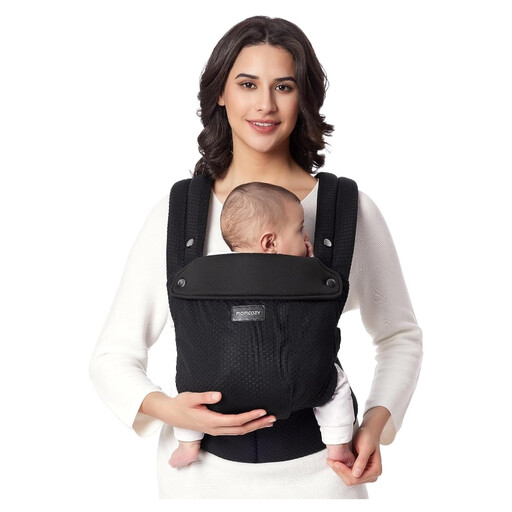
Why it suits this profile: The Air Mesh version is designed for parents who are often out and about or want a more breathable material for warmer days.
The product specifications list Air Mesh, three adjustment positions and X-shaped straps. This makes it easier to assess the ventilation and fit before you buy.
Breathable Air Mesh fabric, cooling-neck contact fabric, machine washable and a product weight of around 760 grams.
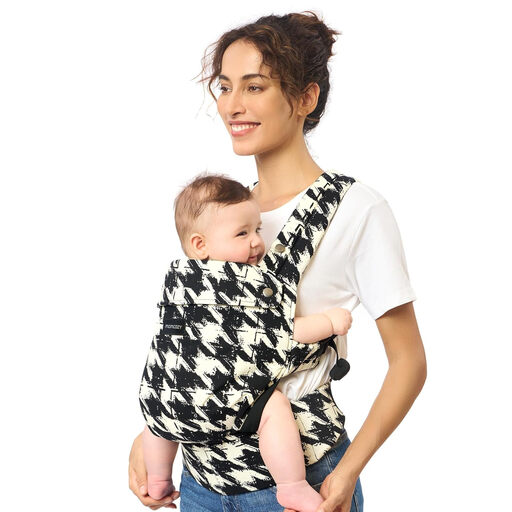
Why it suits this profile: According to the product information, this model is designed for everyday front carrying and features cross-over straps, adjustable buckles and lumbar support.
The wide seat, padded leg openings and three adjustment positions are clearly specified. This makes it easier to check the fit rather than relying on a general claim.
100% cotton, cross-over straps, machine washable and a stated carrying range of around 3,18 to 20 kg.
We’ve put together a complete, up-to-date list of products that meet these strict selection criteria and the applicable European safety requirements.
This varies by model. According to the product specifications, the Momcozy carriers mentioned are suitable from around 3,18 kg, usually from approximately three months. Don’t use a carrier for a baby who can’t yet support their head independently, unless the instructions specifically state that the model is suitable for this.
Its lifespan depends on how it’s used, washed and stored. Check the buckles, seams, straps and seat regularly. Stop using the carrier if it shows signs of wear, fraying or damage, even if the maximum weight hasn’t been reached.
A breathable carrier can be handy for travelling, walking and getting around day to day, especially in warm weather. However, check the carrier’s weight, adjustability and carrying position. Take the instructions with you and check that all the buckles fasten securely before setting off. Carrying your baby hands-free is safe only when their face is visible, their airway remains clear and you can keep checking on them at all times.
