
Vandaag of morgen in huis

Kwaliteit gegarandeerd

Welkomstaanbiedingen ontgrendelen: GRATIS bezorging | Tot 80% korting | Gratis 30 dagen JoyPlus-proefperiode
Download de app
An ergonomic baby carrier can come in handy on a walk, a train journey or while doing household chores. It keeps your hands free and your baby close. However, not every baby carrier is easy to use or suitable for long periods. A great product photo tells you little about fit, carrying comfort or usage limits.
Look out for these common pitfalls:
Always check the minimum and maximum weight limits in kilograms. The Momcozy models in this selection generally list a range of around 3.18 to 19.96 kg, or approximately 7 to 44 lb. That matches the search term baby carrier for 3 to 20 kg, but the exact minimum and maximum limits are what matter.
Also consider your baby’s stage of development. A product listed as suitable for approximately 3 to 24 months is not automatically a carrier for newborns and toddlers. If your baby can’t yet hold their head upright independently, follow the manufacturer’s instructions and seek professional advice if you’re unsure.
Leg position matters when choosing an ergonomic baby carrier. Your baby’s knees should sit higher than their bottom, allowing their legs to fall outwards. At the same time, the carrier should provide enough back and neck support without covering your baby’s face.
Momcozy’s product information describes an M-shape for the legs and a C-shape for the back on various models. These are product specifications from the manufacturer’s description; they don’t guarantee that every baby will sit correctly in every body type. Check your baby’s position each time you put the carrier on.
A breathable baby carrier can be comfortable in a warm home, when travelling or on summer days. Air Mesh and cooling fabric around the neck are mentioned for the mesh models. A cotton model may appeal if you’re looking for soft, machine-washable fabric.
Also look for:
A lightweight baby carrier weighing around 760 to 771 grams can be practical, but overall comfort also depends on how the weight is distributed and how the carrier fits the wearer.
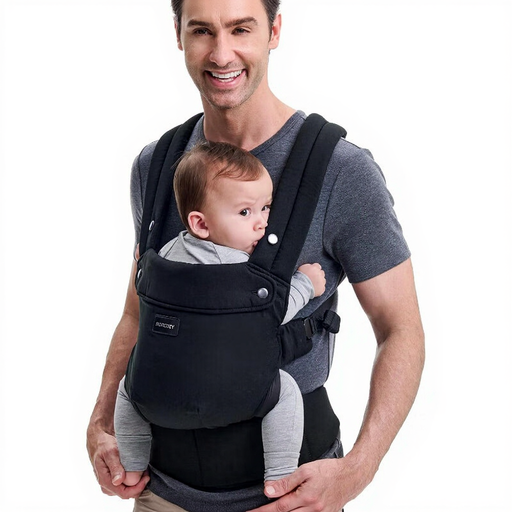
Why it suits this profile: A straightforward front-carry model for everyday use, with no batteries or complicated set-up.
The product information lists an adjustable fit, an M-shaped leg position and a weight range of around 3.18 to 19.96 kg. Check the instructions before using it with a young baby.
100% cotton, machine washable, crossed straps and EVA lumbar support, according to the product specifications.
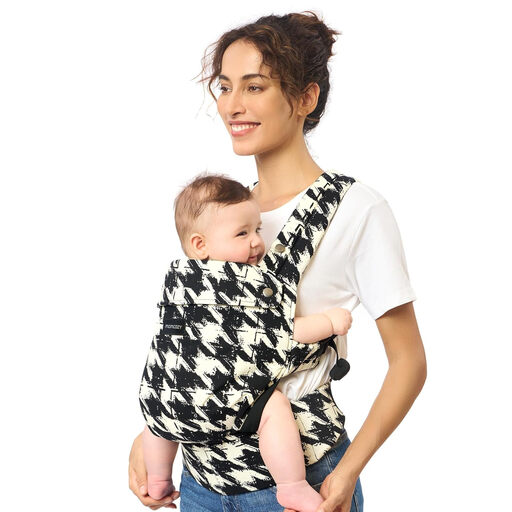
Why it suits this profile: For parents who value material certification and finish as well as practical details.
The description mentions OEKO-TEX Standard 100-certified cotton, a wide seat and three adjustment positions. Check the latest documentation and make sure the fit is right for you.
Cotton cover, crossed straps, machine washable and a stated carrying range of around 3.18 to 20 kg.
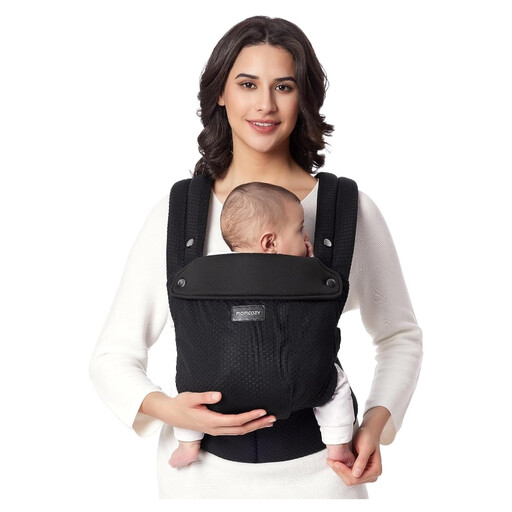
Why it suits this profile: A practical choice for warm days, travelling and parents who regularly carry their baby hands-free.
Air Mesh and cooling fabric around the neck help address concerns about warmth. The carrier is adjustable; always check that your baby is sitting snugly.
Mesh fabric, EVA lumbar support, three size positions and a stated carrying range of around 3.18 to 19.96 kg.
We’ve put together a complete, up-to-date list of products that meet these strict selection criteria and the applicable European safety regulations.
A baby carrier does not protect against falls or road accidents. Never leave your baby unattended in the carrier.
It depends on the model. The Momcozy carriers mentioned are mainly listed in the product information as suitable for babies from around 3 months, with a minimum weight of about 3.18 kg. You shouldn’t assume that a standard carrier is suitable for a newborn who can’t yet support their head independently. Always follow the instructions for your specific model.
Check the maximum weight and the stated age range. According to the product information, the models discussed have a maximum carrying range of around 19.96 or 20 kg, often corresponding to approximately 24 months. How long you can actually use one depends on your baby’s growth, position and fit, as well as the comfort of both parent and child.
Not necessarily, but Air Mesh can be practical on hot summer days, when travelling or indoors. A cotton version may feel more comfortable in colder months. Choose according to the temperature, layers of clothing, adjustability and how you plan to use the carrier day to day.
