
Vandaag of morgen in huis

Kwaliteit gegarandeerd

Welkomstaanbiedingen ontgrendelen: GRATIS bezorging | Tot 80% korting | Gratis 30 dagen JoyPlus-proefperiode
Download de app
An ergonomic baby carrier may seem simple to choose at first. However, models can differ considerably in fit, carrying position, adjustability and materials. A carrier that looks comfortable on the packaging may disappoint in everyday use if the straps are difficult to adjust or the weight is not distributed well enough.
These situations will be familiar to many parents:
The points below will help you distinguish marketing claims from product specifications you can check.
First, check the minimum and maximum carrying weight. Several models in this selection are designed for around 3,18 to 19,96 kg—in other words, a baby and toddler carrier for approximately 3 to 24 months. Age is only a guide: weight, development and the manufacturer’s instructions should take priority.
A carrier for babies from around 3 kg is not automatically suitable from birth. Young babies need to be able to support their own heads, unless the carrier is specifically designed for newborns according to its instructions. Always check:
According to the product information, the Momcozy models in this selection are designed for front carrying and for babies from around 3,18 kg. The Chicco EasyFit has a different range: according to the product information, it is suitable from birth up to a maximum of 9 kg.
A carrier with an M-position supports the legs so that the knees sit higher than the bottom. That does not mean you should rely solely on the word “ergonomic”. Check that the seat is wide enough, the leg openings do not dig in, and the baby sits upright and close to the wearer’s body.
According to the product information for the Momcozy models mentioned, the seat and leg openings are designed to support an M-shaped leg position. Claims about support and development come from the brand’s product description; in practice, they should always be paired with correct adjustment and supervision.
An adjustable carrier is useful if it will be used by more than one adult. Check that:
The recommended carrying height is usually one that lets you see and kiss your baby easily without leaning forwards. If you feel pain or pressure on your shoulders, hips or lower back, readjust the straps or stop using the carrier.
A carrier with back support can be comfortable if you regularly take your baby along when shopping, going for walks or travelling. Look at how it is constructed, not just at phrases such as “all-day comfort”. According to the product information, the Momcozy models feature an EVA panel, adjustable straps and an X-shaped or crossed back design. These are features you can check, but they do not guarantee the same level of comfort for every body shape.
The carrier’s own weight matters too. The cotton Momcozy models weigh approximately 771 grams. According to the product specification, the mesh model weighs approximately 760 grams. This makes them relatively lightweight carriers within this product selection, although of course your baby’s weight remains the biggest factor.
The choice of material is particularly relevant to care and temperature:
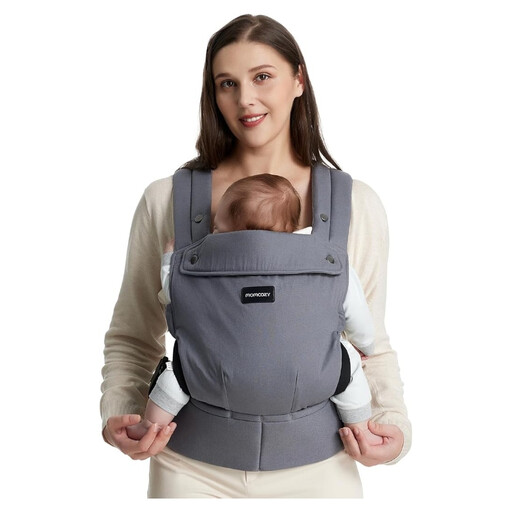
Why it suits this profile: A practical choice for parents looking for their first baby carrier for everyday front carrying, without lots of separate parts.
The stated range of around 3,18 to 19,96 kg makes the limits clear from the outset. Its machine-washable cotton construction also makes it easier to care for.
100% cotton according to the product information, front carrying, adjustable straps and a stated weight of around 771 grams.
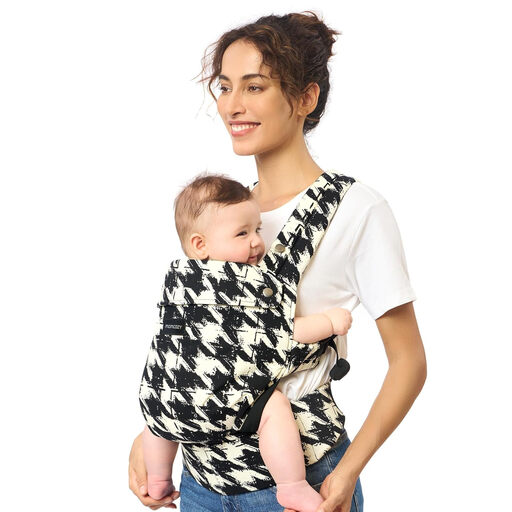
Why it suits this profile: A good choice for anyone who values material details, crossed straps and a smart look as well as carrying comfort.
The product information lists a weight limit, machine washing and adjustable buckles. This means important conditions for use are not hidden behind vague claims about comfort.
100% OEKO-TEX Standard 100-certified cotton according to the product information, X-shaped back straps, EVA back support and three adjustable positions.
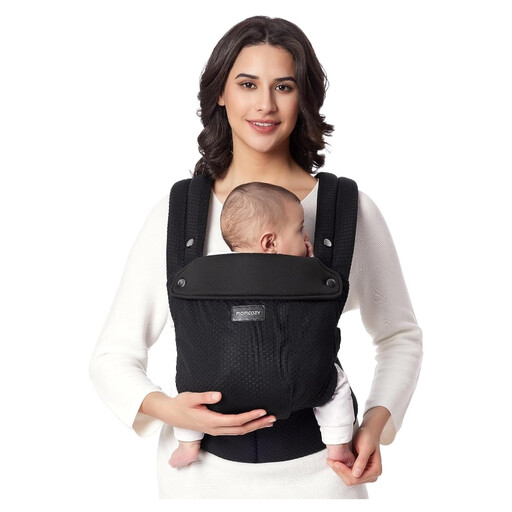
Why it suits this profile: A sensible option for parents who are often out and about or want to prioritise a breathable material in warmer weather.
The product specification names the Air Mesh material and gives the carrier’s own weight as around 760 grams. This makes it easier to compare breathability and carrying weight in concrete terms.
Air Mesh, machine washable, three adjustable positions, X-shaped back straps and a stated range of around 3,18 to 19,96 kg.
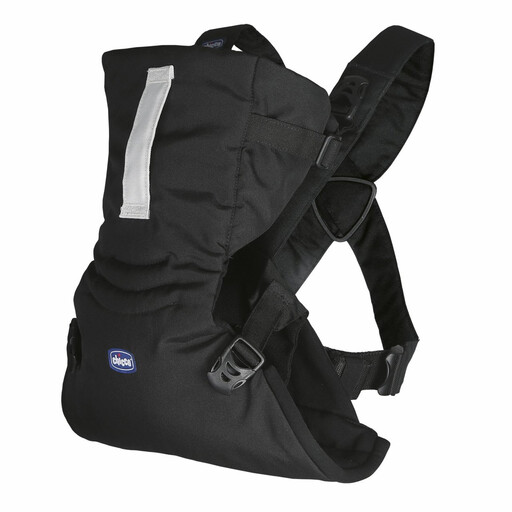
Why it suits this profile: A model for anyone looking for a carrier to use from birth, with an easy, T-shirt-style way of putting it on.
The maximum carrying weight of 9 kg is clearly defined. This helps you avoid confusing a newborn carrier with one designed for babies and toddlers.
Suitable from birth up to 9 kg according to the product information, with an adjustable wide seat, M-position and a foldable neck support.
We’ve put together a complete, up-to-date list of products that meet these strict selection criteria and the applicable European safety regulations.
An ergonomic design is no substitute for correct fitting. Before each use, check:
A baby carrier is not protective equipment in the event of a fall or road traffic accident. Use the carrier under the direct supervision of an adult and stop if you feel pain or discomfort.
Start by adjusting the waist and shoulder straps before placing your baby in the carrier. Your baby should sit high enough for you to see their face clearly. Adjust the seat so that their legs form an M-position, check the buckles and make sure their nose and mouth are uncovered. Always follow the instructions for your specific model too.
Its lifespan depends on how often it is used, how much weight it carries, how it is washed and how it is stored. Check the buckles, straps, seams and fabric regularly. Replace the carrier if any parts are damaged or if your baby no longer fits within the stated weight range or carrier fit. A model with a range of 3 to 20 kg may be usable for longer than a carrier with a 9 kg limit, as long as the fit remains good at every stage.
Cotton can be a good choice for everyday use and easy care. A mesh model may feel more breathable in warm weather. The right option depends on the season, clothing, how long you use it and personal preference. Always compare the material information, washing instructions, carrying position and maximum weight rather than choosing based on the fabric name alone.
