
Vandaag of morgen in huis

Kwaliteit gegarandeerd

Welkomstaanbiedingen ontgrendelen: GRATIS bezorging | Tot 80% korting | Gratis 30 dagen JoyPlus-proefperiode
Download de app
As a new parent, you want to keep your baby close, but you also need your hands free. An ergonomic baby carrier seems like the perfect solution. However, the market is flooded with models that overpromise and underdeliver. Before you make a choice, it's crucial to know what to look for to avoid common pitfalls.
Many parents invest in a baby carrier that ends up unused in a closet after just a few months. The reasons are often the same: the carrier causes back pain, the baby seems uncomfortable in it, or the material is sweaty and irritating. These are not minor inconveniences; they point to fundamental design flaws.
The 2 most common pitfalls when choosing a baby carrier:
To avoid a poor choice, it's best to focus on a few objective specifications. These determine the comfort and safety for both you and your child.
A good baby carrier distributes your baby's weight evenly across your hips, back, and shoulders. A crucial feature for this is a wide carrier with a hip belt. This belt ensures that most of the weight rests on your hips—the strongest part of your body. This significantly relieves pressure on your shoulders and lower back. Also, pay attention to the shoulder straps. Crossed straps (an X-shape on your back) often help distribute weight better than traditional H-shaped straps.
The most important factor for your baby carrier is hip support. An ergonomic carrier supports the baby in the so-called M-position (also known as the frog-leg position). This means the baby's knees are higher than their bottom, and the fabric supports their body from one knee pit to the other. This posture promotes healthy hip development. Additionally, the baby's back should be able to form a natural, slightly curved C-shape.
Your baby's skin is sensitive. A cotton baby carrier is often a great choice because it's breathable, soft, and naturally hypoallergenic. Look for certifications like OEKO-TEX Standard 100. This label indicates that the fabric has been tested for harmful substances and is safe for direct skin contact. Also, check if the carrier is machine washable. Easy maintenance is a huge plus in a parent's busy life.
Based on these criteria, we have selected a few options that suit different parent profiles.
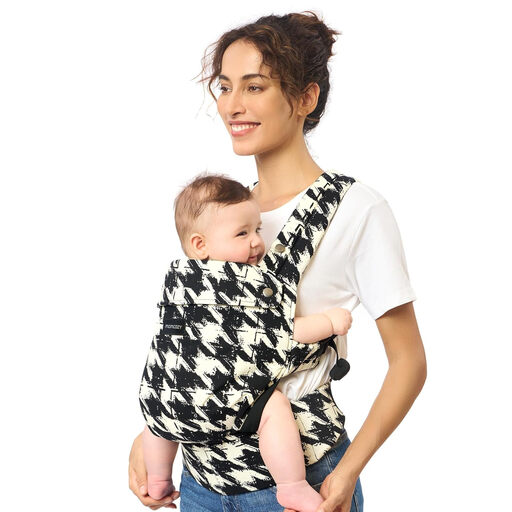
Why This Fits Their Persona: Ideal for daily use, from running errands to a walk in the park. This carrier is designed for convenience and comfort, allowing you to keep your child close while keeping your hands free for other tasks.
The adjustable crossed back straps and lumbar support tackle the "one-size-fits-all" pitfall by effectively distributing weight and reducing back pain.
The wide, padded seat ensures a correct M-position. Made from 100% OEKO-TEX certified cotton, which is soft and breathable for the baby's skin.
Why This Fits Their Persona: This is a practical and thoughtful gift for a new mom or dad. It shows you've considered the well-being of both parent and child, rather than just focusing on aesthetics.
You're giving a gift that avoids the dangling-legs pitfall. The recipients will appreciate the focus on the ergonomic M-position and the comfort for their back.
Suitable for a wide weight range (from approx. 3 to 20 kg), meaning it's a durable gift that grows with the child from infant to toddler.
A thoughtful gift starts with the product, but the presentation completes it. Explore our selection to make your gift for a new mom or dad perfect.
Most structured carriers, like the Momcozy baby carrier, are suitable from around 3 months or a minimum weight of approximately 3.2 kg, up to a weight of 20 kg. For newborns, special baby wraps or carriers with an infant insert are often required. Always check the manufacturer's specifications before making a purchase.
Look closely at your baby's posture. Their knees should be spread apart and sit clearly higher than their bottom. The carrier's fabric should support the thighs from one knee pit to the other. Your baby's back should form a natural, rounded curve (C-shape), especially in young infants.
Many modern baby carriers, and certainly a cotton baby carrier, are machine washable. However, it's important to always consult the care label first. A general recommendation is to fasten all buckles, place the carrier in a wash bag, and use a gentle cycle. Air-dry the carrier to maintain the shape and integrity of the straps.
