
Vandaag of morgen in huis

Kwaliteit gegarandeerd

Welkomstaanbiedingen ontgrendelen: GRATIS bezorging | Tot 80% korting | Gratis 30 dagen JoyPlus-proefperiode
Download de app
As a new parent, you want to keep your baby close all day long. At the same time, the laundry basket is calling, groceries need to be bought, and maybe you just want to drink a cup of coffee with two hands. An ergonomic baby carrier can be a game-changer. It provides the security your baby needs and gives you the freedom to go about your daily life.
But the market for baby carriers is vast, and the choices can be overwhelming. Which baby carrier is truly comfortable for you and good for your child's development? In this guide, we'll give you practical advice to find a model that suits your family, without all the marketing fluff.
A good baby carrier is more than just a way to transport your baby. It's a tool that must provide comfort and support for both parent and child. Here are a few key points to consider.
The most important feature of an ergonomic baby carrier is its support for healthy hip and spine development. Pay attention to the following two positions:
A carrier that supports these positions ensures you can carry your little one in a responsible way.
Your baby will get heavier over time. A carrier that doesn't distribute weight well can quickly lead to back and shoulder pain. A baby carrier with hip support is therefore a smart choice. A wide, sturdy waistband transfers a significant portion of the weight from your shoulders to your hips, the strongest part of your body.
Also, look at the shoulder straps. Are they wide and do they have ample padding? Crossable straps on the back can also help to distribute weight more evenly and reduce pressure on your shoulders.
Think about when you'll be using the carrier most. For a summer baby carrier, a breathable material like mesh is ideal to prevent overheating. For everyday use, soft cotton is often very pleasant. A lightweight carrier is great for travel or if you want to pack it in the diaper bag often. Also, check if the carrier is easy to put on and take off, even when you're alone. Furthermore, machine washability is a practical feature that can save you a lot of time.
Based on the criteria above, we've rounded up a few popular choices for you. These models from Momcozy are known for their focus on ergonomics and ease of use.
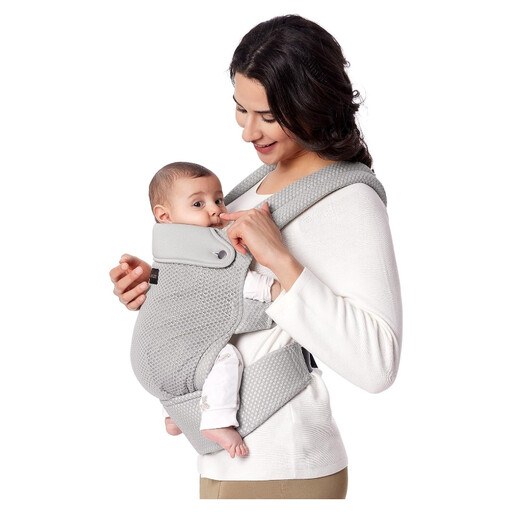
Why It Stands Out: This carrier is specially designed for warm weather and active parents. The combination of Air Mesh panels and a cooling fabric in the neck area ensures maximum airflow, keeping both you and your baby cool and dry.
Benefits:
Who is this carrier for? This is an excellent choice for active parents, for use in the warmer months, or for anyone looking for an extra airy and lightweight carrier.
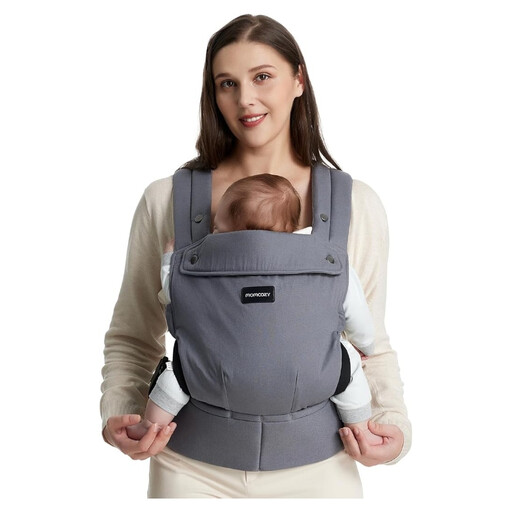
Why It Stands Out: This model is a reliable all-rounder, made from soft cotton. It combines a comfortable design for the baby with a smart support system for the wearer, making it a popular front carrier for daily use.
Benefits:
Who is this carrier for? For parents looking for a comfortable and supportive all-round carrier for everyday use, from running errands to taking a walk in the park.
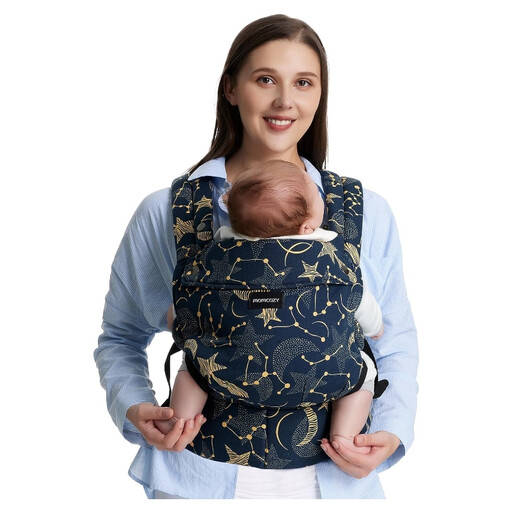
Why It Stands Out: This carrier offers the same ergonomic benefits and comfort as the grey cotton model but with a playful star pattern. It proves that functionality and style can go hand in hand.
Benefits:
Who is this carrier for? For parents who are looking for a reliable and comfortable ergonomic baby carrier and also value a fun design.
A baby carrier is a very personal choice. If these recommendations aren't quite what you had in mind, or if you're looking for other handy accessories for life on the go with your little one, take a look at our broader assortment.
Explore More Handy Baby and Toddler Products
Most ergonomic carriers are suitable from a weight of about 3.2 kg (7 lbs), which makes them a carrier for newborns. It is crucial that the carrier provides good neck and head support until your baby can hold their head up independently. Always read the manufacturer's specifications to check the minimum and maximum weight limits.
Always check for the M-position (knees higher than the bottom) and the natural curve of the back (C-shape). A good rule of thumb is the 'kissable height': your baby should be high enough on your chest that you can easily give them a kiss on their head. Also, make sure your baby's chin isn't resting on their chest and that their face is always visible, so their airway remains clear.
Yes, that's one of the biggest advantages of hands-free babywearing. Once your baby is securely and comfortably in the carrier, you have your hands free for light household chores, grocery shopping, or holding another child's hand. Avoid activities with a risk of falling, such as cycling or running, while wearing your baby.
